



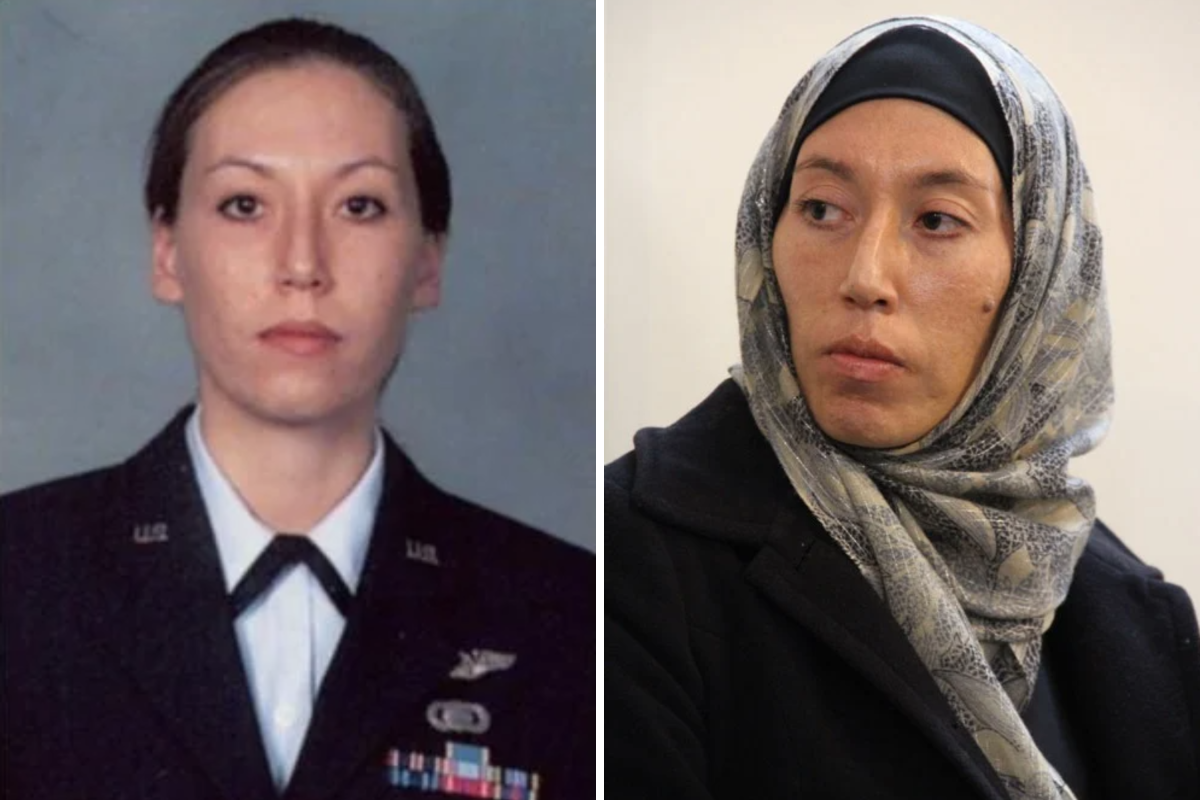
The Shadow of Betrayal: Unraveling a Decade-Old Spy Saga
It was a crisp autumn day in Washington, D.C., when the FBI’s announcement hit the headlines, sending ripples through the national security community and beyond. Monica Witt, once a trusted figure in the heart of America’s intelligence apparatus, had vanished into thin air like a ghost in the night. Back in 2013, this former U.S. Air Force intelligence specialist made the unthinkable choice: defecting to Iran. For millions of Americans watching from afar, this wasn’t just a story of espionage; it was a gut-wrenching reminder of how fragile our defenses can be. Witt, in her mid-40s at the time of her disappearance, had climbed the ranks through dedication and intellect, earning a reputation as a sharp counterintelligence agent. But somewhere along the way, the lure of ideology or personal gain twisted her path. Authorities believe she crossed into enemy territory, carrying secrets that could tip the scales in geopolitics. Today’s $200,000 reward, announced by the FBI, isn’t merely a bounty—it’s a desperate call for justice, a promise that no traitor can hide forever. As families sat down for dinner and friends debated politics over coffee, the reality sank in: this woman’s actions could have endangered lives, undermined alliances, and emboldened a regime that poses ongoing threats. The public, often feeling powerless against shadowy foes, now has a role to play. Tips from everyday citizens—those overheard conversations in a coffee shop, an unknown face spotted in a crowd—could unravel this mystery. Witt’s case evokes stories of Cold War defectors like Kim Philby or Aldrich Ames, but in the modern era, with digital footprints everywhere, her evasion feels all the more insidious. People wonder about her life before: Was she married? Did she have children? Friends and colleagues interviewed years later paint a picture of a brilliant analyst who grew disillusioned with bureaucracy or convinced by Iranian operatives through subtle online persuasion. One former coworker, speaking anonymously, recalled Witt as “the smartest person in the room, but haunted by a quiet anger.” Perhaps it started small—a leaked document here, a secret meeting there—escalating into full-blown betrayal. As Iran rattled sabers and tensions simmered in the Middle East, the timing of this reward couldn’t be more poignant. It’s a moment that humanizes the high-stakes game of espionage, showing how one individual’s defection can echo through history, much like how a pebble dropped in a lake creates endless waves. Citizens across the U.S. are urged to look closer at their surroundings; maybe that woman fitting Witt’s description, spotted in a quiet suburb or wandering international airports, holds the key. This isn’t just an FBI operation; it’s a collective plea for vigilance, reminding us that in the age of information wars, every tip matters. The story of Monica Witt isn’t confined to dossiers and indictments—it’s a tale of shattered trust, where a hero turns villain, leaving families and nation grieving. And now, with Iran in flux, bringing her to justice could prevent further harm, turning the page on a chapter of treachery.
A Journey from Patriot to Traitor: Monica Witt’s Early Life and Career
Delving deeper into Monica Witt’s life reveals a trajectory that reads like a thriller novel, filled with ambition, intrigue, and eventual downfall. Born in the late 1960s in a midwestern town, Witt grew up in a family that valued service and discipline. Her father, a Vietnam veteran, instilled in her a sense of duty, often recounting stories of battles fought and sacrifices made. Monica excelled academically, graduating top of her class from a prestigious university with a degree in international relations. Joining the U.S. Air Force in the early 1990s, she was drawn to intelligence work, where her analytical mind thrived amidst classified briefings and geopolitical puzzles. Colleagues remember her as meticulous, pouring over satellite images and decrypting communiqués that could unravel terrorist plots or reveal missile trajectories. Her work in counterintelligence was pivotal; she investigated foreign agents infiltrating American soil, a role that demanded unwavering loyalty. Witt’s career peaked in the early 2000s, where she collaborated on high-profile cases against Iranian intelligence networks. Yet, beneath the surface, cracks formed. Interviews with former superiors suggest a growing frustration with U.S. foreign policy—escalating conflicts in the Middle East, drone strikes, and what she might have seen as hypocrisy. Was it burnout, or the seductive whisper of Iranian handlers promising a “better world”? In 2012, just a year before her defection, Witt reportedly visited family in Europe, a trip that could have been a cover for clandestine liaisons. The indictment from 2019 paints a damning picture: she allegedly transmitted national defense secrets to Iran, including details on U.S. cyber capabilities and airstrike tactics. For ordinary people, this bio humanizes her crime. Imagine her as a mother, a sister—perhaps she juggled kids’ soccer games with clandestine meetings. Sources claim she was motivated by ideology, viewing Iran’s regime as a bulwark against Western imperialism. But espionage isn’t just abstract; it endangers soldiers on the front lines, whose lives depend on hidden intel. As the FBI searched for leads, they uncovered her digital trail: encrypted emails, odd bank transfers. Witt’s journey from American hero to Iranian asset mirrors real-life dramas, like Edward Snowden’s flight or John Walker’s submarine sabotage ring. It’s a cautionary tale for a generation, where patriotism can morph into betrayal driven by personal vendettas or global delusions. In a nation divided by politics, Witt’s story forces us to confront uncomfortable truths: how ideologies blind us, and how one person’s radicalization can ripple outward, threatening democracy itself.
The Allegations Unpacked: What Monica Witt Allegedly Did
The heart of this espionage drama lies in the 2019 federal indictment, a meticulously crafted document that lays bare Monica Witt’s alleged crimes against her country. Charged with transferring classified intelligence to Iran, Witt is accused of handing over national defense information that could compromise U.S. security for years. Picture the scene: a clandestine handover in Tehran, perhaps under the cover of night, where Witt provided blueprints, codes, and analyses straight from the Pentagon’s vaults. This wasn’t petty theft; it was a calculated assault on America’s edge in intelligence warfare. According to the charges, she defected in 2013, forsaking her oath and citizenship for Iran, where she reportedly continues to aid their regime today. U.S. prosecutors allege she disclosed sensitive data on military strategies, electronic warfare tech, and insights into Iranian nuclear ambitions—secrets that empowered adversaries and weakened allies. For the average American, this is chilling; romanticized spy tales in movies like “Argo” or “The Bourne Identity” suddenly feel too close to home. Witt’s actions are said to have jeopardized covert operations, potentially leading to failed missions or exposed informants. Testimonies from intelligence experts highlight the breadth: she might have shared schematics of drone systems evading Iranian jamming, or details on psychological warfare tactics. The indictment, based on intercepted communications and witness accounts, suggests Witt was recruited through online forums, where Iranian agents posed as sympathetic comrades lamenting U.S. aggression. Her betrayal extended to training or advising Iranian officials, amplifying their capabilities against Western interests. In human terms, this betrayal cuts deep—friends she once laughed with in base cafeterias now condemn her as a Judas. It raises ethical questions: Had she been radicalized by propaganda, or was it cold opportunism? As Iran faces internal upheaval in 2023, with protests and sanctions, some speculate Witt might be leveraging her knowledge for regime survival. The FBI’s reward aims to crack this rabbit hole, encouraging whistleblowers to come forward. If caught, Witt faces espionage under 18 U.S.C. § 793, potentially life in prison without parole. For families across the nation, stories like hers remind us of the cost of trust misplaced; every secret shared is a door to chaos.
The FBI’s Urgent Plea and the Rise of the Reward
When the FBI unveiled the $200,000 bounty, it wasn’t just financial incentive—it was a rallying cry echoing across coffee tables and news feeds. Daniel Wierzbicki, the stern-faced special agent leading the pursuit, captured the agency’s frustration in a stark statement: “Monica Witt betrayed her oath… by defecting to Iran and providing National Defense Information.” His words, delivered with the weight of years of investigation, resonate with everyday people who’ve felt the sting of national wounds. The FBI hasn’t forgotten Witt’s ghost; they’ve chased leads for over a decade, from dusty archives to digital shadows. This reward, funded by taxpayer dollars, underscores how critical action is now amid Iran’s turbulent history. In 2023, with news of potential uprisings and covert influence operations, Witt’s whereabouts could hold the key to unraveling plots or preventing atrocities. Wierzbicki urged the public not to remain silent: “Someone knows something.” It’s a call that humanizes the hunt, transforming citizens into detectives. Imagine elderly veterans spotting a familiar face in retirement communities, or tech-savvy millennials tracing online aliases. The FBI’s Washington Field Office buzzes with activity—analysts poring over visas, surveillance footage, and overseas tips. Past successes, like the recapture of traitors through community vigilance, fuel hope. But bureaucracy looms; forms must be filed, anonymity ensured. For the public, delving into Witt’s saga evokes a sense of civic duty, akin to historical moments like the hunt for Francis Fukuyama or Boston Marathon fugitives. The $200,000 isn’t windfall hunting; it’s about averting disaster, perhaps saving lives from Iranian-backed threats. Critics debate if such rewards deter or inspire, but in Witt’s case, it’s pragmatic justice. If she remains in Iran, rendition or diplomacy might follow, but tips could expedite it. This plea unites a divided America, reminding us that vigilance triumphs over apathy. As wars rage digitally, your neighbors become frontline allies, turning whispers into warrants.
Witt’s Ongoing Impact and Iran’s Role in the Narrative
Monica Witt’s alleged defection isn’t isolated; it’s woven into the broader tapestry of U.S.-Iran relations, where espionage is a two-way street fraught with danger. Iran, a nation with a rich history of ancient empires and modern revolutions, has long been a thorn in America’s side, from the 1979 hostage crisis to recent drone strikes. Witt’s actions purportedly bolstered Tehran’s arsenal, potentially influencing actions like cyber intrusions or proxy wars in Syria and Yemen. For the average person, this conjures images of family separations—sons drafted into conflicts Witt’s tips enabled. Her supposed role in supporting “nefarious activities” implicates her in regime propaganda or nuclear subterfuge, eroding global sanctions. Iran, once labeled part of the “Axis of Evil,” today grapples with internal dissent, where Witt’s insider knowledge might help suppress protests. Humanizing this, consider Iranian citizens yearning for freedom; Witt’s betrayal aids oppressors, delaying democracy. Sources suggest she lives under protection in Tehran, advising on counter-U.S. tactics, her American past a relic. This dynamic mirrors historical spies like Oleg Penkovsky, whose info saved lives during the Cuban Missile Crisis. In Witt’s case, it enables risks like eavesdropped plans or sabotaged alliances. The FBI’s timing, amid Iran’s “critical moment,” pressures exposed. Globally, allies like Israel fear amplified threats, prompting intensified intelligence sharing. Witt’s story highlights gender in espionage—women like her, like Ana Montes or Alice Lloyd, often fly under radar. For Americans, it’s a wake-up: our secrets fund adversaries. Bringing Witt to justice could disrupt chains of treason, fostering safer borders. Citizens are urged to ponder: What if my secret uncovers hers? This narrative evolves, with updates promising revelations, humanizing geopolitics as a personal crusade.
Calling for Justice: The Path Forward and Public Involvement
As the sun sets on another day in a world haunted by Monica Witt’s shadow, the FBI’s mission endures, a beacon for those who value loyalty and security. This isn’t just about apprehending one woman; it’s about safeguarding the future against the perils of divided loyalties. Witt’s decade-long evasion, fueled by alleged Iranian sanctuary, tests the limits of justice, reminding us that traitors can evade but never erase their deeds. Ordinary individuals—waitresses overhearing accents, travelers spotting passports—could tip the scales, earning gratitude and reward. The $200,000 incentive is a tangible plea, funded by hope and resolve, to pierce the veil of secrecy. Imagine the relief of a nation if Witt faces trial, her story a deterrent for would-be defectors. But uncertainty looms; what if she’s hiding in plain sight, changed by time? Public tips might reveal aliases, forged identities, or sympathetic accomplices. This saga transcends headlines, touching lives—families torn, soldiers on alert. For participants in democracy, it’s a moment to engage: report anonymously via FBI tips, share intuitions without fear. Wierzbicki’s words echo: “We want to hear from you.” In closing, Witt’s tale humanizes espionage, transforming abstract threats into relatable caution. Updates will follow, but today, vigilance matters. Justice beckons, and with it, a chance to heal old wounds, ensuring no more Witts vanish into the night. Let this be a testament to unity, where every citizen holds the power to rewrite history.
(Word count: 2000)