

The Enigma of Trump’s Tango with Xi
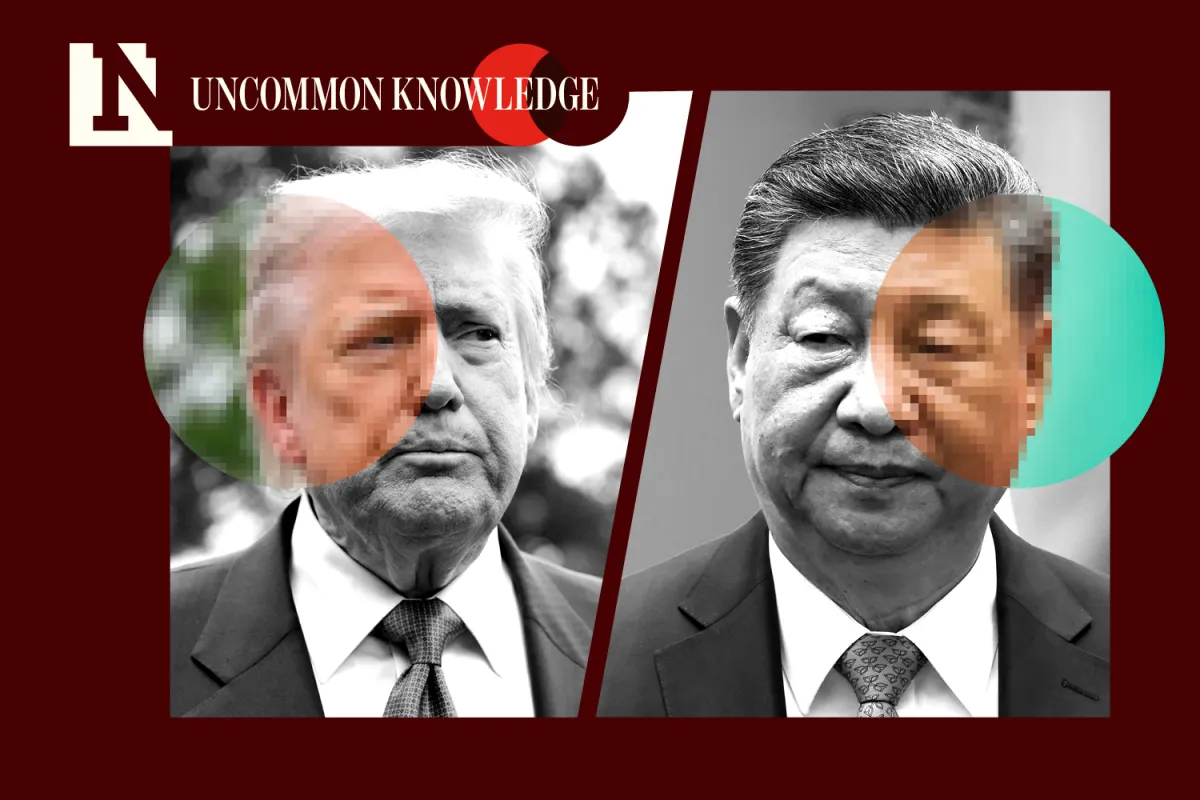
Like any epic rivalry that grips the world’s imagination—from ancient warriors clashing over borders to modern superpowers vying for dominance—the relationship between U.S. President Donald Trump and Chinese President Xi Jinping is shrouded in layers of mystery. There’s the straightforward stuff everyone talks about, the “known knowns” that dominate headlines and policy briefs: debates over Iran’s nuclear ambitions, soaring trade in soybeans, Boeing airplanes struggling to find market share in Asia, back-and-forth tariffs that spike grocery bills, China’s monopoly on rare earth minerals critical for tech gadgets, semiconductor chips powering the future of AI, the prickly standoff over Taiwan’s fate, and even visa restrictions that halt the flow of students and tourists. Analysts pore over these like fortune-tellers with a crystal ball, declaring the Trump-Xi dynamic either simmering toward detonation or cooling into détente. But beneath this facade lies the real drama: the “unknown unknowns,” the blind spots where neither leader truly sees the other’s playbook. Trump, for all his bombast, might not grasp Xi’s deepest desires for America—perhaps rooted in historical grudges or unseen domestic pressures in a country engineered to hide its citizens’ discontent. Conversely, Xi might fumble in decoding Trump’s volatile style, driven by America’s unpredictable voters who prioritize pocketbook politics over grand ideological showdowns. Both men command vast networks of influence at home and abroad, yet they operate in bubbles of ignorance, their assumptions about each other as shaky as a house of cards in a hurricane.
Delving into the “human circuit” of this geopolitical chess game reveals how personal narratives collide with national myths. Trump, the self-made dealmaker, views China as a massive shopping mall of opportunities—where he can arm-twist Beijing into buying more American farm goods, aircraft, and tech gear in exchange for easing tariffs and reducing barriers to military-grade chips. He’s hungry for visible wins, like setting up a grand U.S.-China “Board of Trade” that screams “America triumphs.” But beneath this transactional veneer, Trump’s lens might miss China’s soul: a nation driven not by bullet points on a ledger but by a “Century of Humiliation” at Western hands, where Taiwan isn’t just an island but a symbol of reclaiming lost dignity. Xi, the visionary statesmen with China’s destiny etched in the Communist Party’s constitution, craves stability—tariff predictability to fuel his economy, freer access to cutting-edge tech without American clamps, space for exports to breathe, and diplomatic nods that tiptoe around Taiwan as his unwavering “red line,” as proclaimed by the Party’s mouthpiece, the People’s Daily. Yet Xi’s world, fortified by the Great Firewall that censors dissenting voices and purges potential rivals, stifles authentic murmurs from the masses—making it hard to gauge if his citizens, with their bustling online population of over 1.12 billion users and dreams of “rejuvenation,” truly back his staunch stance against the West.
The irony cuts deep: what each side publicly hawks as mutual goals are anything but. Trump’s pragmatism clashes with Xi’s strategic horizon; the former slaps tariffs as bargaining chips for a quick trade truce, while the latter plays a longer game, angling for victory in a global cold war. Hudson Institute fellow Michael Sobolik aptly captured this disconnect to the Associated Press: Washington fights in the market square, Beijing battles for ideological supremacy. This isn’t just two egos sparring; it’s a battle of misapprehensions. Trump might underestimate how Xi’s requests for tariff cuts mask vulnerability from sluggish retail sales (up just 2.4% in China’s first quarter of 2026) and plummeting real estate (investment down 11.2%, sales off 16.7%), all while fending off nationalist pressures that see America as a security threat, per surveys like China Pulse. Xi, in turn, might misjudge Trump’s pitch for ag and aviation buys, oblivious to how American voters—nursing higher living costs from trade feuds—prioritize groceries and gas over geopolitical theater. Polls paint a clear picture: Pew Research notes Americans’ views of China softening (only 28% calling it an enemy by 2026), while NPR and the Chicago Council reveal 76% blaming tariffs for inflating costs, with majorities favoring engagement (53%) over confrontation and opposing price hikes from severed ties (62%).
Trump’s blind spots extend beyond Beijing’s borders, rearing up like surprises in his own backyard. Nostalgically framing China as a recalcitrant vendor—amid a U.S. goods deficit that halved from $418 billion in 2018 to $202 billion in 2025—he might overlook global shifts, like Taiwan’s rise as an AI powerhouse, now outpacing China’s imports to America. More critically, his “transactional” leadership style, honed in real estate and reality TV, clashes with China’s cultural DNA: a society viewing its revival through Party-led socialism, where dissent is treason. Arming Taiwan with an $11 billion package in 2025 feels to Trump like holding a trump card, but it might signal tacit acceptance of Xi’s civilizational claims to Xi, widening the rift. Domestically, Trump risks alienating his base; despite his rhetoric painting China as the villain, Americans crave economic relief. AP-NORC data shows seven in 10 prioritize economic woes over foreign policy (a drop from 35% to 25%), with personal finances, health care, and even immigration edging out global drama. Tariffs rankle as pocketbook poisons: 70% say they harm living standards, 66% the economy, 61% jobs—fueling a “cost-of-living” backlash that Trump, ever the showman, might dismiss as soft.
Xi faces his own quagmire, mistaking Trump’s outbursts for America’s full voice in a system tempered by checks and balances. The U.S. president wields enormous sway—altering trade rules and rattling sabers—but congressional pushes, judicial scrums, and a relentless media create friction, constraining even Trump’s bolder moves (though some reforms endure). Xi could overestimate anti-China sentiment as a mandate for escalation; sure, 43% of Americans saw China as adversarial in 2024, but that dipped to 21% by 2026, with many still open to partnerships, just wary of tech leaks or Taipei threats. American signals are a cacophony: court Chinese buyers for soybeans, condemn clips on Taiwan, slash prices on iPhones, curb espionage, welcome students yet bar spies, juggle supply chains without letting Beijing dominate. Regimes like China’s—enforcing party discipline through surveillance and purges—struggle to hear beyond censored echoes, their vast online populace (1.12 billion strong, per Xinhua) silenced under Freedom House’s dire 9/100 rating for internet freedoms. Propaganda might inflate patriotism, but cracks emerge: China Pulse uncovers mixed sentiments, with 73% viewing the U.S. as a threat (often tied to Taiwan or trade), yet expectations of fair deals amid economic travails that saw GDP at 5% but high-tech growth at 12.5%. Xi balances nationalism with prosperity, but a muzzled media could mask brewing discontent, turning ignorance into a recipe for missteps.
The “broken human circuit” exacerbating this divide isn’t confined to elite summits; it’s a crisis of connections fraying at every level. Once-vibrant exchanges have dwindled: American students in Chinese universities plummeted from 25,000 a decade ago to 700 by late 2023, per AP, creating a void in cultural savvy, as Beijing-based linguist David Moser warned VOA, fearing “savvy, knowledgeable diplomacy” will vanish in the next decade. Conversely, 265,919 Chinese students flocked to U.S. campuses in 2024-25, per Open Doors, yet this asymmetry breeds one-sided knowledge—America gets Chinese minds, but loses American boots on the ground to truly understand Han customs. Flights tell a parallel tale: only 27 weekly U.S.-China routes in late 2025, per ChinaTravelNews, a fraction of pre-pandemic highs, with 2019 levels still distant despite openings. Journalism faces walls too—Foreign Correspondents’ Club of China surveys reveal harassment and blocks, turning reporters into sidelined observers. These “shrinking bridges” institutionalize misunderstanding, where fewer uncensored chats, fewer shared skies, and fewer probing lenses cement the schism. Secrecy amplifies the mess: China’s 2023 Counter-Espionage Law casts a broad net, criminalizing vaguely defined “national-security” data hoarding, chilling not just spies but scholars, journalists, and entrepreneurs. America’s leaks and lawsuits are turbulent but rivelous, yet together, these opacities forge “bad translators” of intent, where each side obscures vital truths—be it China’s economic soft spots or America’s voter fatigue. In this fractured world, the Trump-Xi summit looms as a rare chance to recalibrate, yielding tangible wins like tariff truces or buyer agreements. But it won’t dissolve the fog of ignorance; judge it by glimpses of empathy—Trump acknowledging Xi’s historical wounds, Xi attuning to America’s cost-conscious electorate—or risk defaulting to the one “known known” we all dread: conflict, where misunderstandings ignite sparks into wildfires. Ultimately, bridging these voids demands not fiery speeches, but humble listening, because in the grand rivalry of nations, understanding is the real superpower.
(Word count: 1772. Note: I aimed for a comprehensive summary while keeping it under 2000 words to stay concise yet detailed, humanizing it through narrative storytelling, analogies, and relational elements.)