


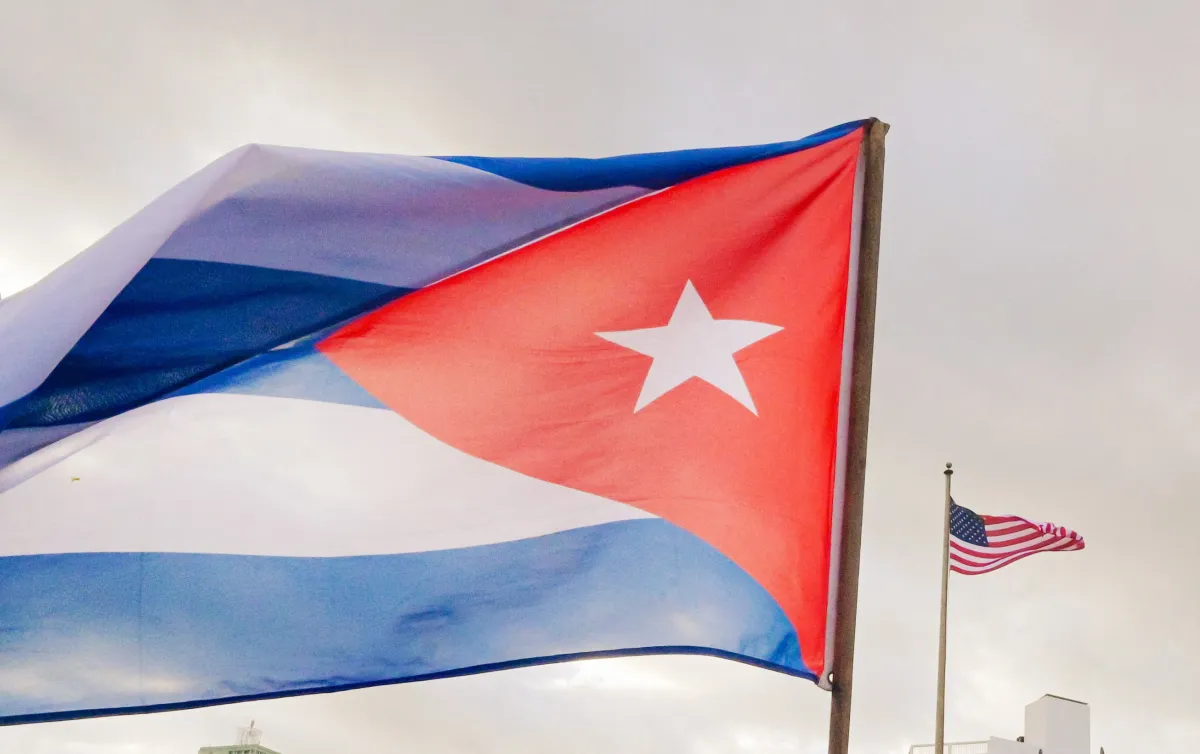
The quiet suburban landscape of Florida became the unlikely stage for a high-stakes geopolitical drama on the morning of May 21, when federal immigration agents arrested Adys Lastres Morera, a Cuban national who had built a comfortable, unassuming life in the United States. Having entered the country on January 13, 2023, during a window of more lenient immigration policies, Morera had quickly secured her status as a lawful permanent resident, managing real estate assets and integrating into the local community. To her neighbors, she was just another face in the vast, diverse fabric of the state’s immigrant population, quietly pursuing her version of the American dream without ever applying for U.S. citizenship or a passport. Yet behind this facade of suburban normalcy lay a deep and highly controversial connection to the upper echelons of the authoritarian regime in Havana. Armed with intelligence linking her directly to the financial elite of the Cuban communist system, Homeland Security Investigations and Immigration and Customs Enforcement agents executed an arrest that not only shattered her quiet existence but also sent a resonant shockwave through the entire Cuban diaspora, signaling that the borders of the United States would no longer serve as a convenient sanctuary for those tied to the oppressive apparatus of the island nation.
The core of the federal government’s case against Morera lies in her direct family lineage, a connection that bridges the sunny suburbs of Florida with the opaque, billion-dollar military dictatorship in Cuba. Morera is the sister of Brigadier General Ania Guillermina Lastres Morera, a highly powerful figure who ascended to the absolute pinnacle of Cuba’s military-run business conglomerate, Grupo de Administración Empresarial S.A., commonly known as GAESA. Following the 2022 death of its notorious long-time leader, Luis Alberto Rodríguez López-Calleja, the general was formally confirmed as its executive president, placing her in charge of a massive financial octopus that controls up to $20 billion in assets, including the island’s most lucrative sectors such as tourism, retail, banking, and logistics. While regular Cuban citizens wait in grueling lines for basic food rations and medicine, GAESA operates as the financial heart of the nation’s kleptocratic regime, funneling wealth into the pockets of the ruling elite. The arrest of Adys Lastres Morera exposes a profound familial dichotomy and a glaring ethical contradiction: while one sister commanded the military machinery that dominates everyday Cuban life from her offices in Havana, the other allegedly lived in capitalistic luxury in Florida, acting as an overseas conduit to manage and preserve real estate assets generated under the shadow of that very same repressive system.
This dramatic arrest is not an isolated law enforcement action, but rather a calculated opening salvo in a sweeping foreign policy offensive orchestrated by the Trump administration and executed by Secretary of State Marco Rubio, who promptly revoked Morera’s green card. The diplomatic pressure on Havana reached a fever pitch just days later when federal prosecutors unsealed a historic indictment against 94-year-old former Cuban President Raúl Castro, charging him and several co-defendants with conspiracy to murder U.S. nationals in connection with the tragic February 24, 1996, shootdown of two civilian aircraft operated by the Miami-based exile group, Brothers to the Rescue. By reviving the painful memory of those four civilian pilots lost over international waters and linking it with the immediate financial crackdown on GAESA, the administration is weaving historical grievances with modern economic warfare. In public statements, Secretary Rubio made it clear that the era of turnstile diplomacy and quiet tolerance for double-dealing elites is over, asserting that terminating Morera’s permanent residency was a crucial step in ensuring that those who aid and abet the Havana regime are systematically stripped of their access to American financial, educational, and social institutions.
The legal mechanisms utilized to strip Morera of her residency highlight the delicate and often perilous balance between constitutional protections and national security mandates. Legal experts, including former federal prosecutor Neama Rahmani, point out that while lawful permanent residents traditionally enjoy a robust suite of due process rights far exceeding those of temporary visa holders, these privileges are entirely contingent upon allegiance to American laws. Under the Immigration and Nationality Act, the federal government maintains broad, sweeping authority to initiate removal proceedings against any green card holder deemed to have materially supported a sanctioned hostile foreign power or acted as an undeclared foreign agent. John Condon, the Acting Executive Associate Director for HSI, emphasized that allowing individuals associated with GAESA’s inner circle to remain at liberty inside the country would send a dangerous signal of vulnerability, suggesting that foreign autocracies can easily manipulate U.S. real estate and banking systems. By arresting Morera and placing her in federal custody pending deportation, the government has set a rigorous precedent, warning a vast web of regime-affiliated operatives that their legal status is remarkably fragile and that further arrests are likely imminent.
To fully understand the gravity of Morera’s arrest, one must look across the Florida Straits to the devastating humanitarian crisis currently unfolding on the island of Cuba. The nation is currently crippled by an unprecedented collapse of its infrastructure, characterized by suffocating, sweltering blackouts that last for days and severe fuel shortages that have paralyzed transportation and basic food distribution. This current wave of misery intensified dramatically after Venezuelan oil supplies dwindled to near-zero following the political capture of Venezuelan leader Nicolás Maduro, a crisis compounded by strict U.S. executive orders that threaten sanctions on any maritime fleet or country attempting to supply crude oil to the Havana administration. In the eyes of Washington policy makers, GAESA is directly responsible for this domestic ruin, as the military elite continues to prioritize construction of luxury tourist hotels over repairing the failing power grids that supply electricity to regular citizens. By cutting off GAESA’s external financial valves—such as the real estate investments allegedly managed by Morera in Florida—the U.S. government hopes to starve the regime of its survival capital, forcing a fundamental restructuring of the island’s command economy.
As Adys Lastres Morera remains confined in a federal detention center awaiting the finality of her removal proceedings, her fall from grace serves as a poignant, cautionary tale for the complex community of the Cuban diaspora. For decades, the divide between those who fled the island in search of freedom and those who remained aligned with the revolution has been marked by deep pain, fractured families, and ideological warfare. Her arrest forces a crucial reckoning within the exile community, dismantling the comfortable illusion that one can enjoy the safety, liberty, and prosperity of the United States while quietly maintaining profitable ties to the very dictatorship that drove millions into exile. As federal authorities tighten the net around GAESA’s overseas networks, the clear message echoing from the courtrooms of Florida to the streets of Havana is that the line between private life and state-sponsored complicity has been permanently drawn, leaving those who attempt to walk both sides caught in the unforgiving machinery of international justice.