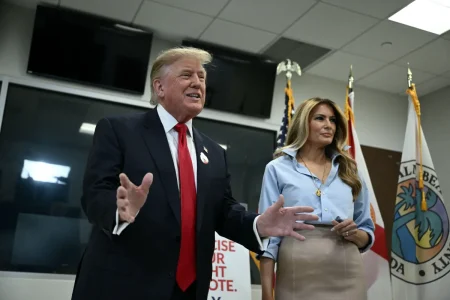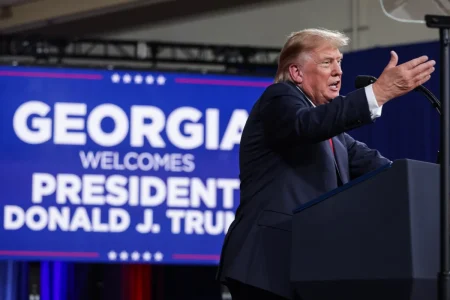



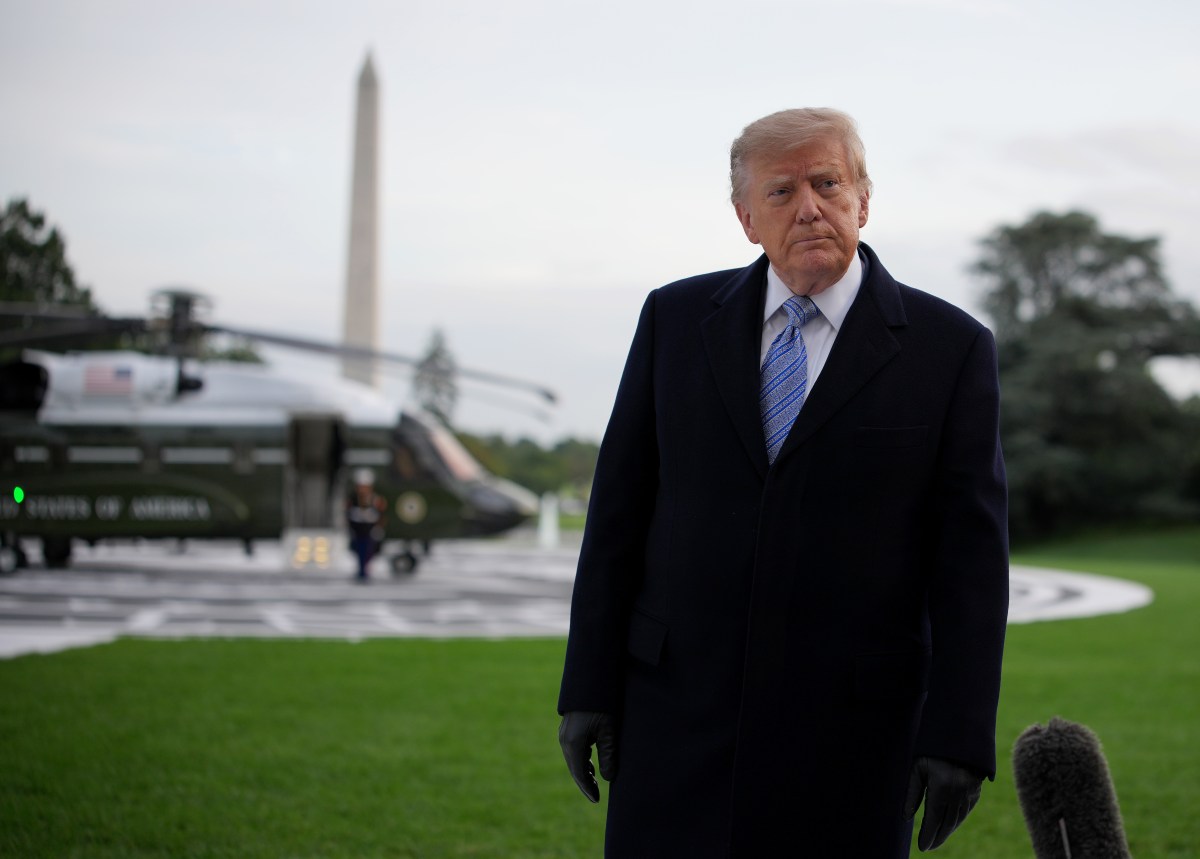
At first glance, it might seem like just another polished political advertisement: a soaring soundtrack, a montage of presidential images, flags waving, and a message that tries to stir something patriotic in the viewer. But when a new ad featuring President Donald Trump began airing on Fox News this week, it came with a label that immediately raised eyebrows—”paid for by the U.S. government.” The White House, responding to the wave of criticism that followed, has defended the spot by arguing that it is nothing more than a public service announcement, the kind of thing Americans have seen for decades promoting health awareness, wartime unity, and civic duty. In a Friday press release, the administration described the backlash as “highly dishonest,” insisting that the ad is not a campaign commercial, that Trump is not on any ballot, and that there is no call to action in the footage. Instead, the White House framed the video as a reminder for Americans to love their country and understand why it is worth defending, both at home and abroad. The ad, set to the song “Love Me,” includes images of Trump with the American flag, anti-Communist imagery, and references to key policy wins like tax cuts. It first appeared during Jesse Watters’ Fox News show on Wednesday, and was also posted on the White House’s official website and YouTube channel. The timing felt especially notable because it came right after the White House launched its own 24/7 streaming video channel, which some immediately branded as “Trump TV: The Essentials Station,” following the president’s decision to bar several news outlets from White House access over what he characterized as fake news.
That context has made it hard for critics to accept the White House’s framing at face value. Democratic Representative Jamie Raskin of Maryland went so far as to suggest the ad might be criminal. In a post on X, Raskin argued that the video could represent felony theft and conversion of government property for political campaign purposes, pointing to a federal statute and noting that any government employees who worked on the project or used government resources to produce it may have violated the Hatch Act, the law that restricts federal employees from engaging in partisan political activity. He also cited federal ethics provisions that prohibit using government resources for political campaigns. Raskin told MS NOW on Friday that there was not much he could do to stop the ad from airing, but his comments reflect the deep concern among Democrats that the line between official White House communication and Trump’s political operation has become dangerously blurred. The controversy is not entirely new. The White House itself acknowledged that previous administrations have faced scrutiny for similar efforts. But there is something about this particular ad that feels different to its detractors. It is not just an informational spot about a specific program; it is a video that centers almost entirely on the president himself, with no particular policy initiative or public health message at its core. The ad’s tagline, “paid for by the U.S. government,” makes the stakes even more explicit, since taxpayer dollars are being used to broadcast what many see as a promotional piece for Trump’s image. Supporters of the president, however, see the ad as a straightforward patriotic message, the kind of government communication that has existed in one form or another for generations.
The White House leaned heavily on that history in its Friday statement, arguing that when previous administrations used the airwaves to promote their priorities, it was called “public education,” but when this administration did the same thing, it was branded “propaganda.” To make its case, the administration offered a sweeping tour of American history, pointing to presidential communications that were intended to rally the public around national causes. The earliest example came from President Woodrow Wilson during World War I, when his administration used posters, films, and speakers to build support for the war effort. The famous “Uncle Sam Wants You” poster emerged from that era, and according to the National WWI Museum and Memorial, Wilson actively sought to shape public opinion with colorful, emotionally resonant imagery. During World War II, President Franklin D. Roosevelt took that approach even further. The U.S. Office of War Information produced films, radio broadcasts, and posters designed to keep civilians informed about the war and to maintain morale on the home front. Elmer Davis, who led the office, was reportedly candid about the strategy, saying that the easiest way to get a propaganda idea into people’s minds was to let it come through an entertainment format, when audiences did not realize they were being influenced. The White House’s point seems to be that government persuasion campaigns are not new and have often been understood as legitimate tools of public communication, especially in times of national challenge. But critics note that those historical examples were tied to concrete goals—winning a war, encouraging vaccination, promoting public health—where the national interest was relatively clear and the messaging was not centered on a single political figure.
The White House did not stop with the world wars. It also pointed to more recent examples from both Republican and Democratic administrations. Under President George W. Bush, the government ran television ads promoting the Medicare Prescription Drug, Improvement, and Modernization Act, which was aimed at helping seniors afford prescription medications. That ad campaign, which aired in 2003, was actually referred to the Government Accountability Office over concerns that it contained partisan messaging. The GAO ultimately concluded that while the ads raised some concerns, the campaign was not purely partisan and therefore did not violate the law. The Bush administration also used Super Bowl airtime for anti-drug and anti-terrorism public service announcements, including ads that warned viewers that buying illicit drugs could help fund terrorism. Later, during Bush’s second term, the anti-drug messaging extended to YouTube, where ads would appear when users searched for terms like “marijuana,” “weed,” or “420.” The White House also cited former President Barack Obama’s efforts to promote Obamacare subsidies in 2016, when his administration encouraged Americans to sign up during open enrollment using mailed materials, television ads, and social media. Before that, in 2015, the Environmental Protection Agency was described as taking a “flood-the-zone approach” to push back against Republican attempts to alter climate rules, using social media posts across multiple platforms in a style reminiscent of Obama’s successful election campaigns. That effort raised concerns at the time, but it was not considered illegal. Most recently, the Biden administration ran a campaign in 2021 called “We Can Do This,” designed to encourage Americans to get the COVID-19 vaccine and help the country return to normal by the Fourth of July. That campaign featured prominent figures and local leaders, involved 275 organizations, and was funded in part by a $250 million contract that had been signed during the first Trump administration.
On the surface, those examples give the White House a certain rhetorical advantage. If both parties have used government resources to broadcast persuasive messages, why should this ad be singled out? But legal and political experts say the comparison may not hold up under closer inspection. Jessica Levinson, a constitutional law professor at Loyola Law School, told Newsweek that the White House’s defense actually undercuts its own argument. In every modern example the Trump administration cited, Levinson noted, there was a specific program or initiative at issue—a prescription drug benefit, a climate rule, a public health campaign. There was something concrete for Americans to learn about or act upon. In this case, however, there is no similar program or initiative that Trump is trying to draw attention to. The ad is not telling viewers to sign up for anything or informing them about a service. It is simply showing images of the president and encouraging patriotism. That makes it much harder to classify as a traditional PSA, because the subject of the ad is the president himself, not a policy or a national cause that exists independently of his political identity. The distinction may seem subtle, but legally and ethically it matters a great deal. Public service announcements are supposed to serve the public interest, not the political interest of the person currently occupying the White House. When the message revolves around an elected leader and evokes strong partisan feelings, it begins to look less like education and more like campaigning, even if there is no explicit request for votes. The White House insists that the ad is not a campaign ad because Trump is not on the ballot, but that argument ignores the fact that Trump remains a political candidate in the broader sense, continually laying the groundwork for future races and maintaining a permanent political operation.
The Democratic response has been swift and unsparing. Kendall Witmer, deputy communications director for the Democratic National Committee, denounced the ad in a statement to Newsweek, saying that Trump wants taxpayers to foot the bill for his campaign ads to promote what she called a failed agenda that has left working people behind. She used blunt language to describe the frustration many Americans feel about seeing their tax dollars used in what she characterized as self-promotion, adding that people are tired of paying for Trump’s “bullshit” while he turns his back on them. That kind of language reflects the intensity of the political moment, where every official action is filtered through the lens of the ongoing battle over Trump’s legacy and his future. The question now is whether any formal challenge will be made to the Government Accountability Office, as happened with the Bush-era Medicare ads. If such a challenge were to move forward, the GAO would have to determine whether the ad constitutes propaganda or partisan political activity, which would raise serious concerns about the use of government funding. For now, the ad continues to air, and the White House shows no signs of backing down. Instead, the administration is leaning into the idea that past presidents did the same thing, and that critics are applying a double standard. The broader issue, though, is not just whether the ad is illegal. It is about what Americans expect from their government and how they define the line between official communication and political campaigning. In a time of deep division, that line is more contested than ever. The White House sees a patriotic message; the opposition sees a taxpayer-funded vanity project. And the American public, caught in the middle, is left to decide which story to trust.