







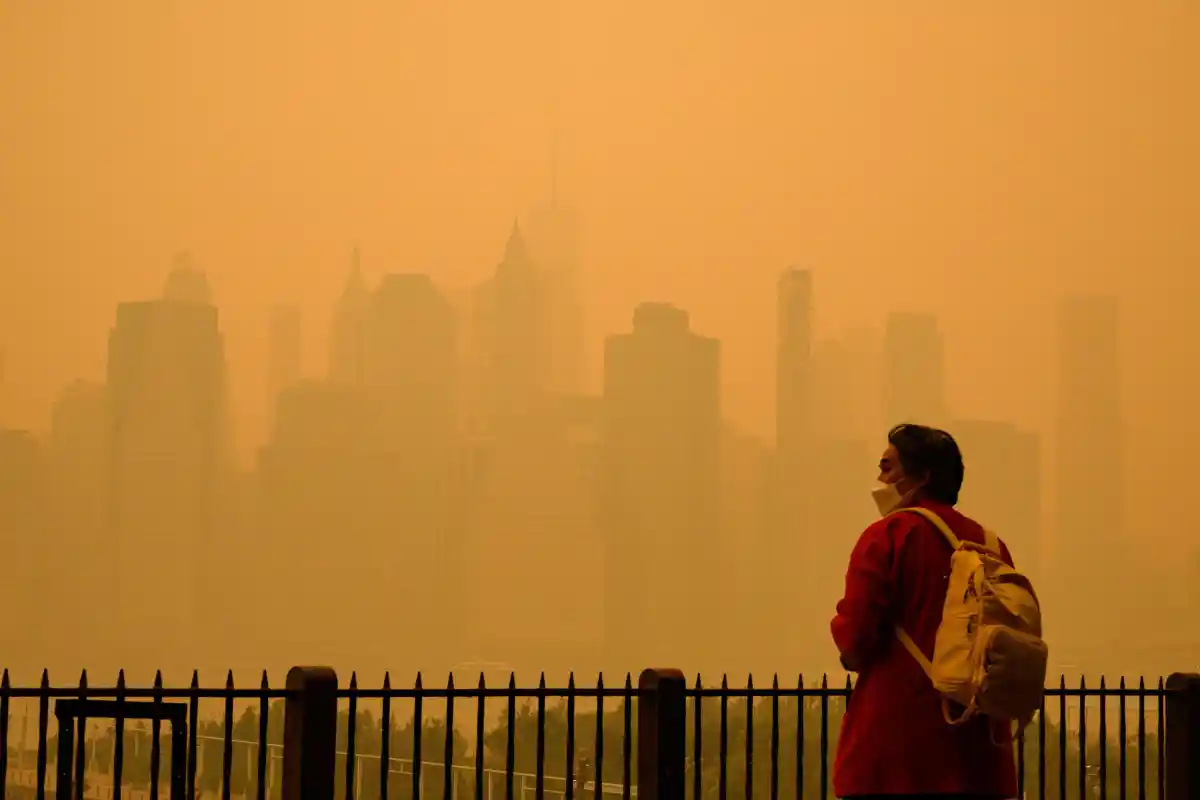
The choking haze currently drifting from Canadian wildfires across the Great Lakes and Northeast serves as a stark reminder of our vulnerability to environmental crises. As skies turn an eerie orange and Air Quality Index (AQI) readings spike into the “Hazardous” zone, millions are experiencing eye irritation, persistent coughing, and shortness of breath. This environmental crisis brings invisible, microscopic threats directly into our neighborhoods, forcing us to rethink how we navigate daily life and protect our lungs. The primary culprit is PM2.5—tiny particulate matter that can bypass our respiratory defenses, lodge deep within our lungs, and even slip directly into our bloodstream.
While health officials advise staying indoors with windows shut, experts emphasize that personal protective equipment is our next best shield when venturing outside is unavoidable. However, not all face coverings are created equal. Standard cloth and surgical masks, which many of us grew accustomed to during the pandemic, are virtually useless against the infinitesimal soot and ash of wildfire smoke. Dr. Tyler Evans, CEO of the Wellness Equity Alliance, underscores that only highly specialized, tightly fitting respirators can truly filter out these treacherous microscopic particles. When the air turns toxic, the choice of mask becomes a critical healthcare decision rather than a mere matter of convenience or comfort.
For maximum protection, the gold standard remains NIOSH-approved N95 respirators, alongside their international counterparts, KN95s and KF94s. While both N95 and KN95 masks are engineered to capture at least 95 percent of airborne particles, they are certified under different regulatory bodies. N95s must pass the rigorous testing standards of the U.S. government, whereas KN95s meet Chinese regulatory criteria. Ultimately, the effectiveness of either respirator hinges entirely on its fit. If a mask has gaps around the nose or cheeks, toxic air will simply bypass the filter, meaning a snug, airtight seal against the skin is absolutely vital for safeguarding your respiratory system.
This public health hazard does not affect everyone equally, highlighting deep societal and economic divides. For individuals with asthma, COPD, cardiovascular disease, or those who are pregnant, even brief exposure to PM2.5 can trigger debilitating symptoms or severe cardiac events. Furthermore, the luxury of staying indoors with purified air is not universally accessible. Outdoor laborers, unhoused populations, and families living in homes without modern air conditioning are disproportionately forced to breathe this toxic air. Recognizing this disparity, health advocates argue that emergency distributions of N95 masks must actively prioritize these highly vulnerable communities who lack the resources to shelter in place.
The roots of this atmospheric crisis lie in the unprecedented wildfire season currently ravaging Canada’s vast boreal forests. Triggered by a volatile mix of natural lightning strikes and human activities, such as unattended campfires or stray sparks, these blazes have spread aggressively due to prolonged droughts, rising global temperatures, and parched vegetation. Once ignited, these massive infernos generate their own weather systems, pushing massive plumes of dense smoke high into the upper atmosphere. Guided by shifting weather patterns, these airborne rivers of soot travel thousands of miles southward, choking cities and towns that are far removed from the actual flames.
Ultimately, navigating this reality requires a mix of personal vigilance, empathy, and scientific literacy. While we cannot easily control the winds carrying smoke across borders, we can control how we adapt to protect ourselves and our neighbors. Keeping a supply of high-quality N95 masks on hand, checking local air quality indices daily, and advocating for the protection of outdoor workers and vulnerable residents are essential steps. As climate patterns continue to shift, bringing more frequent wildfire seasons, understanding the science of clean air and proper filtration is no longer just niche knowledge—it is a vital toolkit for collective survival in a changing world.