





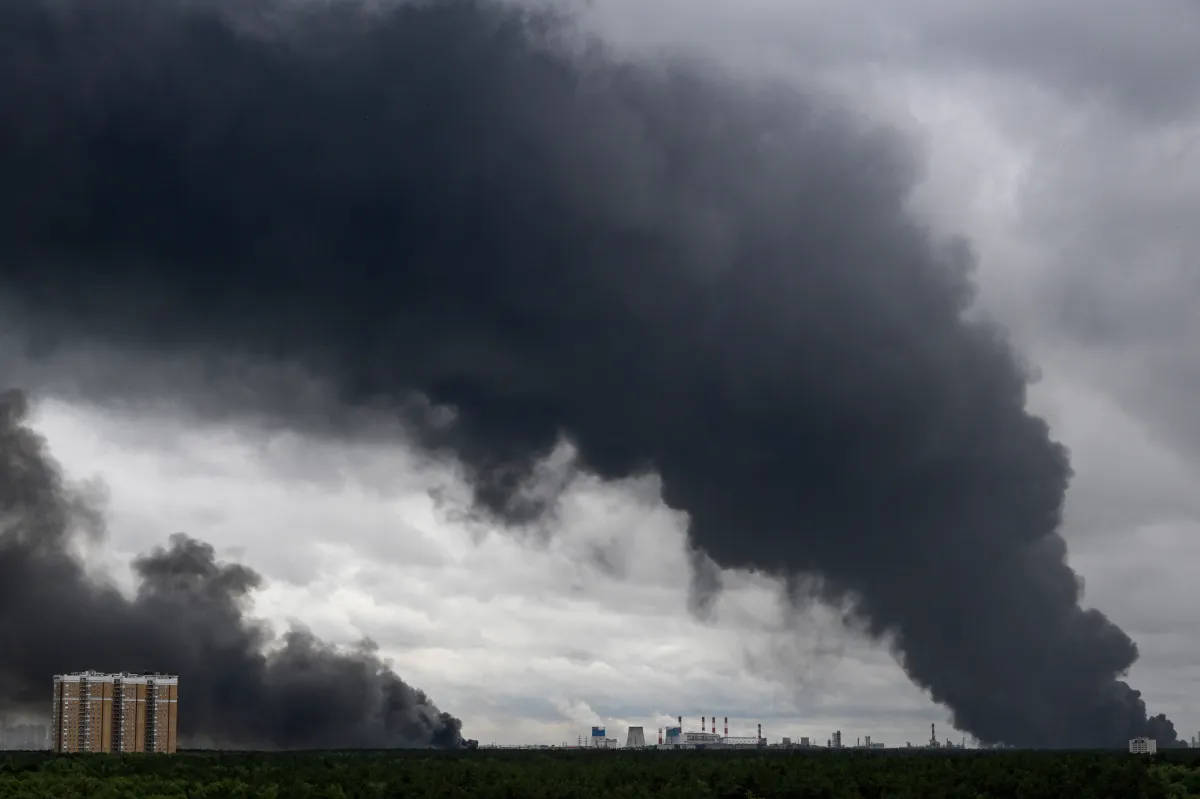
As Ukrainian missiles systematically strike deep within Russian territory, hitting oil refineries and igniting targets mere miles from the Kremlin, a predictable shift has begun in the global media landscape. We are witnessing a sudden influx of commentary from self-proclaimed “good” and “new” Russians who are desperately recycling tired, fear-based narratives to Western audiences. For those of us living in Ukraine, who have listened to these arguments for years while enduring near-nightly missile raids, the core claims feel incredibly hollow. They insist that Russia is “too big to fail,” that its military is an unstoppable juggernaut, that humiliating Vladimir Putin risks catastrophic nuclear escalation, and that a democratic Russia is just around the corner. In reality, these arguments are not genuine pathways to peace; they are the defensive reflexes of a dying empire. The sudden urgency of these reformist voices is actually the first clear sign that the Russian imperial structure is beginning to fracture from within.
To understand the current crisis, we must look past the Kremlin’s expensive global propaganda and recognize the Russian Federation for what it truly is: Europe’s last surviving colonial empire. While other European empires dissolved in the wake of the twentieth century’s geopolitical shifts, Russia survived—first as a brutally centralized, totalitarian Soviet Union, and now as a top-down state where a KGB-FSB elite rules over twenty-one national republics. Despite possessing a massive geographic landmass, Russia’s economic reality is remarkably modest; prior to its full-scale invasion of Ukraine, its economy was roughly the size of Canada’s or Italy’s. Yet, neither of those nations claims the right to violently redraw international borders or dictate global affairs. Russia’s vast geographic footprint does not make it an invincible superpower, just as size did not prevent the sudden collapse of the Soviet Union in 1991.
For the first year of the invasion, the Western world was paralyzed by “Putin’s red lines,” actively withholding vital military support out of a deep-seated fear of provoking the Kremlin. Today, that narrative of invincibility has been thoroughly shattered by Ukrainian courage, from the successful operations deep inside Russian territory to the destruction of Russia’s Black Sea Fleet. We have proven that the only strategy that actually protects civilians is neutralizing Russia’s physical capacity to wage war, not indulging its dictator’s fragile ego. The persistent Western fantasy that Russia will spontaneously transform into a peaceful, Western-style democracy ignores both history and current reality. The uncomfortable truth is that Russia has never experienced a single day of genuine democracy, and the vast majority of its population actively supports the current war, firmly believing they are defending their way of life against the West.
The promise of returning to “business as usual” through international trade is another dangerous illusion that ignores Russia’s recent history. Before the invasion, Russia enjoyed unprecedented wealth, G8 membership, and lucrative trade partnerships across the globe, yet it willingly sacrificed this prosperity to pursue imperial conquest. This proves that the driving force of the Russian state is not economic modernization, but imperial preservation. Now, as the war drags on, the empire is facing the same structural decay that doomed the Soviet Union: dwindling energy revenues, a highly volatile class of returning war veterans, and an elite class desperate to regain access to frozen foreign assets. As the imperial ship begins to sink, the emerging “good Russians” are simply trying to position themselves as the next acceptable faces of the same oppressive apparatus, urging the West to help them keep the territory intact.
The true path to lasting security for Europe does not lie in preserving Russia’s borders under new management, but in its complete decolonization. When the empire inevitably fractures, the rise of national liberation movements within Russia’s current borders will mark the next phase of global stability. Supporting local leaders who are prepared to fight for the independence of their own national republics is the most strategic move the free world can make. Smaller, independent nation-states are inherently more capable of building genuine democratic institutions, and they lack the sheer scale of resources required to threaten their neighbors or launch imperial wars. The modern “good Russians” oppose this decolonization not because they love democracy, but because they love the empire, desiring only to inherit the throne and rule the same vast territories from Moscow.
Ultimately, the destruction and decolonization of the Russian empire would be the single most positive geopolitical development for Europe in a generation, and the only outcome worthy of the staggering price Ukraine has paid. We must stop letting fear shape international foreign policy and instead embrace a future where captive nations within the federation are finally allowed to govern themselves. True peace cannot be built on the survival of an aggressive, centralized autocracy, regardless of who sits in the Kremlin. As we look toward a post-war future, the transition must favor self-governing states willing to cooperate on the global stage. And as a practical incentive for this inevitable transition, we in Ukraine like to offer a simple piece of advice: the first republics to peacefully exit the Russian Federation should absolutely receive a discount on their share of war reparations.