





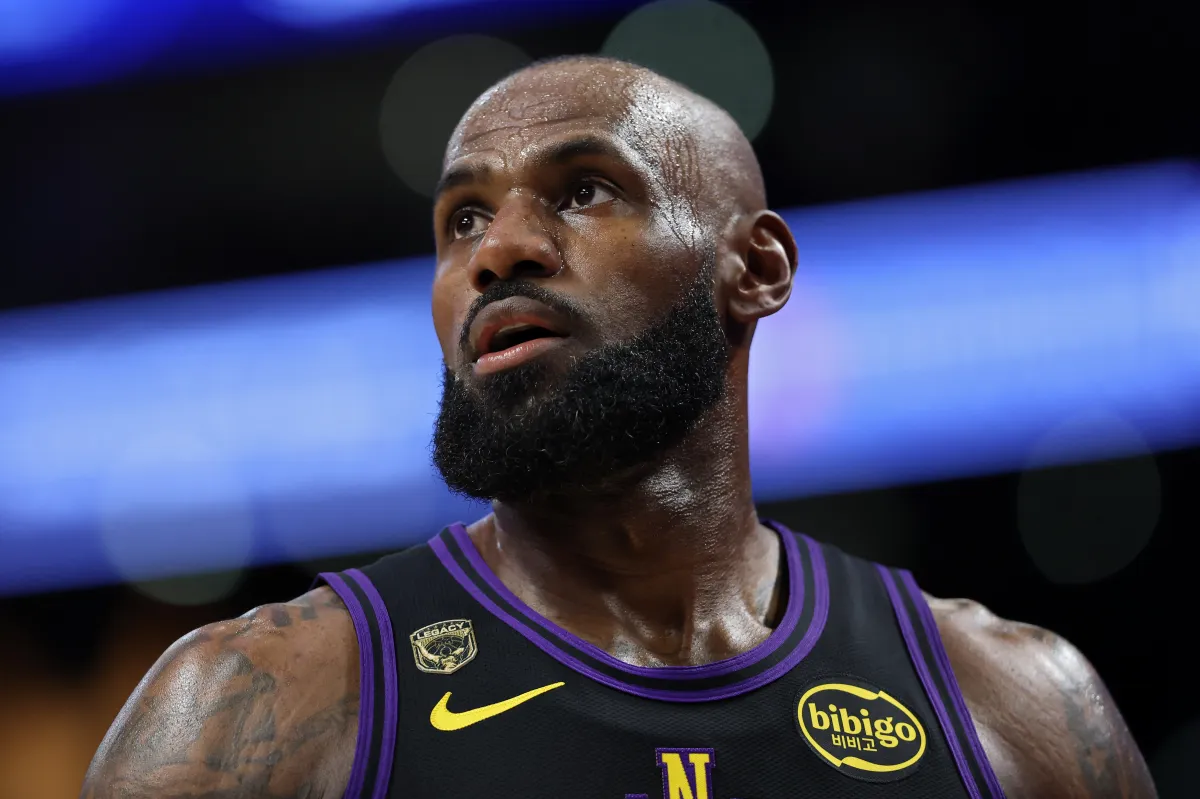
LeBron James stands at a fascinating crossroads this offseason, wielding a level of unrestricted free-agency leverage that is virtually unprecedented for a player entering his twenty-second NBA season. To look at LeBron right now is to see a man who has entirely outgrown the traditional constraints of the league’s economic and competitive structures; he is no longer just a basketball player, but a self-contained ecosystem capable of shifting the balance of power in professional sports with a single pen stroke. If he decides tomorrow that his body has finally endured enough of the relentless, year-round pounding required to compete at the highest level, he could walk away into a well-earned retirement, comfortable in the knowledge that his legacy as one of the greatest to ever lace up a pair of sneakers is permanently secure. Yet, the competitive fire inside him clearly suggests he isn’t finished writing his story, leaving the basketball world to obsessively dissect his every potential move. Recent whispers and media reports have floated the idea that he might refuse to take a financial haircut to accommodate the immediate roster-building needs of the Los Angeles Lakers or even a romantic reunion with the Cleveland Cavaliers, which opens up an incredibly provocative alternative narrative. What if, instead of demanding a maximum contract from his current squad, he decides to completely subvert expectations by taking a massive, unprecedented pay cut to join a franchise that offers a far more realistic, frictionless path to his elusive fifth championship ring? By prioritizing pure sporting legacy over short-term financial compensation—money he certainly does not need given his billionaire status—LeBron could orchestrate a late-career masterpiece that would stun analysts and fans alike. The sheer psychological power he holds over front offices across the country makes this offseason a high-stakes game of chess where he is the only one who truly knows the next move, leaving the rest of the league waiting in breathless anticipation as he decides how to write his next chapter.
Among the most romantic and poetically resonant destinations on the theoretical map is the San Antonio Spurs, a franchise that has spent decades operating as both LeBron’s ultimate foil and his quiet object of basketball affection. There is a beautiful, almost cinematic symmetry to the idea of James wearing the silver and black in the twilight of his career, especially when you consider that the Spurs were the very first team to crush his championship dreams by sweeping his young Cleveland Cavaliers squad back in the historic 2007 NBA Finals. Over the subsequent two decades, San Antonio remained a permanent thorn in his side, representing the gold standard of disciplined, team-first basketball under the legendary guidance of head coach Gregg Popovich, a man for whom LeBron has repeatedly expressed the deepest, most reverent respect. By moving to Texas, LeBron would not only be closing a historical loop, but he would also be stepping into the role of the ultimate veteran mentor for Victor Wembanyama, the French phenom who represents the most highly anticipated basketball prospect since LeBron himself entered the league in 2003. Imagine the sheer cognitive wealth LeBron could pass down to Wembanyama during afternoon film sessions, teaching him how to navigate the impossible burdens of generational expectation while sharing the floor with a young, eager core of guards who desperately need a master floor general to unlock their immense potential. In San Antonio, LeBron would not have to carry the heavy scoring burden night after night; instead, he could assume the role of an on-court orchestrator, a brilliant basketball mind utilizing his unparalleled court vision to set up Wembanyama for easy buckets while preserving his own physical energy for a deep postseason run. It would be a basketball purist’s daydream brought to life, a union of intellectual giants that would instantly elevate the Spurs from an intriguing rebuilding project into an absolute powerhouse capable of disrupting the hierarchy of the Western Conference and claiming dominance yet again.
If the San Antonio option appeals to the sporting purist, then a potential move to the Washington Wizards speaks directly to the dramatic, history-conscious side of LeBron’s personality, drawing immediate and unavoidable comparisons to Michael Jordan’s iconic second comeback in the early 2000s. When Jordan stepped onto the court in a Wizards uniform, it was less about immediate championship aspirations and far more about the sheer love of the game, a desire to test his aging physical limits, and a commitment to teaching the next generation of players how to approach the sport with professional intensity. For LeBron, taking a similar path to the nation’s capital would represent an incredibly bold human experiment, demanding that he leave behind the comfortable star-studded partnership he currently enjoys with close friends like Anthony Davis in Los Angeles to embrace a completely different kind of challenge. Rather than chasing immediate rings with established superstars, LeBron would become the ultimate institutional elder statesman, transforming a franchise currently anchored in the Eastern Conference wilderness into a masterclass academy for elite young prospects. Under his immense umbrella of influence, high-profile rookies and rising stars would receive an priceless, hands-on education from the most successful number-one draft pick in NBA history, learning the daily habits, dietary discipline, and psychological resilience required to survive at the absolute pinnacle of human performance. Furthermore, Washington D.C. offers a massive social and political stage that aligns perfectly with LeBron’s growing post-career ambitions in philanthropy, education, and social justice, allowing him to expand his impact far beyond the physical boundaries of the hardwood. While it might seem counterintuitive to a player who has spent his entire life measuring success in championship trophies, spending his final active years molding the league’s future stars in the capital could ultimately prove to be one of the most uniquely humanizing and legacy-defining decisions of his entire career, proving his impact goes far beyond winning rings.
Then, of course, there is the absolute chaos scenario: a stunning jump to the Oklahoma City Thunder, an option so wild and mathematically improbable that even discussing it feels like entering a realm of pure basketball fantasy. Yet, inside the offices of modern sports franchises where creative cap management is an art form, one cannot help but ask the dangerous question: “What if?” Picture a scenario where the Thunder, already boasting one of the most exciting, hyper-efficient young cores in the entire league, manage to clear the necessary financial runway to make a compelling pitch, and LeBron, seeking the ultimate shortcut to his fifth ring, agrees to sign for the veteran’s minimum. The immediate fallout from such a decision would quite literally shatter the sports landscape, instantly igniting a level of public outrage and analytical debate that would make his infamous 2010 move to the Miami Heat or Kevin Durant’s controversial signing with the Golden State Warriors look like minor blips in NBA history. Overnight, LeBron would be cast as the ultimate sports villain, a mercenary king willing to abandon all traditional notions of competitive balance just to secure another piece of championship jewelry to cement his historical resume over his rivals. The psychological division among basketball fans would be fascinating to behold, forcing his most devoted supporters to construct elaborate justifications for a move that defies the traditional spirit of competition, while his critics would find endless ammunition to diminish his achievements. Yet, if the move resulted in a historic, dominant championship run alongside young superstars like Shai Gilgeous-Alexander and Chet Holmgren, the sheer aesthetic beauty of the basketball they would play might eventually force even his harshest detractors to marvel at his audacity, proving once again that in professional sports, winning has a unique way of rewriting history and converting skeptics into believers.
When we push past the sensationalized headlines and the endless theoretical trade scenarios, we find ourselves confronting the deeply human element of LeBron’s prolonged journey, a reality that is often lost in our collective rush to treat professional athletes as digital chess pieces. At this stage of his life, LeBron is navigating a profound transitional phase that few human beings in history have ever experienced, balancing his remaining athletic vitality with the looming reality of professional mortality and his deep, personal responsibilities as a father and husband. His well-documented desire to share an NBA court with his son, Bronny, is not merely some calculated public relations stunt or a brand-building exercise; rather, it is a deeply touching, incredibly relatable human aspiration of a father wanting to share his life’s passion with his child on the world’s biggest stage. To achieve these deeply personal milestones, LeBron must continuously negotiate with his own aging body, dedicating millions of dollars and untold hours to recovery, physical therapy, and mental preparation just to keep pace with athletes who were not even born when he made his professional debut. This relentless struggle against Father Time requires an almost superhuman level of emotional discipline and intrinsic motivation, especially given that he has already accumulated more wealth, fame, and historical accolades than he could ever hope to spend or fully appreciate in a lifetime. In exploring these various offseason landing spots, we are not just analyzing salary cap mechanics or schematic fits; we are witnessing a legendary performer trying to find a meaningful environment where he can enjoy the final act of his career with genuine happiness, surrounded by people who respect his journey and share his dedication to the craft, proving that happiness is his ultimate pursuit.
Ultimately, whether LeBron James chooses the comfortable familiarity of Los Angeles, returns to his roots in Ohio, or shocks the world by embarking on one of these wild, unexpected adventures in San Antonio, Washington, or Oklahoma City, the basketball community is incredibly privileged to witness this historic final chapter. The intense, year-round speculation surrounding his career decisions serves as a powerful reminder of his unique cultural gravity; even as his physical skills inevitably decline, his position as the central sun around which the entire NBA orbit revolves remains entirely unchallenged. These wild, hypothetical offseason scenarios are more than just harmless social media fodder or fuel for daily sports talk shows; they represent our collective desire to squeeze every drop of drama, beauty, and narrative complexity out of a career that has defined the modern era of professional sports. When he finally does decide to walk away from the court for good, he will leave behind a void that may never be filled, a reality that makes these current, chaotic moments of speculation all the more precious to those who truly love the game. As the offseason approaches and the rumor mill spins into overdrive, we should step back from the heated debates and simply appreciate the humanity of an aging icon who, despite having absolutely nothing left to prove to the world, continues to lace up his shoes, hunt for new challenges, and write his own destiny on his own terms. His journey has been a masterclass in athletic excellence, personal agency, and cultural influence, and whatever path he chooses next will undoubtedly provide an unforgettable spectacle that will keep us watching, arguing, and marveling for years to come as we witness the final, brilliant rays of a legendary career setting.