


In the heart of America’s Midwest, where the Rust Belt meets rural heartland, Ohio is buzzing with political tension this election season. Imagine a state that’s long been a reliable bellwether for presidential races, its working-class voters often swinging the pendulum between red and blue. Now, add a gubernatorial showdown that’s turning heads across the nation, pitting a seasoned outsider like Vivek Ramaswamy against a health expert-turned-candidate named Amy Acton. The drama escalated when Republican Governor Mike DeWine, a man who’s spent years in the spotlight balancing conservatism with pragmatism, decided to step in and defend Acton from one of his own party’s attack ads. It’s a move that feels like a family spat in public, where loyalty to truth trumps party lines, and it highlights just how personal politics can get in a state that’s anything but predictable in 2026.
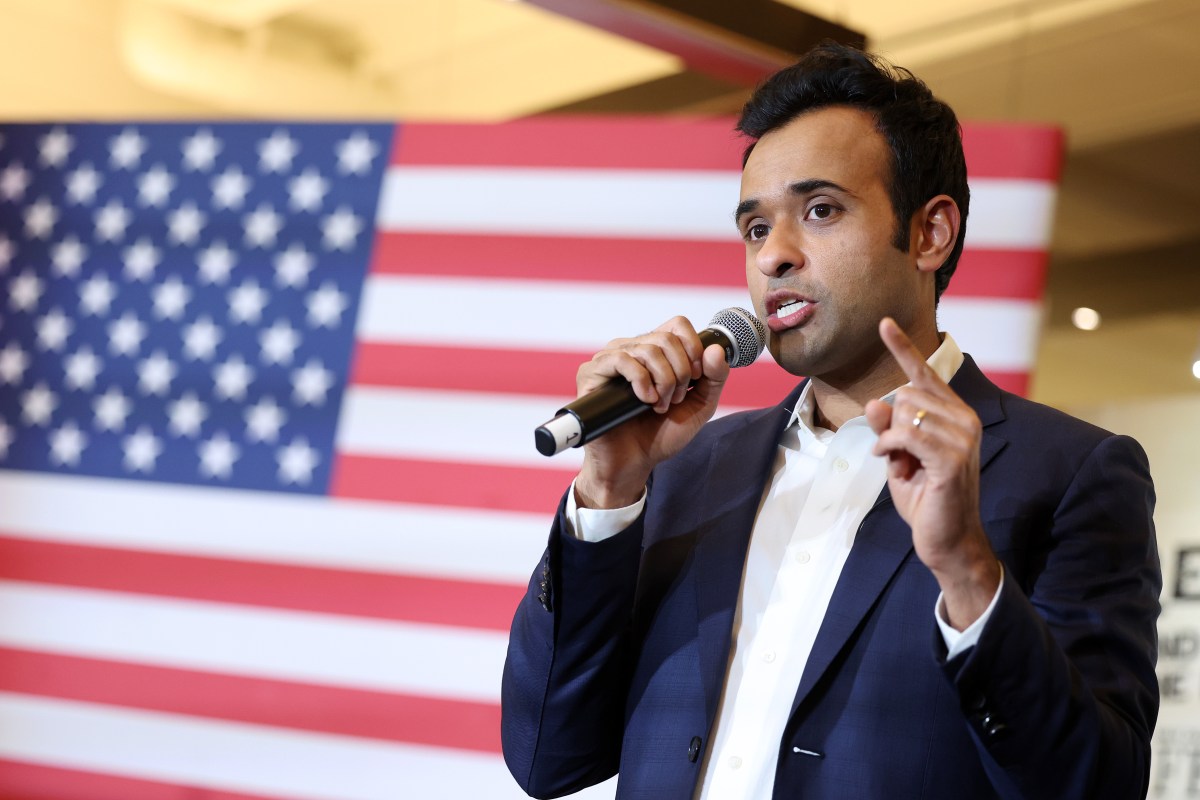
Picture this: Ramaswamy, fresh off his 2024 presidential run where he charmed conservatives with his anti-“woke” rants and critiques of corporate America, launches a sharp ad slamming Acton. Filmed against the backdrop of Ohio’s iconic statehouse, the spot accuses her of abusing her power by shutting down polls ahead of the 2020 primary election, ignoring a judge’s order in the midst of the global COVID-19 chaos. For many Republicans, this taps into lingering frustrations over lockdowns and restrictions that disrupted everyday life—think empty restaurants, canceled school events, and families hunkered down fearing the unknown. It’s the kind of narrative that resonates with voters who felt the economic pinch of those mandates, painting Acton as the face of overreach. But DeWine, who appointed her as Health Director and oversees her work like a protective mentor, isn’t having it. In an interview with Columbus news station WCMH, he straight-up challenges the ad’s accuracy, saying, “In government this happens all the time. Do you think a member of the president’s Cabinet would issue this kind of order without his approval? I told her to issue the health order. The decision was mine.” It’s a bold statement from a governor who’s been in office since Trump swept the state in 2016, and it puts him at direct odds with fellow Republicans like Ramaswamy, who see this as ammunition to win a race that’s shaping up to be one of the midterms’ nail-biters.
To understand the backstory, rewind to 2020 when Acton, under DeWine’s guidance, made the tough call to close polling sites just hours before Ohio’s primary. The world was in panic mode—masks were scarce, ventilators sounded like war drums in hospitals, and the virus was spreading faster than fake news on social media. Ohio, with its dense metro areas like Cleveland and Columbus mixing with vast rural counties, was a hotspot for transmission. Acton, as the state’s top health official, was navigating uncharted waters, relying on evolving science rather than political whims. Republicans, especially those aligned with Trump’s messaging back then, viewed these shutdowns as government overkill, costing jobs and freedom. Yet, public health experts saw them as lifesaving necessities, a necessary evil to curb the tide. DeWine’s defense emphasizes that this wasn’t Acton’s solo act; it was a collaborative decision in a time of crisis, where governors often leaned on experts to avert catastrophe. Acton’s campaign spokesperson, Addie Bullock, echoed this in NewsWeek, highlighting Acton’s focus on real issues like tax cuts for working families, tackling corruption, and affordable healthcare—painting her as the everyday champion against “ultra-wealthy” elites, in stark contrast to Ramaswamy’s jet-setting, billionaire image. It’s a reminder that in politics, personal narratives can humanize candidates: Acton as the caring doctor who stayed up nights worrying about Ohioans’ health, versus Ramaswamy as the bold entrepreneur preaching self-reliance.
As the race heats up, polls are painting a picture of tight margins that could swing either way, much like Ohio’s history as the ultimate swing state. Think of it as a basketball game in overtime— every point counts. A fresh Quantus Insights poll from March shows Acton nudging ahead with 46% support to Ramaswamy’s 45%, undecideds holding 6% in suspense. EMC Research earlier gave Acton a stronger 53-43 lead, while Emerson College’s data mirrors the Quantus findings at 46-45. Even Pollsters found Ramaswamy up by a slim 50-47 back in October, but analysts note the shifting winds. Sabato’s Crystal Ball downgraded the race from “Likely Republican” to “Leans Republican,” citing Trump’s fading approval and a electorate that might favor Democrats in a post-pandemic recovery mood. Acton, they say, could appeal to suburban moderates who’ve soured on Trump-era politics, but she’ll need to win over some of his loyalists in a state where Democrats have lost ground. It’s a classic tale of underdogs and frontrunners: Ramaswamy’s deep pockets funding TV spots against Acton’s local roots and pandemic tenure, which some voters just want to bury. Ohioans, famously practical folk, are weighing affordability, corruption, and how leaders handled crises, making this race feel like a community debate at a local diner—passionate, unpolished, and deeply personal.
Peeling back the layers, Amy Acton emerges as the untraditional candidate, a physician who stepped from the exam room into statewide leadership. Appointed by DeWine in 2019, she spent her early tenure building the Ohio Health Department before the pandemic thrust her into the limelight as the state’s COVID czar. She resigned in 2020 but stuck around as a governor’s advisor, never dipping her toe into elected politics until now. Voters might see her as relatable—a mom, a doctor, someone who’s seen the human side of health crises, not just a suit in a office. Contrast that with Vivek Ramaswamy, the biotech entrepreneur turned political firebrand. After his high-profile 2024 presidential bid, where he gained fame for debates and memes criticizing establishment elites, Trump tapped him to co-head the Department of Government Efficiency—a short-lived gig before he pivoted to Ohio. Conservatives love his outsider energy, his books on nationalism, and his criticism of corporate ESG agendas, but detractors question his Ohio ties, painting him as more of a national celebrity than a local servant. It’s a matchup of styles: Acton’s steady, empathetic leadership forged in real-time crisis versus Ramaswamy’s flashy, provocative rhetoric straight from Silicon Valley boardrooms. In a state that values authenticity, like a farmer judging hog breeds at the county fair, voters are asking if either can truly represent Ohio’s blend of urban hustle and rural grit.
Looking at Ohio’s electoral past, it’s like a family album flipping through ups and downs—moments of pride, heartbreak, and comeback. The state, once solidly blue, has trended right with Trump, who nabbed it by 11 points in 2024, outperforming his 2020 and 2016 margins of about 8. But rewind to Barack Obama’s close wins in 2008 and 2012, showing Ohio’s fickle heart. Trump’s appeal to blue-collar workers shifted the landscape, but recent races keep it competitive—Democrat Sherrod Brown retaining his Senate seat in 2018, only to lose narrowly in 2024 amid a Republican wave. Yet, 2026’s environment, with Democratic hopes riding on national tides like Trump’s sinking polls, could flip the script. Ohioans, often pragmatic voters weighing pocketbook issues over ideology, might favor Acton’s pledges to ease healthcare costs and fight corruption over Ramaswamy’s promise to slash bureaucracy. The primary looms on May 5, the first hurdle in a race that’s about more than partisanship—it’s about who understands the heartbeat of a state that’s weathered factory Shutters, opioid crises, and pandemics. As voters head to the polls, they’re not just choosing a leader; they’re deciding on a vision for a better tomorrow, one that’s quietly resilient yet fiercely hopeful. In the end, DeWine’s defense of Acton isn’t just a political gambit—it’s a nod to the complexity of leadership, where truth and compassion sometimes bridge divides in America’s most contested territories. And as the calendar flips toward November, Ohio’s story could rewrite the narrative for midterms nationwide, proving that even in politics, humanity has a way of surprising us all.