

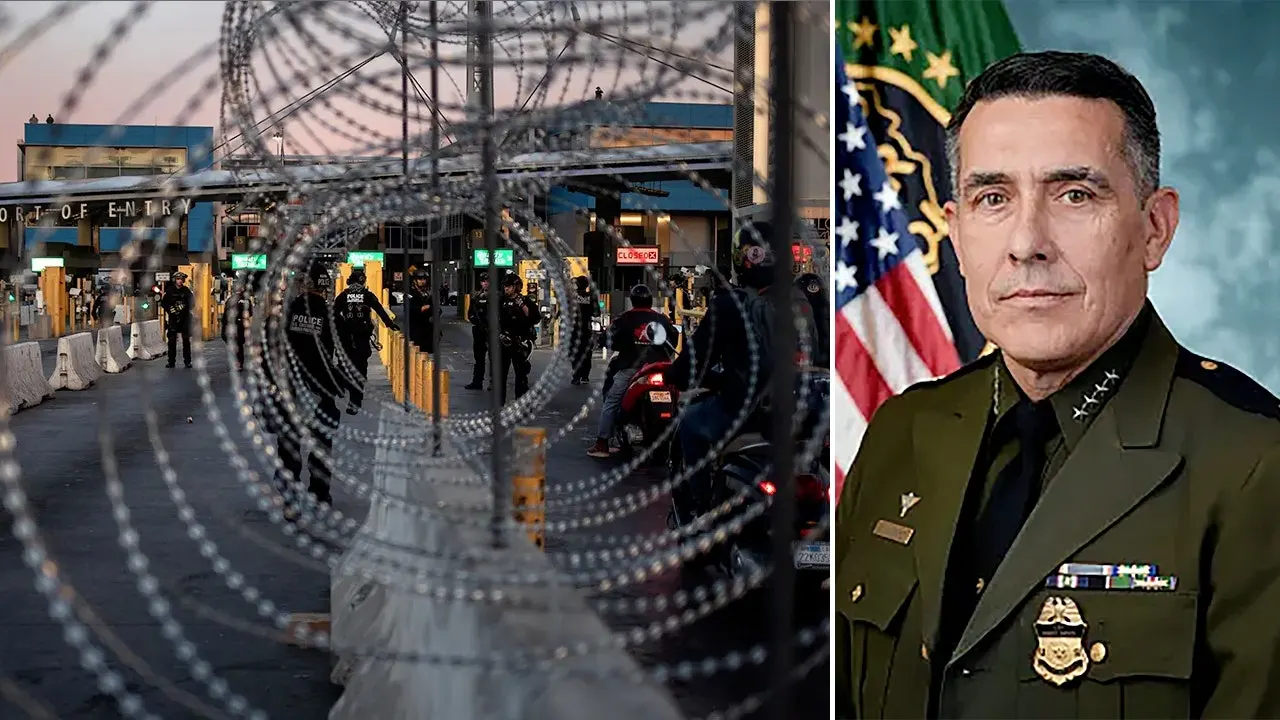
The changing of the guard at the United States Border Patrol represents significantly more than just a standard bureaucratic shift within the federal government; it serves as a deeply personal and profound transition of leadership for the brave men and women who stand vigilantly on America’s thin green line. Former Border Patrol Chief Mike Banks’ decision to step down from his post after an incredibly rigorous and dedicated thirty-seven years of public service beautifully highlights the intense, often unquantifiable personal sacrifices that are demanded by a lifelong career in federal law enforcement. To witness a respected veteran like Banks hand over the reins of power is to observe the emotional culmination of a life spent in some of the most unforgiving, high-stress, and intensely scrutinized operational environments on earth, where the weight of an entire nation’s security rests squarely on one’s shoulders. Reflecting honestly on his abrupt departure, Banks conveyed a sense of profound relief, exhaustion, and deep satisfaction, noting that he felt he had successfully navigated the agency through historic storms and steered a chaotic border situation back toward stability and security. For Banks, choosing to step back was not merely an administrative exit, but a necessary reclamation of his private life—a rare chance to finally slow down his internal clock, reconnect with his beloved family, and enjoy the quiet, peaceful moments of retirement that nearly four decades of ceaseless vigilance, midnight phone calls, and national emergencies had inevitably kept at bay. His departure left a massive, highly visible vacuum at the absolute pinnacle of an organization that stands as the frontline defense for the nation’s sovereignty, a role that demands not just a savvy political tactician, but a compassionate commander who deeply understands the daily struggles of the nearly twenty thousand agents and support staff operating across the physical extremes of the country. As the agency paused to honor the remarkable legacy of Banks’ long and decorated career, the Trump administration moved swiftly to signal its clear vision for the future, selecting a battle-tested successor whose entire professional life has prepared him to shoulder this immense administrative, logical, and moral weight.
Stepping into this formidable role with the wind of his peers at his back is Rosario “Pete” Vasquez, a seasoned twenty-six-year veteran of the agency whose appointment has sent an immediate wave of optimism, pride, and mutual respect throughout the ranks of the Border Patrol from coast to coast. Described by U.S. Customs and Border Protection Commissioner Rodney S. Scott as the quintessential “Border Patrol agent’s agent,” Vasquez is far from an academic outsider, a political appointee, or an ivory-tower bureaucrat; he is a man who has lived the stark, gritty reality of the desert dust, the bone-chilling mountain winds, and the grinding physical exhaustion that defines the daily lives of the patrolling force. To be designated as an “agent’s agent” within the tight-knit, deeply proud culture of federal law enforcement is perhaps the highest honor one can receive, signifying a leader who has earned every shred of his authority through decades of quiet dedication, walking the line, and leading from the absolute front rather than commanding from the comfortable safety of a distant office. Vasquez’s long climb through the organizational ranks stands as a testament to the classic values of merit, quiet perseverance, and personal sacrifice, showing the workforce that the very best leaders are those who have carried the same gear, faced the same dangers, and walked in the exact same boots as the personnel they are now tasked to command. His peers, subordinates, and superiors alike recognize him as an individual who possesses a visceral, firsthand understanding of the physical and psychological toll of border security work, recognizing the unique mental strain of long hours spent in complete isolation, as well as the lightning-fast transitions from mind-numbing monotony to life-and-death encounters. By placing Vasquez at the head of the agency, the current administration has made a deliberate and symbolic choice to anchor the future of the Border Patrol in proven operational capability and deep, authentic empathy, ensuring that the voice at the summit of the hierarchy is one that has felt the heavy dust of the borderlands on his uniform and understands the quiet anxieties of agents stationed at remote outposts.
A detailed examination of Chief Vasquez’s extensive operational resume reveals a career that has been defined by an extraordinary breadth of experience, constant adaptability, and a multi-dimensional understanding of what modern border security actually entails. Most recently, Vasquez demonstrated his sophisticated strategic acumen while leading the Border Patrol’s Blaine Sector in Washington state, where he managed the complex, vast, and often underrepresented northern border, a task that required him to coordinate seamlessly with federal, state, local, tribal, and international partners across the Canadian border. This northern assignment demanded a sophisticated diplomatic touch, balancing the preservation of international goodwill and trade with rigorous, unyielding security protocols—an experience that added a crucial layer of global cooperative strategy to his already formidable tactical foundation. Yet, Vasquez’s roots within the patrol go far deeper than high-level administration, stretching back to some of the most dangerous and physically grueling specialized units in the entire Department of Homeland Security, including his early service with the Border Patrol’s Search, Trauma, and Rescue (BORSTAR) Unit. BORSTAR represents the humanitarian heart of the agency, a highly specialized group of elite tactical medics trained to track, locate, and save human lives in the most extreme, hazardous conditions imaginable, from rescuing dehydrated migrants abandoned by smugglers in the scorching heat of the southern deserts to saving individuals swept away by raging, freezing river currents. Vasquez’s foundational background within BORSTAR, combined with his tactical service in the Special Operations Group and the CBP Office of Anti-Terrorism, illustrates a leader who is as deeply committed to preserving human life and administering emergency aid as he is to enforcing federal law and neutralizing hostile threats to the homeland. Having also served in key international diplomatic roles as a CBP assistant attaché in Canada and in economic policy as the acting executive director within CBP’s Office of Trade, Vasquez possesses a rare, comprehensive understanding of how physical security intersects with international relations, massive trade flows, and migration patterns.
The sheer, breathtaking scale of the physical geography that Chief Vasquez is now charged with protecting is nothing short of monumental, encompassing nearly seven thousand miles of diverse international land borders and approximately two thousand miles of unpredictable coastal waters. From the sun-baked, cactus-strewn deserts of the American Southwest and the rugged, heavily forested mountain wilderness of the Pacific Northwest, to the vast, windswept plains of the northern tier and the complex, mangrove-dense waterways of the southern coastlines, the geography of America’s borders is as beautiful as it is incredibly perilous. Each unique geographic region presents its own set of environmental hazards and human complexities, demanding tactical flexibility, localized expertise, and a profound respect for the natural elements that agents must navigate on every single shift. Behind the abstract maps, political charts, and security statistics are the actual human beings who patrol these vast expanses of wilderness—individuals who spend their nights in near-total darkness, navigating deep, treacherous ravines, tracking footprints through snow and sand, and placing their physical safety on the line to keep communities secure. Under Vasquez’s new leadership, these twenty thousand personnel are not merely numbers on an employment roster, but mothers, fathers, sons, and daughters who face real, evolving hazards every time they put on the uniform, from extreme heat stroke and hypothermia to direct confrontations with transnational criminal networks. The central challenge of Vasquez’s tenure will lie in his ability to translate grand national security directives formulated in Washington, D.C., into practical, life-saving, and highly effective operational realities for an individual agent standing watch on a dark, isolated stretch of border fence in the middle of the night. By prioritizing the safety, equipment, and mental well-being of his personnel, Vasquez has the unique opportunity to humanize the massive federal apparatus, ensuring that those on the frontlines are fully supported as they perform their difficult duties.
Chief Vasquez takes the reins of the United States Border Patrol at a highly critical, politically charged juncture in the nation’s history, as the agency remains at the epicenter of intense national policy debates, media scrutiny, and evolving global security challenges. Under the current administration, the strategic mission of the agency has focused intensely on disrupting and dismantling sophisticated, multi-national criminal cartels that profit immensely from human exploitation and the illicit trafficking of lethal synthetic narcotics like fentanyl. These criminal syndicates represent a highly adaptable, ruthless, and heavily financed adversary that operates with complete disregard for human life or national sovereignty, frequently utilizing advanced technology and violent tactics to bypass security measures. Securing the border against such formidable opponents requires the Border Patrol to constantly innovate, deploying advanced surveillance technology, intelligence-driven interdiction methods, and seamless joint operations with domestic and international partner agencies. At the same time, the administration’s public commitment to achieving zero unauthorized immigrant releases and restoring complete operational integrity along the southern border places an extraordinary amount of pressure on the agency’s leadership to perform flawlessly under a national microscope. Vasquez’s role will require him to navigate these turbulent political waters with a steady, objective hand, working tirelessly to shield his workforce from external partisan battles so they can remain focused on their core, non-partisan mission of protecting the homeland. By dedicating his administration to strengthening the agency’s mechanical capabilities, optimizing field intelligence, and addressing the severe morale challenges that have historically plagued the workforce, Vasquez aims to ensure that the Border Patrol remains a resilient, highly disciplined, and elite law enforcement organization capable of defeating modern asymmetric threats.
Expressing deep personal humility in the wake of his historic appointment, Vasquez described the opportunity to lead the United States Border Patrol as the absolute “honor of a lifetime,” offering his profound gratitude to President Trump, Homeland Security Secretary Mullin, and Commissioner Scott for placing such immense trust in his character and capabilities. As the Border Patrol celebrates its centennial milestone, having been officially established by Congress in 1924, Vasquez’s leadership marks the beginning of a fresh, highly significant chapter for an organization that has spent a hundred years evolving alongside the growth of the nation itself. What originally began in the early twentieth century as a small, loosely organized band of mounted watchmen patrolling remote horse paths along the southern plains has transformed over a century into one of the largest, most technologically sophisticated federal law enforcement entities in existence. As Chief Vasquez steps into this rich historical legacy, his ultimate focus remains firmly anchored on the human core of his agency, pledging that he will never back down from a challenge and will always prioritize the health, safety, and operational needs of the agents in the field. The distinctive green uniform worn by Border Patrol agents represents a century of quiet sacrifice, unyielding vigilance, and dedication to country, and under Vasquez’s guidance, that legacy is poised to continue with a renewed focus on professional integrity, humanitarian care, and strategic excellence. Ultimately, the true strength of the Border Patrol does not reside in physical barriers, aerial drones, or advanced sensor networks, but in the character, resilience, and compassion of the human beings who wear the badge, and with a respected veteran now steering the ship, the agency stands ready to face the challenges of its second century with confidence.