





When Friday morning arrived in Southern California, it did not bring the clear, golden sunlight for which the region is world-famous. Instead, communities throughout the Coachella Valley and the Salton Sea basin were met with a heavy, oppressive haze that signaled a severe environmental and public health crisis. Local air quality officials issued urgent warnings as pollution levels climbed into dangerous territory, reaching grades classified as “unhealthy” and “very unhealthy.” For residents living in towns like Mecca, this was not merely a meteorological update or a minor inconvenience to be ignored; it was an immediate threat to their physical well-being. Every breath of wind carried a toxic mixture that made lungs burn and throats feel raw, transforming the simple, daily act of stepping outdoors into a hazardous activity. As the Air Quality Index (AQI) spiked, the reality of the situation became clear: the air itself had become a vector for illness, forcing families to make difficult choices about their safety. This sudden deterioration of atmospheric conditions serves as a stark reminder of how quickly an environmental hazard can escalate, transforming a quiet end to the workweek into an emergency that disproportionately threatens the region’s most vulnerable populations—especially children, the elderly, and those already battling chronic respiratory illnesses.
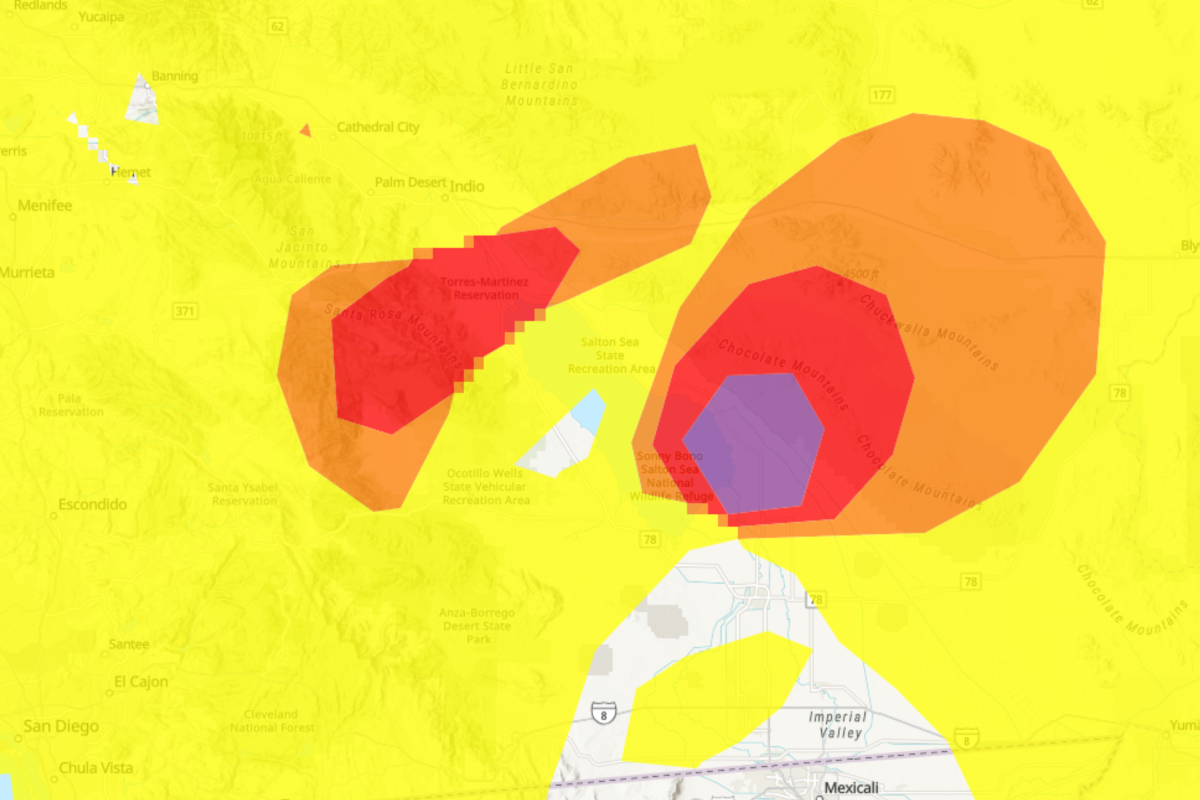
The scale of this atmospheric crisis is mapped out clearly on the Environmental Protection Agency’s AirNow system, which displays a startling and vivid illustration of the threat hovering over Southern California. On the digital tracking maps, a large, alarming cluster of warnings stretches across the eastern desert landscapes, with the most severe conditions concentrated around the agricultural communities of Mecca and the adjacent Mecca Hills, before pushing eastward toward the rugged, barren terrain of the Chocolate and Chuckwalla Mountains. On these maps, the colors red and purple stand out like bruises on the landscape, representing areas where the air has grown thick with fine particulate matter. Further to the south, a dense band of purple—the color reserved for “very unhealthy” conditions—covers Bombay Beach, Salton City, and the vast agricultural tracts stretching west of Calipatria, sending a clear warning that even brief outdoor exposure in these Imperial Valley regions can trigger immediate physical distress. Even the wealthier enclave communities further to the west, including La Quinta, Indio, and parts of Palm Desert, have not been spared; though their skies appear slightly less severe, they are still bordered by worrisome red zones that threaten to shift and expand at any moment depending on which way the desert wind decides to blow.
At the heart of this public health emergency is the invisible, invasive danger of particle pollution. Unlike larger particulate matter like sand or visible ash, the particles currently blanketing the desert are microscopic, often generated by a combination of vehicle exhaust, heavy industrial operations, agricultural dust, and the exposed, drying lakebed of the Salton Sea. Because these particles are so unimaginably tiny, our bodies’ natural defenses—the microscopic hairs and mucus membranes in our noses and throats—are completely useless against them. When a resident inhales this compromised air, these fine particles travel deep into the respiratory system, settling within the tiny air sacs of the lungs and even migrating directly into the bloodstream. The immediate consequence of this biological intrusion is often rapid and painful, resulting in persistent coughing, wheezing, and a suffocating tightness in the chest. However, the long-term dangers are even more terrifying; prolonged exposure to this level of particulate pollution is scientifically linked to permanent reductions in lung function, chronic respiratory diseases like asthma and bronchitis, and a much higher incidence of life-threatening cardiovascular events, including sudden heart attacks and strokes, turning a simple walk in the park into a silent threat to human survival.
In order to help communities navigate this gaseous minefield, the EPA relies on the Air Quality Index, a standardized scale that translates complicated scientific data into a simple, color-coded warning system that dictates the rhythm of daily life. The AQI utilizes six distinct colors to represent varying levels of danger, ranging from a peaceful, healthy green up to a hazardous, deep maroon. Once the index value creeps past the critical 100 mark—transitioning from yellow into orange—the air is deemed unsafe for sensitive groups, but when it crosses into the red and purple zones, the warning expands to protect every single human being in the area. For local residents, these color bands dictate the decisions made around kitchen tables and at school board meetings: an orange day might mean keeping an asthmatic child inside during school recess, while a red or purple designation demands that outdoor sporting events be canceled, farm work be halted, and local residents lock their doors and windows. This color-coded scale serves as a visual language of crisis, a stark warning that what is normally considered a healthy, active lifestyle can suddenly become dangerous when the atmosphere turns against us.
Protecting oneself from a severe air quality event requires a mixture of technological vigilance and immediate behavioral adaptation, though the ability to seek refuge is not accessible to everyone in equal measure. Health professionals advise residents to closely monitor the AirNow.gov portal and proactively modify their schedules, which means canceling outdoor workouts, keeping pets indoors, and rescheduling any non-essential outdoor chores. Inside the home, creating a safe sanctuary involves keeping all doors and windows tightly sealed, running air conditioning units on recirculate mode to prevent pulling in toxic outdoor air, utilizing high-efficiency HEPA air purifiers, and avoiding activities that can worsen indoor air quality, such as cooking on gas stoves, burning candles, or vacuuming. Yet, we must acknowledge the deep social inequalities that shape who can actually follow this advice; for the thousands of dedicated farmworkers harvesting crops in the fields of Mecca and Calipatria, “staying indoors” is a luxury that would mean losing a critical day of wages, and many low-income households live in older, drafty homes that lack modern, well-sealed HVAC systems to keep the toxic dust outside. Therefore, community protection must go beyond individual checklists to include systemic safety nets, such as establishing clean-air cooling centers, distributing high-quality N95 masks to outdoor laborers, and enacting stronger environmental policies to protect workers from extreme conditions.
Ultimately, the toxic air hovering over the Coachella Valley and the Salton Sea is a symptom of a much larger, historic ecological crisis that demands our collective attention and action. The receding waters of the Salton Sea have left behind a dry, vulnerable lakebed filled with decades of chemical agricultural runoff, which is easily swept up by the strong desert winds and carried directly into the lungs of nearby residents. This environmental tragedy is not an isolated incident; it is a physical manifestation of past decisions and changing dry climates, showing that when we neglect the health of our natural landscapes, we directly compromise the health of human beings. As we face these repeating air quality emergencies, building true regional resilience will require us to look out for one another—checking on elderly neighbors who live alone, supporting local dust-suppression initiatives, and demanding long-term ecological restoration projects for the Salton Sea. Clean, breathable air should never be treated as a luxury or a privilege reserved only for those who can afford high-tech indoor filtration systems; it is a fundamental human right, and our commitment to cleaning the atmosphere is, at its heart, a commitment to preserving the health, dignity, and future of every person who calls this beautiful desert region home.