





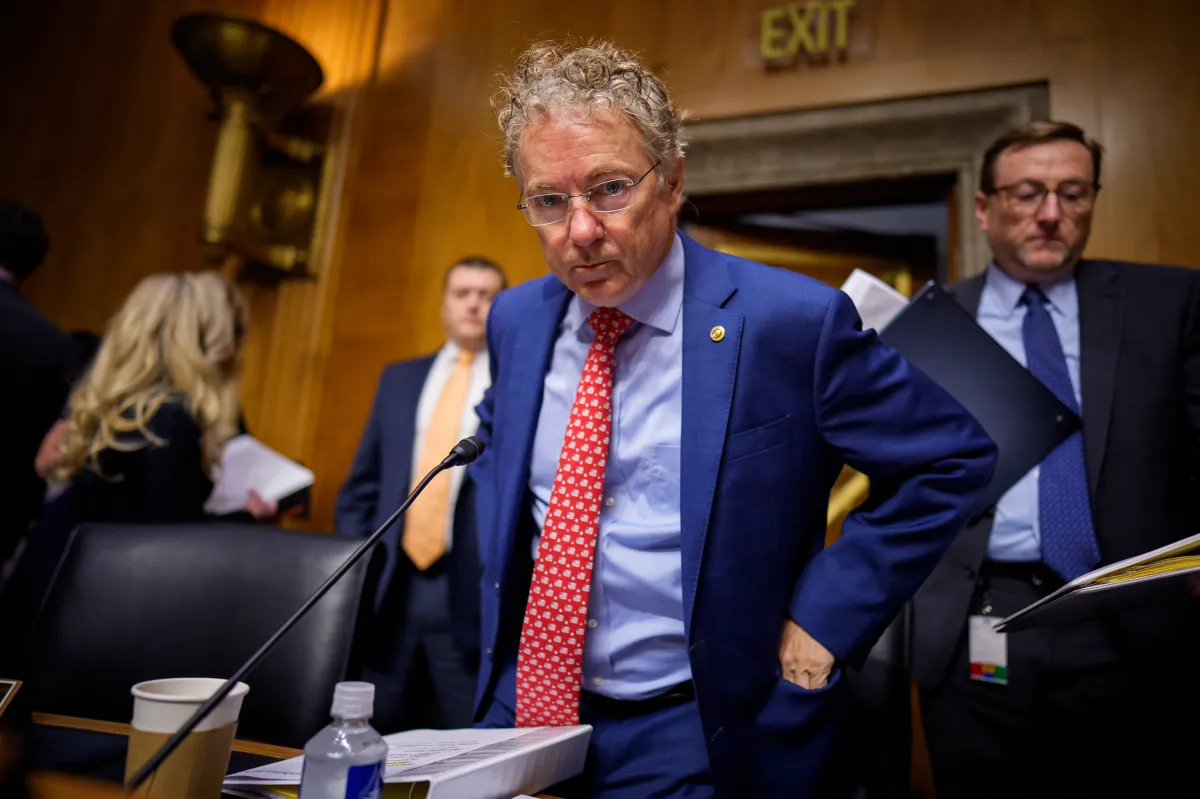
The milestone of turning sixty-five is meant to be a time of celebration and relief—a hard-earned entry into retirement supported by the social safety nets Americans spend their entire working lives paying into. Yet, for millions of seniors, this milestone is accompanied by a jarring and stressful reality: the forced transition into the Medicare system, which often acts as a bureaucratic barrier between patients and the healthcare providers they have trusted for decades. It is a deeply personal disruption when an elderly patient, navigating the vulnerabilities of aging, is told they can no longer visit the physician who knows their medical history, their family dynamics, and their quiet anxieties, simply because that doctor does not participate in their specific Medicare network. Addressing this emotional and systemic friction, Republican U.S. Senator Rand Paul of Kentucky has introduced a provocative new piece of legislation known as the “Legalizing Premium Health Care Act.” This bill seeks to dismantle the rigid boundaries of the current Medicare system by allowing seniors the freedom to seek care from any doctor they choose, ensuring that those who have spent a lifetime contributing to the system are not suddenly cut off from their long-standing medical relationships or forced to choose between their life savings and their health.
To understand the potential impact of Senator Paul’s proposal, one must look at how Medicare currently restricts access to care, particularly through the lens of modern managed-care structures like Medicare Advantage plans. Under the current framework, beneficiaries are tightly bound to networks; straying outside of these pre-approved circles of doctors can result in astronomical out-of-pocket costs or a complete denial of coverage, forcing seniors to navigate a maze of prior authorizations and specialist referrals. The proposed legislation seeks to introduce a “private contracting” model which would fundamentally rewrite these bureaucratic rules. Under this new mechanism, a Medicare beneficiary would be permitted to bypass network limitations completely and establish a direct contract with any doctor, including those who have opted out of the federal Medicare program entirely. Instead of leaving the patient to foot the entire bill in cash, Medicare would still step in to pay its standard, pre-approved reimbursement rate for the covered services, leaving the patient responsible only for paying the remaining balance directly to the provider. In essence, it aims to treat Medicare not as a strict, dictatorial gatekeeper of networks, but as a flexible financial utility that follows the senior wherever they decide to seek healing.
The real-world implications of this policy shift are vast, especially in rural and underserved areas where a growing number of physicians are opting out of Medicare due to declining reimbursement rates and mounting administrative burdens. When doctors leave the system, seniors living in these communities are often left stranded, forced to travel long distances to find a participating provider or pay entirely out-of-pocket for local care. As financial literacy expert Alex Beene points out, this bill could serve as a vital lifeline for these vulnerable populations, offering a middle-ground solution that eases the financial pain of keeping a cherished doctor. By allowing Medicare to cover at least a portion of the bill, the government would prevent seniors from facing the binary choice of abandoning their medical history or draining their retirement funds. It restores a sense of agency and dignity to elder care, acknowledging that the doctor-patient relationship is not a transactional commodity that can be easily swapped out, but a sacred partnership built on years of mutual trust, shared decisions, and deep-seated comfort.
While the promise of unparalleled physician choice is highly appealing, the bill also prompts significant concerns from financial and healthcare analysts who worry about the practical chaos of implementing such a system. The primary anxiety centers on “balance billing” and the operational nightmare of weaving individualized private contracts into an already staggering and fragile bureaucratic framework. Kevin Thompson, a wealth management expert, warns that instead of simplifying healthcare, this approach could layer even more administrative friction onto an already overburdened structure. If doctors and patients must negotiate individual payment agreements for every follow-up, adjustment, or unforeseen procedure, the sheer volume of paperwork could overwhelm small practices. Furthermore, there is a risk that physicians might overbill upfront to cover potential complications, or conversely, strictly limit their service to the absolute minimum stated in the contract to avoid complex renegotiations. Critics argue that without rigid guidelines, this could lead to a fragmented, two-tiered healthcare system where wealthier seniors can afford to pay the surplus for top-tier doctors, while lower-income retirees are left behind in underfunded, understaffed public networks.
Beneath the specific policy mechanisms of Senator Paul’s bill lies a broader, ongoing debate about the philosophical identity of public healthcare in America. Is Medicare meant to be a highly controlled, cost-efficient public utility that sacrifices individual choice for collective bargaining power, or should it function as a portable voucher system that empowers the individual consumer to navigate the free market? Senator Paul’s “Legalizing Premium Health Care Act” is a clear ideological champion of the latter, framing the issue as a matter of personal liberty and deregulation. By advocating for reduced government interference and the restoration of the direct doctor-patient covenant, the bill challenges the highly consolidated system of insurance networks that has come to dominate modern American medicine. This ideological tension highlights a painful truth: while the current managed-care models excel at keeping baseline costs predictable for insurers, they often do so at the direct expense of personal autonomy, forcing patients to conform to corporate algorithms rather than human-centered medical advice.
Ultimately, the introduction of this bill is merely the opening salvo in what promises to be a lengthy and highly contested legislative journey through Congress. Before it can ever become law, it must survive rigorous committee reviews, intense lobbying from insurance giants who benefit from tight network controls, and fierce debates on the congressional floor regarding its long-term budgetary impact. There are no guarantees of its passage, and the operational hurdles identified by critics mean that even if it does become law, its real-world execution will require meticulous refinement to prevent unintended financial harm to seniors. Yet, regardless of the bill’s eventual legislative fate, this debate serves as a crucial wake-up call regarding the cracks in our eldercare infrastructure. It reminds policymakers that at the heart of every actuarial table, policy memo, and network restriction are real human beings—grandparents, parents, and neighbors—who deserve a healthcare system that respects their loyalty, honors their relationships, and prioritizes their wellness over bureaucratic convenience.