






For the Portuguese, travel is not merely a leisure activity or a luxury to be indulged in when times are easy; it is an essential part of the soul, a deeply rooted need for personal balance, rejuvenation, and family connection. Despite living through a period of relentless geopolitical stress and economic uncertainty, the people of Portugal are demonstrating an extraordinary, almost defiant desire to pack their bags and explore the world in 2026. According to the 25th edition of Europ Assistance’s Annual Summer Holiday Barometer, an impressive 82% of Portuguese citizens plan to take a holiday this year. This remarkable figure puts Portugal near the very top of European travel enthusiasm, eclipsed only by the United Kingdom at 84%, and comfortably ahead of most of its continental neighbors. Over the years, holidays have transformed from pleasant distractions into vital components of mental health and well-being, serving as a necessary pause from the grinding demands of daily life. This collective urge to escape and recharge shows that even when the global landscape feels increasingly unpredictable, the promise of a summer journey remains a sacred, non-negotiable priority for the vast majority of Portuguese families.
However, desiring a dream vacation and actually funding it are two very different realities, particularly in a climate of persistent inflation. To make these journeys happen, Portuguese travelers are digging deeper into their pockets than ever before, stretching their household budgets to the absolute limit. The average budget allocated for a major holiday in Portugal has climbed by €147, reaching a total of €1,662—a significant 10% increase compared to last year. While this financial effort represents a major sacrifice for local households, it still highlights a stark economic divide within Europe, leaving Portugal well below the continental spending average of €2,089. Globally, the financial league is led by affluent nations like Switzerland, where travelers plan to spend an average of €3,100, closely followed by the United States and Australia. For the 18% of Portuguese who cannot travel, the reason is almost exclusively financial, with nearly half of them pointing to the urgent need to save money. Inflation has cast a dark shadow over active vacation plans as well; Portugal ranks as the European nation most deeply concerned about rising prices, with 90% of respondents admissioning that high costs are severely squeezing their leisure budgets.
This delicate balancing act between high dreams and tight budgets has directly influenced where the Portuguese choose to spend their precious vacation days, driving a powerful trend toward domestic tourism. Instead of navigating the high costs and logistical headaches of international flights, 47% of Portuguese travelers are choosing to explore the stunning diversity of their own homeland, finding comfort and beauty closer to home. For those who do decide to venture beyond national borders, the destinations of choice reflect a desire for both cultural familiarity and geographical proximity. Our neighbor, Spain, remains the favorite foreign getaway, capturing 21% of Portuguese travel intentions, while the historic charm of Italy and the warm, linguistic embrace of Brazil attract 8% and 9% of travelers respectively. This slight shift inward—characterized by a marginal dip in international travel from last year’s 43% to this year’s 42%—reveals a conscious effort to minimize risk and cost without sacrificing the joy of a summer holiday. By rediscovering domestic treasures, travelers are finding that adventure does not always require crossing oceans, especially when local landscapes offer world-class beauty.
Beyond the financial constraints, a growing sense of anxiety about global safety is weighing heavily on travel decisions, forcing wanderlust to share the stage with caution. In an increasingly fractured world, security has evolved from a secondary logistical detail into a primary, non-negotiable filter through which destinations are judged. Across Europe, nearly a third of travelers now consider safety to be a deciding factor when booking a trip, but this concern is strikingly more acute in Portugal. Portuguese travelers exhibit a heightened sensitivity to global unrest, with 70% identifying armed conflicts and 67% pointing to the threat of terrorism as major sources of anxiety when planning their itineraries—figures that soar well past the European averages of 59% and 53%. The ongoing war in the Middle East and wider geopolitical tensions have even reshaped the map of desirable destinations, making locations like the United Arab Emirates and parts of the United States places that travelers are actively choosing to avoid. This caution reveals a poignant truth about the modern holidaymaker: while the hunger for adventure remains undiminished, the need to feel safe and protected in an uncertain world is paramount.
As if economic pressures and safety concerns were not enough, a looming logistical crisis in the aviation sector is threatening to disrupt summer travel plans across the globe. The aviation industry is currently navigating a severe squeeze on jet fuel reserves, a crisis deeply linked to political fragility in the Middle East and the critical shipping lanes of the Strait of Hormuz. The International Energy Agency has sounded an alarm, warning that European airlines may only have a few weeks’ worth of fuel reserves, raising the very real specter of sudden flight cancellations and skyrocketing ticket prices as paraffin costs surge. Major European carriers, including giants like Lufthansa, British Airways, KLM, and Turkish Airlines, have already been forced to cancel a small fraction of their flights, signaling a tense and unstable summer season ahead. For the average passenger, this adds a stressful layer of unpredictability, turning the anticipation of a long-awaited holiday into a nerve-wracking game of wait-and-see. Travelers are left hoping that their flights will survive the fuel shortages and that their hard-earned vacations will not be grounded before they even begin.
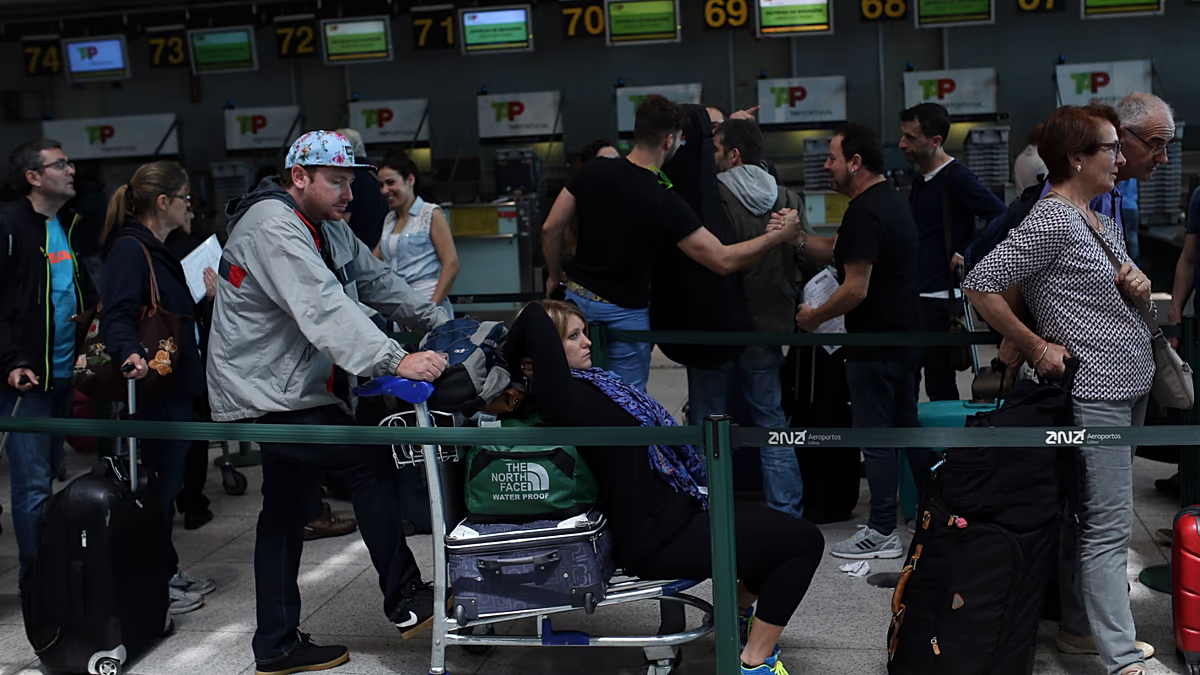
This potential aviation bottleneck has sent shockwaves through the Portuguese government, which acutely understands that tourism is the lifeblood and major engine of the national economy. With over 90% of foreign tourists arriving in Portugal by airplane, any systemic disruption to European flight paths could trigger what Finance Minister Joaquim Miranda Sarmento has described as a “very signficant economic shock.” While some European countries face immediate vulnerability, Portuguese officials are working tirelessly to reassure the public; Environment Minister Maria da Graça Carvalho confirmed that domestic fuel reserves at the Sines refinery are secure until August, and Infrastructure Minister Miguel Pinto Luz has assured travelers that national carrier TAP is not currently facing any threat of cancellation. Nevertheless, the government remains on high alert, closely monitoring airport fuel supplies in cooperation with major oil companies to protect the summer season. As the European Commission prepares to issue emergency operational guidelines to optimize fuel logistics, the Portuguese tourism sector and its hopeful travelers are holding their collective breath, united in their resolve to protect the warmth, joy, and economic promise of the summer of 2026.