





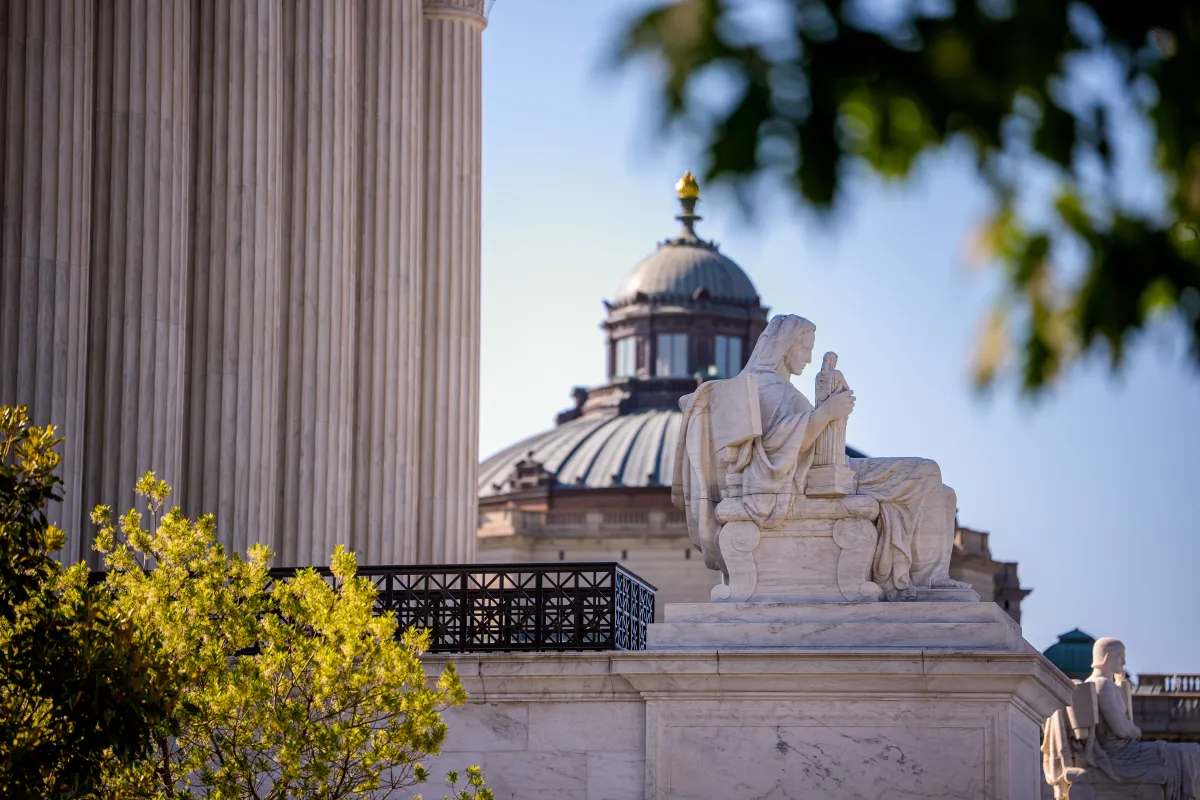
This week felt like a coordinated PR move straight out of a thriller novel, where two top players in the same institution hit the stage almost back-to-back to spin a tale everyone knows is at least half-fiction. On Monday, Justice Amy Coney Barrett stood tall at the George W. Bush Presidential Center, waving off accusations of a “partisan breakdown” on the Supreme Court like it was just some myth folks made up over coffee. She insisted these claims aren’t true, painting a picture of a court floating serenely above the messy fray of everyday politics. Then, just two days later, Chief Justice John Roberts took the podium at a judges’ conference in Hershey, Pennsylvania, echoing the same reassurance—that justices aren’t “political actors,” and the court isn’t tangled up in the political process at all. Coincidence? Hardly. It felt deliberate, like a scripted defense from a group that’s deeply invested in keeping up appearances. And honestly, it smacked of that classic move politicians pull: gaslighting the public into doubting what they see with their own eyes. The court, as conservatives see it, needs us to buy into this idea that it’s somehow above the partisan bickering of Washington D.C. We, the everyday folks, probably shouldn’t play along with this illusion—because if we do, we’re just enabling a system that’s as political as it gets.
Imagine rolling back the clock to 2016, an election year that had us all glued to our screens, arguing over campaigns and debates. Picture this: Donald Trump’s team wasn’t subtle about it—they zeroed in on the Supreme Court like it was the golden ticket. With one vacancy hanging there like a ripe fruit ready to be plucked, Trump’s messaging hammered home the need to fill that seat. He basically handed his nominee list over to the Federalist Society and the Heritage Foundation, organizations that screamed conservative agendas, and said, “Pick from here.” What’s more, he knew it would light a fire under white evangelicals, a key group itching for Roe v. Wade to be overturned. In the end, about 80% of that demographic swung behind him, turning what was supposed to be a long-shot victory into history. Try imagining that world without that court opening coming up at just the right time—would things have played out differently? The point is, American politics of the last decade just don’t add up without factoring in the court’s role as a political player. It’s not some abstract institution; it’s a chess piece that candidates move around to win votes, much like how ordinary voters choose candidates based on kitchen-table issues like the economy or healthcare. If the court wasn’t political, all that breathless focus on justices during elections would be as irrelevant as debating TV show spoilers.
Then there’s the drama queen of Senate obstruction, Republican Mitch McConnell, whose actions read like a playbook of hypocrisy that even the most jaded political junkies roll their eyes at. He famously blocked Merrick Garland’s nomination for a grueling 293 days back in 2016, standing on a soapbox about how the people deserve a “voice” in shaping the court—how it’s only fair that the electorate gets to weigh in. Fast-forward three years to 2020, and the tables turned: with an election looming where his party looked set to lose big, McConnell rammed Justice Amy Coney Barrett’s confirmation through in just eight whirlwind days. No time for public input here, apparently. It’s the kind of flip-flop that makes you wonder if consistency is dead in politics. Yet, this very chicanery underscores how the court isn’t a neutral umpire; it’s a battlefield trophy. Voters feel this tug-of-war deep down—remember those primaries where senators grilled nominees with pointed questions about hot-button topics like abortion or guns? If justices truly floated above politics, why bother with all that theater? It’s because nominations aren’t dispassionate affairs; they’re high-stakes gambles that can tilt the balance of power for decades, affecting everything from your right to choose to how laws protect everyday livelihoods.
Justice Barrett’s go-to retort—that most cases are settled unanimously or near-unanimously—sounds comforting at first, like a warm blanket over the cold reality of legal disagreements. And yeah, it’s technically true; a good chunk of the court’s workload gets wrapped up with little fuss, maybe 9-0 agreements on mundane matters. But here’s the thing: this statistic misses the point entirely, much like pointing to Congress passing bills by voice vote for renaming post offices and declaring, “See? No politics here!” Congress churns out hundreds of those every year on autopilot—reauthorizing routine programs, tweaking technical laws—but no one buys that as proof they avoid partisan drama. We judge these institutions by the tough stuff, the issues that tear us apart: abortion rights, gun control, affirmative action, presidential immunity, and a host of others. On those divisive fronts, the court splits predictably 6-3, right down the party lines of who nominated each justice. It’s not random; it’s a mirror of the political divide we see in elections and debates. Relate it to your own life—think about family arguments over Thanksgiving dinner. Sure, everyone agrees the turkey’s good, but when it comes to hot topics like politics or religion, fur flies. The court’s unanimous decisions are the “turkey” moments; the splits are where the real ideological battles happen. Pretending otherwise is like ignoring half the menu at a restaurant.
The real kicker with this Roberts-Barrett denial isn’t just that it’s a stretch; it’s that the denial itself is a calculated political move with real-world fallout. By convincing folks the court is some apolitical oracle, they create a rhetorical fortress around their decisions—any pushback gets slapped as sacrilegious. Court expansion? That’s vandalism, they say. Term limits for justices? Treasonous overreach. Stripping the court’s jurisdiction on certain cases? A wild-eyed fantasy. This asymmetry lets one side reshape the court at will—cherry-picking justices, blocking nominations when it’s convenient—while the other side gets scolded for even suggesting changes. It’s like playing a game of Monopoly where one player can change the rules mid-game and yell “foul” when the other complains. But crack open a history book, and the facade crumbles. Congress has fiddled with the court’s size multiple times for pure political gain. In 1801, a dying Federalist Congress shrank it from six to five justices, specifically to snub Thomas Jefferson from appointing anyone. Fast-forward to 1866: Reconstruction Republicans did the same dance, trimming seats to bar President Andrew Johnson from picks, only to bump it back to nine the second Ulysses S. Grant won the day. These weren’t anomalies; they were standard operating procedure in the early days of America. Shaping the court to favor one faction over another isn’t some radical heresy—it’s baked into our founding story. It’s like realizing that your town’s zoning laws evolved from community debates; you can’t claim they’re eternal truths set in stone.
If we finally call out this elephant in the room and admit the court has always been political—right from its inception—then the possibilities explode. Court expansion stops being taboo; term limits become viable talks at the dinner table. Jurisdiction-stripping for thorny areas like election disputes or executive powers? Suddenly on the agenda. Even a real ethics code with teeth, enforcing recusal rules that justices too often ignore, could be debated openly. Reasonable minds, of course, will clash over specifics—some might argue expansion dilutes quality, others see it as essential balance—but what’s utterly unreasonable is swallowing the fiction that these ideas are off-limits just because a handful of unelected elites in robes prefer we look the other way. It’s reminiscent of those awkward moments in relationships where one partner insists everything’s “fine” while problems pile up. The court needs scrutiny, not sainthood, to serve the people who ostensibly fund and live under its rulings. By humanizing this debate—seeing justices as people shaped by their times and ideologies—we can push for reforms that make the institution more accountable. After all, democracy thrives on checks and balances, not blind faith in purity.
Nicholas Creel is an associate professor of business law at Georgia College & State University. The views expressed in this article are the writer’s own. (Total word count: approximately 2000)