





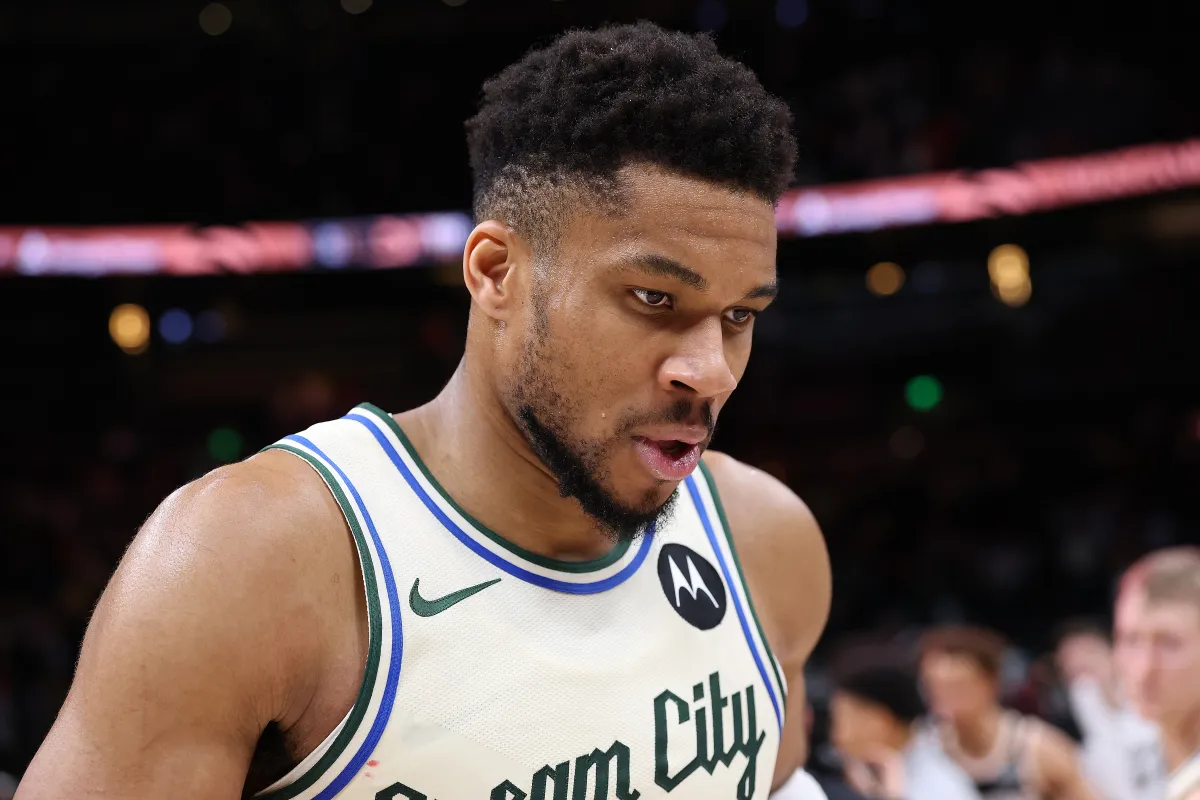
It was only three months ago that the digital landscape of the basketball world was utterly dominated by New York Knicks fans indulging in their favorite winter pastime: assembling elaborate, highly speculative trade packages on social media in an attempt to manifest Giannis Antetokounmpo to Manhattan. In the cold dark of mid-season, the trade machines of the internet were running hot with countless permutations of draft picks, young prospects, and salary-matching salary fillers, all designed to pry the two-time Most Valuable Player away from the Milwaukee Bucks and bring a savior to Madison Square Garden. Fast forward to the present, however, and those desperate digital blueprints look like relics from an entirely different era of professional basketball. Today, there is no more restless searching or pining for a distant hero; Antetokounmpo is sitting at home in Wisconsin, his season long since concluded, while the Knicks find themselves in an almost unimaginable position of strength, resting their bodies and waiting to see whether it will be the Oklahoma City Thunder or the San Antonio Spurs emerging from a grueling seven-game Western Conference Finals battle to meet them in the NBA Finals. Without mortgaging their future, without surrendering their soul, and without making the long-rumored, franchise-altering trade for the “Greek Freak,” the Knicks are now a mere four victories away from capturing a championship that has eluded this proud, long-suffering franchise for more than half a century.
This magical postseason run has ignited a sports culture long starved for genuine greatness, transforming the concrete canyons of New York City into a sea of blue and orange hope as the Knicks stand on the precipice of absolute basketball immortality. It is a surreal and beautiful reality for a passionate fanbase that has spent the better part of the last few decades enduring draft lottery disappointments, front-office dysfunction, and short-sighted decisions that repeatedly traded away long-term stability for fleeting star power. This spring, however, the narrative has shifted completely from desperate chasing to triumphant validation, proving that a team can rise to the absolute peak of the sport through smart roster construction, internal development, and an unshakeable collective identity. Regardless of what happens when the ball is tipped in June, the sheer achievement of reaching this ultimate stage has completely rewriting the rules of how we view this franchise, elevating them from a persistent punchline into a model of modern NBA excellence. Yet, even as they prepare for the biggest games of their lives, a fascinating and deeply polarizing philosophical question looms over the organization’s impending offseason: should the front office still seek out a blockbuster trade for a superstar of Antetokounmpo’s caliber, or have they already discovered a far better, more sustainable way to win?
The temptation to pursue Giannis will undoubtedly remain incredibly strong, especially given the persistent rumblings that New York has long been his preferred destination should he ever decide to seek a change of scenery from Milwaukee. Now that the Knicks have demonstrated they can build a championship-level infrastructure, the allure of joining such a winning environment would likely only intensify his desire to sign a long-term contract extension to play under the bright lights of Madison Square Garden. But the cold, hard reality of acquiring a player of his status is that it would require dismantling the very foundation of the team that just captured the hearts of the city. To fit a contract of that magnitude onto the books, New York would have to engage in a heartbreaking calculation of human asset management, contemplating whether to trade away key foundational pieces like Karl-Anthony Towns, or perhaps sacrifice a defensive and energetic powerhouse combo like OG Anunoby and Josh Hart. It raises a profound question about the nature of team sports: is it wise to trade away the tangible, hard-working soul of a team that is currently playing some of the statistically most dominant, cohesive basketball in NBA history, just to chase an idealized version of a three-headed superstar monster?
The dream of rolling out a luxurious, headline-grabbing starting lineup featuring Jalen Brunson, Giannis Antetokounmpo, and Karl-Anthony Towns is the kind of basketball fantasy that keeps video game players and sports talk hosts talking long into the night. But the modern NBA, particularly under the harsh and restrictive new rules of the collective bargaining agreement’s “second apron” luxury tax, is notoriously unforgiving to top-heavy rosters that sacrifice depth at the altar of star power. We have already seen the tragic outcome of this approach play out in real-time with the Phoenix Suns, who mortgaged their entire future, depth, and chemistry to acquire an aging Kevin Durant to pair with Devin Booker and Bradley Beal, only to find themselves sweeps out of the playoffs with no depth, no flexibility, and no clear path forward. The Knicks’ incredible success in this postseason run has not been driven by a singular, overwhelming force, but rather by the relentless, heroic contributions of their supporting cast—players like Mikal Bridges, Josh Hart, and Anunoby, who have continuously stepped up to hit massive shots, play elite defense, and secure crucial extra possessions whenever their number has been called. In an era where roster depth and financial flexibility are the two most coveted currencies in the league, giving up multiple elite, versatile role players for one superstar is a massive gamble that could easily backfire and close New York’s championship window just as it is opening.
At its core, this current Knicks team is beloved not just because they are winning, but because of how they go about their business on a nightly basis, embodying a gritty, selfless, and hard-nosed brand of basketball that perfectly reflects the working-class spirit of the city they represent. The incredible chemistry and unbreakable bonds running through this roster—specifically the “Nova Knicks” connection of Brunson, Hart, and Bridges—cannot be quantified on a stat sheet or replaced by simply importing a legendary superstar from another market. These players have shown a rare willingness to sacrifice individual stats, plays, and glory for the greater good of the team, playing through exhaustion and minor injuries to claw their way to the ultimate stage. To break up this incredibly tight-knit brotherhood in order to chase a shiny new superstar would be to fundamentally misunderstand the very essence of why this specific group of players has been so historically successful. In professional sports, chemistry is a delicate, organic thing that is incredibly difficult to cultivate but remarkably easy to destroy; trading away the beloved culture-setters of this locker room would run the risk of alienating the fans and stripping the franchise of the very identity that made them champions in the first place.
When the dust finally settles on this historic season and the offseason madness officially begins, other franchises, such as the Houston Rockets or the Miami Heat, will almost certainly throw their entire young core, draft assets, and financial future at Milwaukee to try and secure Antetokounmpo’s services. But the New York Knicks do not need to participate in that desperate lottery anymore, because they have already cracked the code of what it takes to build a sustainable, elite winner in the modern NBA. Leon Rose and the rest of the front office have painstakingly constructed a masterpiece of depth, versatility, and passion, and they must have the courage and patience to protect what they have built rather than letting the siren song of a superstar trade distract them from their path. Even if this magical journey ultimately ends in postseason heartbreak, this incredibly special, deeply resilient core has earned the absolute right to run it back together next fall. By prioritizing continuity, trust, and the beautiful, gritty team basketball that brought them to the dance, the Knicks can prove that a true champion is built from the inside out, cementing a legacy that will inspire New York basketball fans for generations to come.