


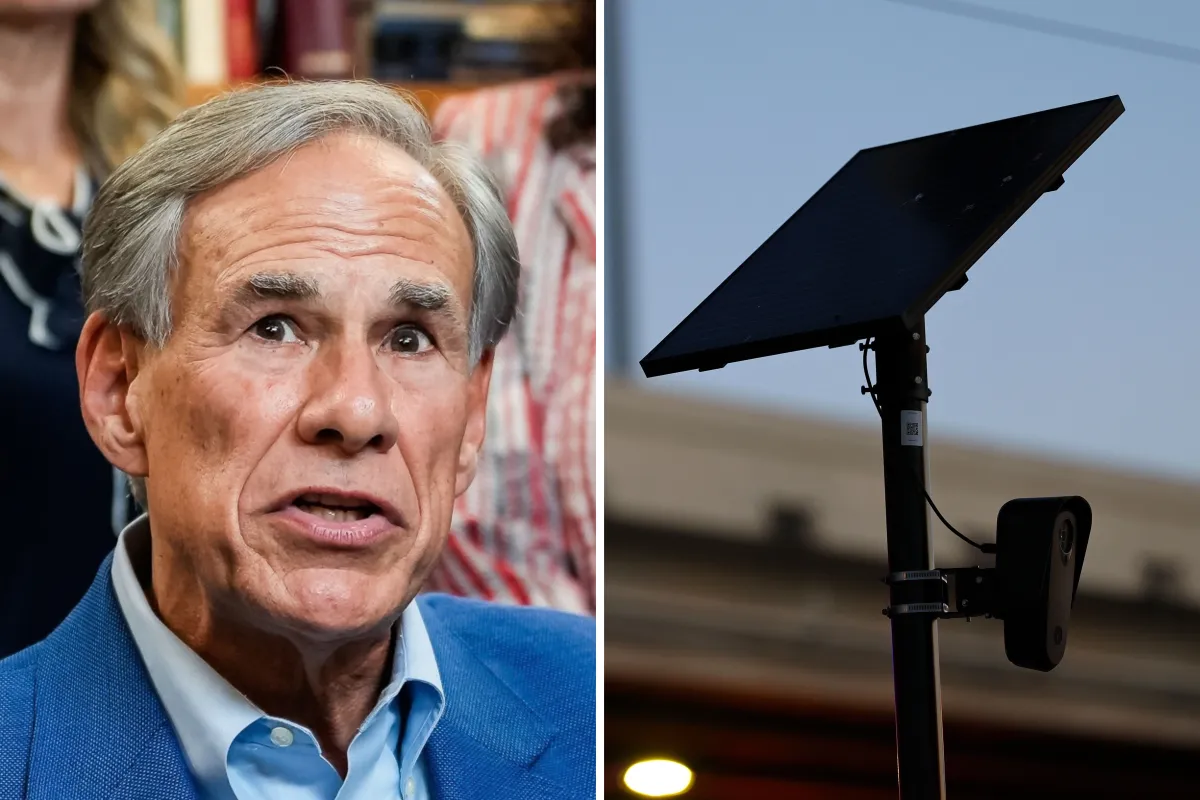
In a move that underscores the growing unease over automated surveillance, Texas Governor Greg Abbott has ordered the state’s transportation department to stop issuing new permits for Flock cameras and other license plate readers installed along state roadways. The Texas Department of Transportation, or TxDOT, announced Thursday that it had “suspended issuing approvals for Flock cameras or similar devices installed by third parties” along public rights-of-way. This suspension also applies to agreements that have already been approved but not yet physically installed. The official explanation is straightforward enough: TxDOT’s role is to review permits to ensure that license plate readers are placed correctly and safely on state-owned roads. The agency also noted that it does not have access to the data collected by these cameras, and that the devices are installed at the request of law enforcement. But behind this administrative action lies a deeper, more emotional story about privacy, safety, and the creeping presence of surveillance in everyday American life.
For drivers across Texas, these cameras may be familiar: small, sleek devices mounted on poles at intersections and along highways, quietly snapping images of every passing vehicle. They are automatic license plate readers, or ALPRs, made most prominently by a company called Flock Safety. Each camera captures more than just a plate number; it records the vehicle’s make, model, color, and distinctive features like roof racks, bumper stickers, or damage. The software then catalogs that information, allowing law enforcement to search for vehicles connected to crimes, missing persons, or stolen cars. Flock Safety’s marketing materials describe the system as a tool that helps police, businesses, and communities “securely share vehicle evidence, uncover more leads, and solve more cases together.” And indeed, there are countless success stories: a stolen car recovered, a kidnapping victim found, a suspect tracked across county lines. For many law enforcement officials and community leaders, these cameras are a modern-day necessity, a force multiplier in a world where police simply cannot be everywhere at once. But for civil liberties advocates, the same devices raise alarming questions about who is watching, how long the records are kept, and whether a surveillance grid is being constructed without true public consent.
The backlash against Flock cameras is not happening in a vacuum. Critics worry about the largely unregulated accumulation of data about ordinary citizens going about their daily lives—driving to work, dropping kids at school, visiting a doctor or a pastor, attending a protest. License plate readers do not need warrants, and they capture the movements of everyone, not just suspects. Over time, that data can reveal patterns: where someone sleeps, who they visit, what time they leave the house, which clinics or places of worship they frequent. Opponents argue that this violates the spirit of the Fourth Amendment, which protects against unreasonable searches and seizures. Even if a license plate is visible in public, the aggregation of millions of plate reads can create something reminiscent of a tracking device. There is also the fear of abuse by police officers—personal grudges, stalking, politically motivated monitoring, or the chilling effect that occurs when people know they are constantly being watched. These concerns are not abstract; they have fueled disputes in town halls and city councils across Texas and other states. Governor Abbott himself spoke to this anxiety in late August, when he ordered all Texas agencies to pause state funding for Flock cameras. At the time, his spokesman said that most Flock cameras in Texas are funded by cities, many of which are already pulling back their contracts, and that any state or federal money flowing toward the technology would be redirected or clarified. Abbott’s own words were pointed: “What Texans deserve, they deserve clarity about how these cities and counties are using them. Citizens are concerned about their Fourth Amendment rights. They have to be protected. Their privacy must be protected.”
The scale of the issue in Texas is staggering. According to estimates from the Texas Privacy Coalition, a grassroots advocacy group, there are more than 13,500 automatic license plate readers across 218 of the state’s 254 counties. That means roughly 86 percent of all Texas counties have at least one of these cameras. The distribution is heavily weighted toward urban population centers. Harris County, which includes Houston, leads the state with 3,546 community-mapped cameras—about a quarter of the statewide total. Dallas County is next with 1,334, followed by Tarrant County with 949. The list goes on: Collin County with 603, Fort Bend County with 596, Denton County with 534, Bexar County with 433, and Travis County with 430. These numbers are not just statistics; they represent thousands of vantage points, thousands of intersections where a person’s car is silently logged and stored in a searchable database. For many Texans, the sudden awareness of this network has felt like a betrayal—a sense that they had been living in a surveillance state without realizing it. The cameras are not hidden, exactly, but they are easy to overlook, installed high on poles where they blend into the landscape of traffic lights and street signs. Once people learn what they are, the feeling of being watched can be visceral. This is especially true in communities where faith leaders, activists, and ordinary residents have voiced fears that the technology could be used to target dissent or to track people based on race, religion, or political beliefs.
Governor Abbott’s latest action is a continuation of his earlier moves to rein in the technology. In late August, he ordered state agencies to stop funding Flock cameras, and now he has gone further by directing TxDOT to halt new permits for third-party installations along state rights-of-way. That may sound technical, but the implications are significant. Because many of these cameras are installed along state roads and highways, the state has an approval process to ensure they are mounted safely. By suspending that process, Abbott has effectively frozen the expansion of the network on state property. It is a symbolic and practical victory for privacy advocates, though it does not remove existing cameras or prevent cities from installing them on municipal streets. What it does do is send a clear signal: the state is no longer going to be an easy partner in the spread of ALPR technology. Flock Safety, for its part, has defended the cameras. A company spokesperson told Newsweek that Flock supports “thoughtful legislation and strong privacy, transparency, and accountability guardrails” while preserving law enforcement’s ability to use effective tools. They noted that officers across Texas use the technology to solve serious crimes, find missing people, recover stolen vehicles, and support safer communities. Indeed, the central tension of the Flock debate is that the cameras genuinely do help catch criminals. There are real victims whose lives have been changed because a license plate reader spotted a fleeing car. There are missing children who have been found. For every person who feels invaded, there is another who feels protected. Governments and communities are now wrestling with how to balance those competing goods.
Looking ahead, Texas is becoming a testing ground for a national conversation about automated surveillance and civil liberties. The debate is not simply about repealing or keeping the cameras; it is about the terms under which they are allowed to exist. Should there be strict limits on how long data can be retained? Should police need a warrant before searching license plate databases? Should private companies like Flock have the power to hold millions of data points about ordinary citizens? These are questions that touch on fundamental ideas about privacy, freedom, and trust. Governor Abbott has framed his actions as protecting Texans’ constitutional rights, and his popularity will likely be judged in part by whether voters believe he is truly safeguarding them or performing political theater. Meanwhile, local officials in cities like Houston, Dallas, and Austin will need to decide whether they can craft rules that allow Flock cameras to help solve serious crimes without turning every roadway into a silent, unblinking network of digital eyes. The suspension of new permits does not end the story. It merely pauses a chapter, giving Texas a moment to breathe and reflect. In that pause, everyday Texans might look at the poles along their highways a little more closely, wondering what is watching them, who is logging their paths, and whether the trade-off between safety and privacy is one they were ever actually asked to make. The answer to that question is still being written, not just in the governor’s office, but in every community that must decide what kind of place it wants to be.