





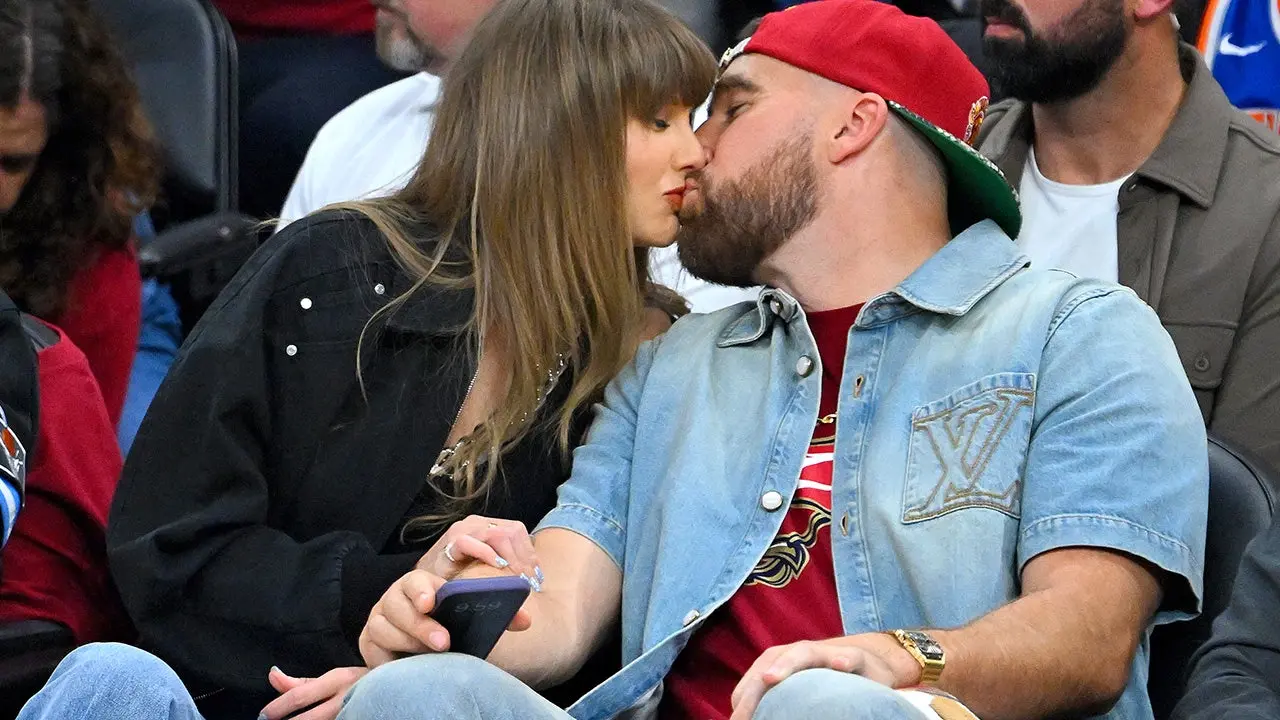
The romance between Taylor Swift and Travis Kelce has captured the world’s attention like few other modern love stories, blending the worlds of pop royalty and elite athletics into a singular, mesmerizing cultural narrative. Ever since rumors began swirling about their low-key engagement in August 2025, fans and media outlets alike have been operating on high alert, eagerly parsing every hint and leak regarding where and when they might finally say “I do.” Speculation has recently reached a fever pitch, with various reports suggesting the couple might exchange vows during a spectacular summer weekend at New York City’s iconic Madison Square Garden in early July. Yet, even before a single invitation has officially landed in a mailbox, a quiet storm of controversy is already brewing over how the couple plans to manage their exclusive guest list. Sources close to the pair reveal they are strictly enforcing a traditional “no ring, no bring” policy, meaning that any guest who is not married or actively engaged will not be permitted to bring a date. This strict boundary has reignited an age-old debate about modern wedding etiquette, social expectations, and the ultimate rights of a bride and groom on their wedding day.
For a couple with a social circle as vast, influential, and high-profile as Swift and Kelce’s, such a rigid rule is bound to create significant waves and perhaps even a bit of social discomfort among their famous friends. Many of their closest companions easily clear the matrimonial bar: Swift’s longtime confidante Selena Gomez recently married music producer Benny Blanco, and Kelce’s superstar teammate Patrick Mahomes has been happily married to his high school sweetheart, Brittany, for over four years. However, the strict policy reportedly poses a delicate dilemma for several other high-profile relationships within their immediate circle. Supermodel Gigi Hadid, one of Swift’s absolute best friends, is currently in a highly publicized and deeply serious relationship with actor Bradley Cooper, yet they remain unmarried. Similarly, rising singer-songwriter Gracie Abrams is seriously dating actor Paul Mescal, but would presumably have to attend solo under these strict guidelines. This dynamic is not without historical precedent in elite social circles; Kate Middleton’s sister, Pippa Middleton, famously enforced the very same boundary at her high-society wedding in 2017, which notably forced a then-unmarried Meghan Markle to skip the formal church ceremony in order to avoid a media spectacle, only joining Prince Harry later for the private evening reception.
Predictably, the news of Swift and Kelce’s uncompromising approach to their guest list has set internet message boards and social media platforms alight with passionate arguments. On platforms like Reddit, the debate quickly evolved into a broader discussion on the anxiety and isolation of attending major life events alone, highlighted by an anonymous comment from a single woman who confessed she was seriously considering passing on the wedding of the year simply because she wouldn’t know many people there without a partner by her side. On the other side of the screen, legions of fans and defenders stepped up to champion the couple’s right to total privacy, arguing that a wedding is a deeply personal, sacred milestone rather than a public parade or a networking event. Commenters pointed out the incredibly unique and intense security risks faced by a global icon of Swift’s caliber, noting that she deserves a day surrounded entirely by people she loves and trusts, rather than having her nuptials populated by unvetted plus-ones who might be tempted to photograph the event or leak details to the press.
This polarization online highlights a profound and evolving shift in how we view social gatherings and personal relationships in the modern era. Jan Goss, a prominent professional development and etiquette expert based in Texas, suggests that the current backlash reflects a growing cultural sense of personal entitlement, where guests increasingly view a wedding invitation as a transaction rather than an honor. Goss argues that a wedding invitation is fundamentally a gift of inclusion—a heartfelt request to share in a monumentally private milestone—not a formal contract that guarantees the recipient’s personal social comforts or custom accommodations. The traditional rule does admittedly create some logical paradoxes, such as when a couple who has been happily cohabitating for a decade is split up on the guest list, while a pair who rushed to get engaged after only six months of dating receives a joint invitation. Yet, experts maintain that while hosts should always strive to invite established, long-term partners together on a single invitation, they are under absolutely no ethical obligation to offer generalized plus-ones to casual dates or new acquaintances.
For those who do find themselves navigating a wedding without a plus-one, the experience does not have to be a source of social dread or awkwardness. Rather than retreating into the safe, familiar glow of a smartphone screen or hiding in a corner, Goss encourages solo attendees to reframe the event as an exciting opportunity to practice face-to-face social skills and build genuine human connections. The simplest way to break the ice in a room full of unfamiliar faces is to focus outward, asking other guests warm, open-ended questions like, “How do you know the happy couple?” By shifting the attention away from one’s own internal discomfort and redirecting it toward celebrating the bride and groom, guests can easily find common ground and enjoy the vibrant community spirit of the evening. Ultimately, a wedding is designed to bring families and friends together, making it one of the most naturally receptive environments for meeting new people and making lasting memories, provided we are willing to put away our devices and actively engage with the humans around us.
In the grand scheme of things, the absolute power of choice rests solely with the couple who are promising their lives to one another. Etiquette experts agree that while hosting is an art of hospitality, a wedding is not a public service; the bride and groom have every right to curate an environment where they feel completely safe, relaxed, and genuinely celebrated. If the prospect of attending a major celebration alone feels too overwhelming or logistically stressful, guest etiquette offers a wonderfully simple, stress-free escape valve: merely decline the invitation with warmth and grace, and send a thoughtful gift along with your heartiest congratulations. As the world watches to see if Taylor Swift and Travis Kelce will indeed make their promises beneath the bright lights of New York this summer, their firm boundary serves as a powerful reminder to couples everywhere that your wedding day belongs to you, and protecting your peace is always worth the effort.