






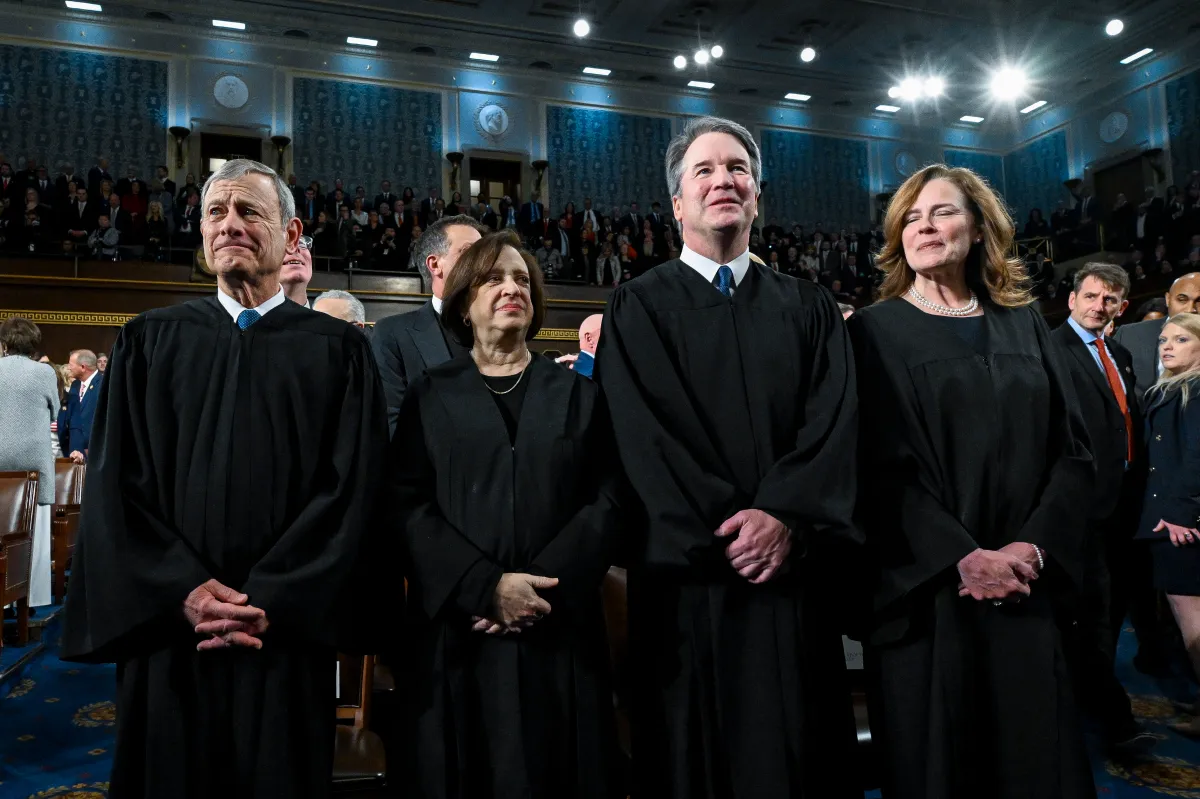
As the sweltering early summer heat settles over Washington, D.C., a palpable sense of anticipation fills the halls of the Supreme Court. We are in the final stretch of the judicial term—a chaotic and high-stakes period observers call the “June rush.” This annual crucible is when the nation’s highest justices deliver their most monumental, divisive, and transformative decisions. Far from being merely academic exercises in constitutional law, these rulings carry deeply personal stakes that will directly ripple through American living rooms, workplaces, schools, and voting booths. At the heart of this legal storm is a fundamental interrogation of how American democracy functions and the extent of executive power, particularly under the legacy of Donald Trump. With the clock ticking toward early July, the decisions crafted by the court’s 6–3 conservative majority will not only influence the upcoming elections but will also permanently redraw the landscape of American governance.
Perhaps the most legally profound question currently before the court is how much control a single individual should wield over the vast machinery of the federal government. The justices are debating cases that challenge long-standing boundaries on a president’s authority to unilaterally fire the leaders of independent regulatory bodies, such as the Federal Reserve and the Federal Trade Commission. For decades, these watchdog agencies have operated under “for-cause” protections to keep critical national priorities—like monetary policy and consumer protection—shielded from the volatile swings of partisan politics. If the court rules in favor of Trump’s vision of a highly unified executive branch, future presidents could command unprecedented influence over these independent agencies, effectively restructuring the balance of power in Washington. Conversely, keeping these barriers intact would preserve the traditional checks and balances designed to ensure that the regulatory state serves the public interest rather than the political whims of the incumbent administration.
The deeply human dimension of this judicial term is nowhere more visible than in the high-stakes battle over immigration and identity. The court is facing a direct challenge to birthright citizenship under the Fourteenth Amendment, which historically guarantees citizenship to virtually anyone born on American soil—a cornerstone of the nation’s immigrant identity for over a century. Trump’s attempts to dismantle this policy have sparked anxiety among immigrant communities and exposed deep rifts even within his own party; polling shows that nearly half of Republicans support birthright citizenship, reflecting a widespread discomfort with such a radical shift. This case arrives alongside other contentious immigration policies, such as the administration’s push to end Temporary Protected Status (TPS) for hundreds of thousands of migrants fleeing crises in countries like Haiti and Syria. For these families, a negative ruling could mean displacement and the tearing apart of communities, while simultaneously dealing a severe economic blow to agricultural and labor workforces across the country.
Simultaneously, the justices are poised to reshape the very rules of American democracy by deciding how citizens cast their ballots and how political campaigns are financed. One crucial case weighs the validity of mail-in voting deadlines, specifically whether ballots postmarked by Election Day should still count if they arrive in the days following. With several conservative justices expressing skepticism toward these grace periods, a ruling for stricter rules could dramatically impact voter turnout, particularly for busy working-class families, rural voters, and elderly citizens who rely on the postal system. At the same time, a challenge backed by Trump allies and tied to Vice President JD Vance seeks to strike down limits on coordinated campaign spending between political parties and candidates. If the court sides with the challengers, it could unleash an unprecedented wave of financial influence in elections, further raising the hurdles for grassroots campaigns and changing the way free speech protections apply to political donations.
Beyond the voting booth and executive offices, the court is tackling some of the most sensitive culture war issues and technological privacy concerns of the digital age. The justices are deciding whether states have the authority to ban transgender girls from competing on female school sports teams. It is a highly charged dispute where arguments have leaned toward upholding state-level bans, a move that critics argue would marginalize vulnerable youth and reshape federal civil rights protections under Title IX, while supporters advocate for protecting biological female sports. At the same time, on the privacy front, the court is examining the controversial use of “geofence” warrants—a modern surveillance technique where law enforcement sweeps up location data from the cell phones of anyone near a crime scene. While police rely on this as a vital tool to catch suspects, civil liberties advocates warn that these dragnet-style searches violate basic constitutional privacy rights, making the final ruling a landmark moment for personal privacy in our hyper-connected world.
As the term races toward its early July conclusion, the court’s mixed track record this year makes the final outcomes incredibly difficult to predict. The justices have occasionally aligned with the Trump administration on emergency appeals and select immigration policies, yet they have also shown independence, notably rejecting a high-profile tariffs case earlier this year. This uneven pattern illustrates a court that is wrestling with its own identity, navigating the delicate line between reinforcing conservative legal philosophies and maintaining respect for established constitutional limits. What is certain is that the decisions handed down in the coming days will do far more than resolve temporary political disputes. They will establish the institutional boundaries of presidential power and individual liberties for decades to come, ensuring that this final stretch of the term goes down as one of the most legally consequential periods in modern American history.