




The pursuit of a national championship in the landscape of college football is an unforgiving, high-stakes journey, where the fine line between historic immortality and agonizing heartbreak is often measured in a matter of inches, a few crucial plays, or a single whistle. Last season, the Miami Hurricanes stood on the very precipice of ultimate glory, capturing the collective imagination of the college football world with a thrilling, unexpected run that took them all the way to the national title game. Though they ultimately fell just short, bested by a relentless Indiana Hoosiers team in a championship battle for the ages, the Hurricanes proved beyond a shadow of a doubt that the swagger, talent, and championship-caliber DNA of this legendary program had officially returned to Coral Gables. Yet, in the hyper-competitive arena of modern collegiate athletics, there is absolutely no time to wallow in the sorrow of what might have been, as the offseason brings a completely new set of roster challenges and the pressure to replicate success intensifies. The departure of star starting quarterback Carson Beck, who took his talents to the professional ranks as a rookie with the Arizona Cardinals, left a massive, looming question mark over the future of the program. Replacing an NFL-bound leader under center is always a monumental task, but doing so while trying to keep a national championship window open requires a rare mixture of strategic coaching brilliance, roster-building wizardry, and sheer luck. Miami’s passionate fan base, hungry for their first national title since the glory days of the early 2000s, watched with bated breath as the coaching staff set out to navigate this critical transition, knowing that their choices in the coming months would decide whether last year’s run was a beautiful fluke or the beginning of a dominant, sustainable new era of Hurricanes football.
To bridge the gap between being a brilliant runner-up and a national champion, the Miami coaching staff turned their attention to the modern lifeblood of college football: the transfer portal. Treating the portal not merely as a safety net but as a high-octane engine for immediate program rejuvenation, the Hurricanes aggressively pursued elite talent to bolster both sides of the ball and ensure they did not take a step backward. Miami’s recruiting staff worked tirelessly, securing the commitment of five-star edge-rusher Damon Wilson II, a defensive phenom whose explosive first step and relentless pursuit of quarterbacks are expected to terrorize opposing offensive coordinators in the ACC. To complement this defensive crown jewel, they added four-star defensive tackle Keona Davis, a massive human being who possesses the rare combination of lateral quickness and raw power needed to clog running lanes and disrupt the interior of the pocket. Recognizing that a great defense is only as good as the offense’s ability to keep them fresh and off the field, the Hurricanes also targeted elite pass-catchers, welcoming four-star wide receivers Cooper Barkate and Vandrevius Jacobs to the family. This influx of sheer, unadulterated athletic talent sent a clear, thunderous message to the rest of the country: Miami was not rebuilding; they were actively reloading with some of the most sought-after athletes in the nation. The atmosphere around the practice facilities in Coral Gables became electric, as these newcomers integrated with a battle-tested core of returning veterans, creating a hyper-competitive environment where every single repetition in practice felt like a high-stakes audition.
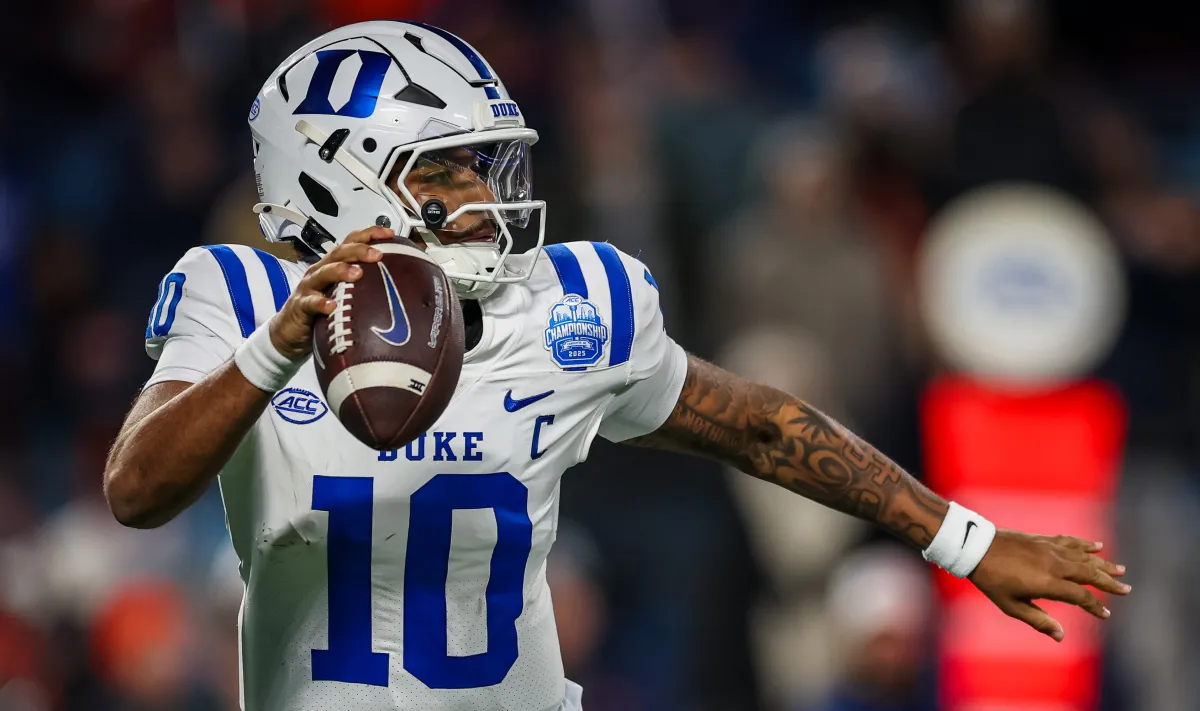
While the additions on defense and the perimeter generated plenty of excitement, the true fulcrum upon which Miami’s entire season balances is four-star transfer quarterback Darian Mensah. Stepping into the shoes of Carson Beck is a monumental task, but Mensah arrived in Coral Gables boasting a resume that commands immediate respect and instills a deep sense of optimism. Last season, while pulling the strings for the Duke Blue Devils, Mensah orchestrated an absolute juggernaut, leading Duke to a top-25 offense that put the entire country on notice by averaging a staggering 423.5 total yards and 34.6 points per game. Mensah himself was the undisputed crown jewel of the ACC’s passing game, pacing the entire conference with an incredible 3,973 passing yards and a jaw-dropping 34 touchdown passes. His journey from a highly touted recruit to a dominant collegiate playmaker has been defined by a quiet, unflappable confidence and an elite cerebral understanding of the game. For Mensah, transferring to Miami represents the ultimate platform to showcase his skills on the grandest stage of college football, trading the quiet, academic atmosphere of Duke for the legendary prestige and bright lights of the Hurricanes. The sheer gravity of his decision to join the Hurricanes has completely reshaped the landscape of the ACC, transforming Miami from a team in transition to an immediate, formidable favorite in the eyes of analysts and fans alike.
The buzz surrounding Mensah’s arrival in Miami is far from mere offseason hyperbole; indeed, it is backed up by the genuine apprehension of opposing coaches and executives who now have to figure out how to stop him. When discussing Mensah’s unique skill set, rival ACC coaches speak with a mixture of profound professional respect and genuine strategic concern, recognizing that his playmaking ability outside of structure makes him a defensive coordinator’s worst nightmare. One rival ACC coach, speaking anonymously to ESPN, marveled at Mensah’s uncanny ability to maintain pinpoint accuracy while on the move, noting that he actually threw deep balls with better precision when escaping the pocket than he did from a stationary position inside it. This coach described Mensah as “scary” because, unlike many modern quarterbacks who scramble merely to throw a safe checkdown or run out of bounds, Mensah remains aggressive, scanning the deep portions of the field to deliver devastating touchdown strikes. An anonymous ACC general manager echoed these sentiments, praising Mensah’s cerebral nature, his ability to deliver throws off-platform with ease, and his remarkable spatial awareness that allows him to pick up chunk yards on the ground when the defense drops too deep. This GM emphasized that Mensah is an incredibly smart player who consistently avoids taking bad sacks, displaying a veteran efficiency in quickly getting the ball into the hands of his primary playmakers and making the smart, winning play time and time again.
The dynamic potential of Mensah’s arrival is magnified tenfold when considering the elite offensive weapons he inherits in Miami, most notably the star-studded tandem of running back Mark Fletcher and explosive wide receiver Malachi Toney. The connection between a quarterback and his primary targets is something that cannot be manufactured overnight; it requires hours of sweat, shared frustration, and repetition during early morning throwing sessions when the cameras are off and the stadium is empty. In Malachi Toney, Mensah has a genuine superstar wide receiver who can turn a simple five-yard slant into a seventy-yard touchdown, a player whose route-running precision and elite catch radius complement Mensah’s off-platform throwing ability perfectly. Meanwhile, the presence of Mark Fletcher in the backfield provides a thunderous, physical running game that will force opposing defenses to stay honest, preventing them from dropping seven or eight defenders into coverage and opening up those deep-shot opportunities that Mensah loves to exploit. This combination of an elite, smart quarterback, a physical bell-cow running back, and a dynamic perimeter threat has opposing defensive coordinators pulling their hair out before the season even begins. The sheer excitement of this offensive synergy has created a palpable buzz throughout Miami, as fans eagerly anticipate the explosive, high-scoring fireworks that are sure to define the team’s offense in the coming months.
However, the path to a national championship is never entirely smooth, and the Hurricanes will have to overcome some significant challenges, particularly on the defensive side of the ball where they lost key stalwarts like Rueben Bain Jr. and Akheem Mesidor. Losing players of that caliber—individuals who could single-handedly disrupt an opposing offense’s game plan and generate pressure in key moments—is a devastating blow to any defense, and there will inevitably be some growing pains as the new transfers and young players find their footing. This defensive vulnerability places an even greater premium on the shoulders of Darian Mensah and the newly retooled offense, who must be prepared to carry the team, score at will, and offset any defensive deficiencies that may arise during the early stages of the grueling season. By pairing Mensah’s elite arm talent and cerebral playmaking with the addition of high-impact weapons like Cooper Barkate, the Hurricanes have built an offensive insurance policy capable of winning high-scoring shootouts against the best teams in the country. As the season approaches, the narrative surrounding the Miami Hurricanes is no longer just about the heartbreak of what they lost last year, but rather about the limitless potential of what they can achieve with a new leader at the helm. With a revamped roster, a terrifyingly explosive offense, and the painful lessons of the past fueling their fire, Miami is primed to make another run at college football immortality, eager to prove that this time, they have exactly what it takes to bring the national championship trophy back home to South Florida.