





Deep beneath the murky, rushing currents of the Savannah River, a profound piece of American history lay silent and forgotten for nearly two and a half centuries. This silence was finally broken when a crew with the U.S. Army Corps of Engineers, tasked with routine dredging to accommodate larger modern cargo ships, unexpectedly stumbled upon a massive cache of nineteen Revolutionary War-era cannons. The extraordinary discovery has been hailed by historians as the nation’s largest recovery of eighteenth-century artillery from a single Revolutionary War naval event. Now, on the eve of America’s 250th anniversary, these legendary relics have officially resurfaced to find a permanent home in Georgia’s oldest and most historic city, breathing new life into the stories of our nation’s founding.
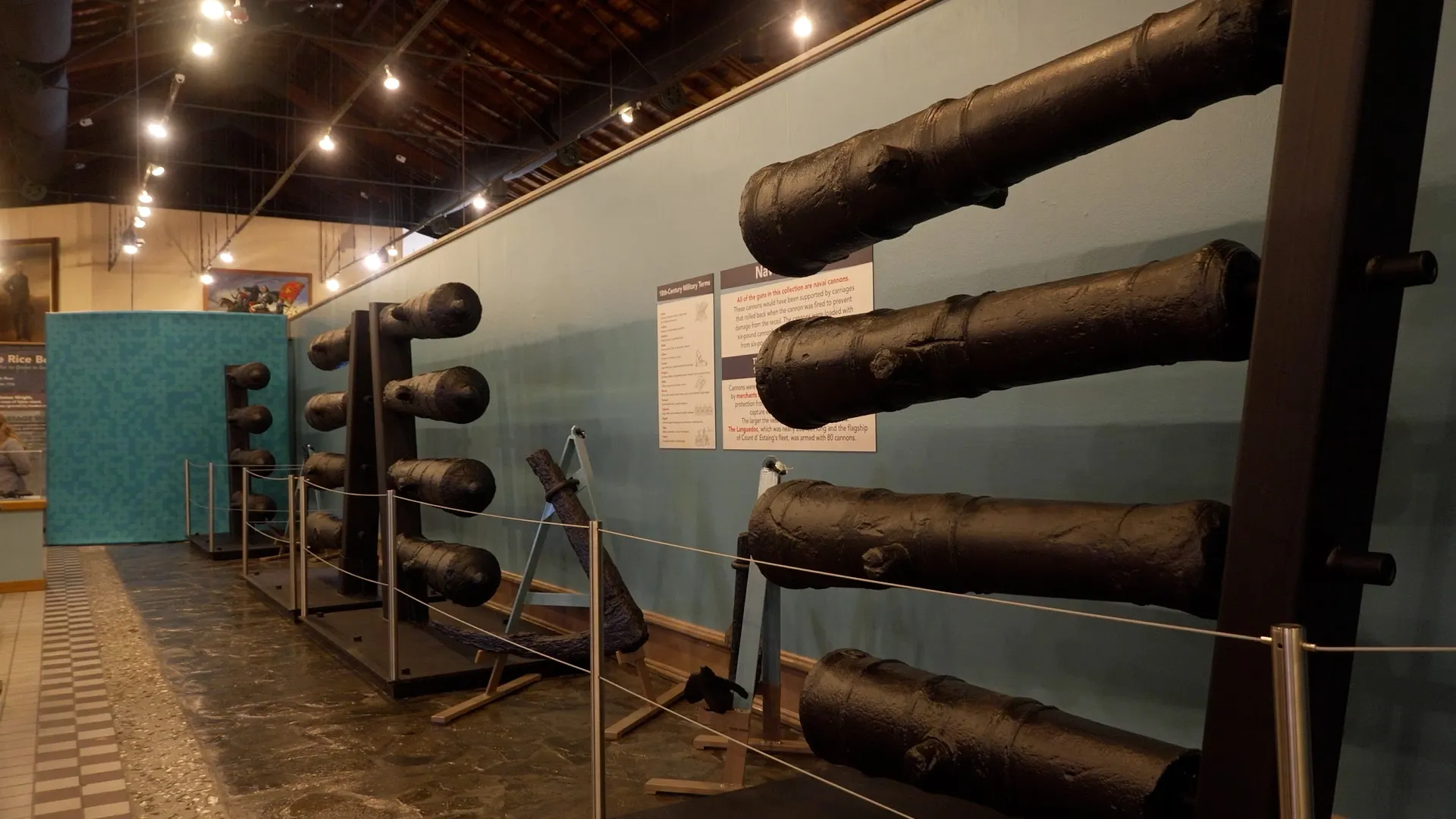
When the massive iron barrels were first hoisted from their muddy river grave, they were heavily blanketed in centuries of marine growth, caked in thick concretion, and clinging to countless oyster shells. Astoundingly, some of these weapons were still fully packed with their original cannonballs and gunpowder charges, frozen in time exactly as they were when they last saw battle. To preserve these fragile national treasures for future generations, they were sent to a specialized preservation laboratory at Texas A&M University. There, scientists subjected the artifacts to a painstaking conservation process, using electrical currents in water baths to desalinate and stabilize the iron, followed by protective acid and wax treatments to ensure they could survive on dry land.
Seventeen of the recovered cannons underwent this meticulous restoration, while the remaining two were intentionally left untouched, allowing museum visitors to observe a striking, side-by-side comparison of the raw, marine-encrusted iron versus the beautifully preserved metal. This entire collection is now the center of a major new exhibition titled “Loyalists & Liberty: Savannah in the American Revolution,” housed at the Savannah History Museum. For the first time in modern history, the public can stand face-to-face with these awe-inspiring weapons, which serve as a powerful, tangible link to the harrowing naval struggles that shaped the birth of the United States.
Historians believe these heavy guns met their watery fate in 1779 during the British occupation of Savannah, just weeks before the French and American forces attempted to reclaim the city. In a desperate tactical move to defend their stronghold, British forces scuttled several of their own ships at the narrowest point of the river, creating a makeshift underwater blockade. This clever defensive barrier successfully prevented the formidable French fleet from sailing upriver to support the land assault. The strategy forced a brutal land confrontation instead, leading directly to the Siege of Savannah, which remains one of the bloodiest and most fiercely contested battles of the entire Revolutionary War.
The historical significance of this exhibition is heightened by its location, as visitors are standing on the very ground where the devastating clash took place—a battle that saw over eight hundred casualties in less than an hour. The newly restored cannons act as a solemn, physical gateway to this violent past, anchoring the local naval history to the broader narrative of the war. After spending generations buried in darkness, these artifacts are finally reclaiming their place on the battlefield where the struggle for control of Georgia’s coast was decided, offering a profound sense of place to everyone who walks through the museum doors.
Ultimately, the “Loyalists & Liberty” exhibit uses these extraordinary artifacts as a backdrop to tell a much richer, more inclusive story of the American Revolution. Rather than focusing solely on famous generals and politicians, the museum highlights the diverse, everyday people who lived through the chaos of war, tracing the conflict through the personal perspectives of five unique historical figures—including Indigenous people, free and enslaved African Americans, women, and children. By weaving these marginalized voices together with the dramatic recovery of the river cannons, the exhibit shines a bright, humanizing light on the complex realities of the struggle for independence, making it a cornerstone celebration for America’s upcoming semiquincentennial.