






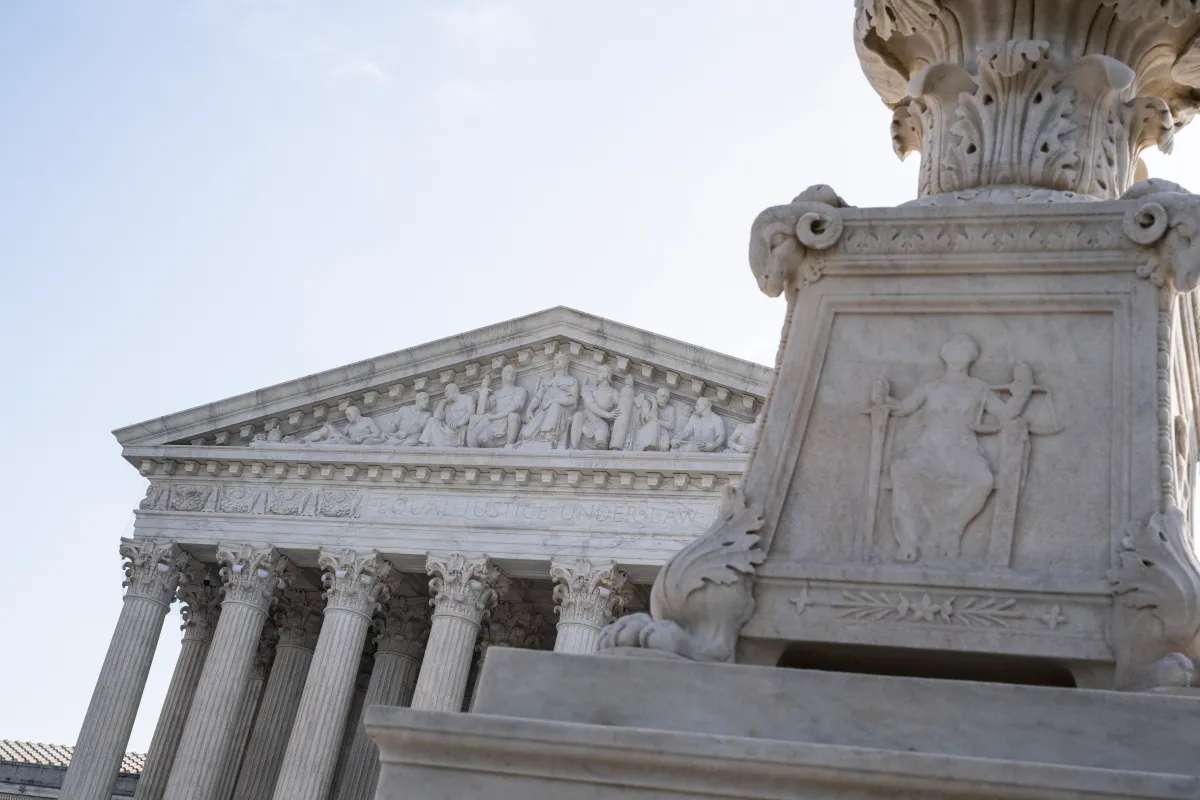
In the early days of the United States, the judicial branch of government carried so little weight that its reality would be unrecognizable to Americans today. Writing in the 78th Federalist Papers, founding father Alexander Hamilton famously described the judiciary as the “least dangerous” branch of our government, noting that it held neither the power of the purse to control finances nor the power of the sword to enforce laws. During those formative years, the Supreme Court was a modest, part-time institution that heard only a handful of cases annually, with justices borrowing spare office space in the U.S. Capitol just to get their work done. The position was held in such low regard that several early nominees actually turned down the opportunity to serve, viewing the appointment as lacking both prestige and influence. This humble origin story contrasts sharply with our modern reality, where justices command annual salaries exceeding $300,000, enjoy personal chambers, private security, and extensive staffs, and wield the lifetime power to shape the daily lives of millions of Americans across generations.
Today, rather than acting as a quiet arbiter, the Supreme Court has transformed into a dominant force in American life, handing down sweeping decisions on roughly 80 deeply consequential cases every year. This massive concentration of unelected power has led to a profound disconnect, as the public watches the court repeatedly toss out decades of established, sound legal precedents on matters of critical personal liberty. Major rulings on reproductive freedom, affirmative action, and voting rights have been dismantled along starkly ideological lines, leaving many regular citizens feeling as though their rights are subject to the political whims of a permanent judicial elite. Because justices are appointed for life, several current members of the bench could easily remain in office for up to nine presidential terms, meaning their personal legal philosophies will dictate the boundaries of American freedom long after the presidents who nominated them have left office.
Compounding this sense of alienation is a growing cloud of ethical questions surrounding the private conduct of the justices themselves. Daily headlines reveal a worrying pattern of behavior among the nation’s highest judges, deeply shaking the public’s faith in their impartiality. Everyday Americans see Justice Clarence Thomas accepting and failing to disclose decades of luxury travel funded by a wealthy political donor, while Justice Samuel Alito accepted expensive gifts from a hedge fund billionaire who subsequently had business interests before the court. Meanwhile, Justices Neil Gorsuch and Ketanji Brown Jackson have engaged in lucrative, highly publicized book tours, securing advances worth hundreds of thousands and even millions of dollars. When all six of the court’s conservative justices are seen socializing at a White House state dinner hosted by the very administration whose policies they are actively reviewing, it becomes increasingly difficult for the average citizen to believe the court operates above the political fray. Unsurprisingly, this has caused a full-blown crisis of institutional legitimacy, with public trust plummeting to historical lows and overall approval hovering around a dismal 42 percent.
In response to this trust deficit, the American people are overwhelmingly crying out for structural reform, with a striking 75 percent of the country uniting behind the idea of court term limits. This is not a partisan issue; poll after poll demonstrates that Democrats, Independents, and Republicans alike agree that a healthy democracy cannot sustain an institution that operates with zero accountability and no checks on its power. Indeed, the United States is virtually alone in this practice, as no other major democracy in the modern world grants unlimited lifetime tenure to its constitutional court judges. We witness the damaging side effects of our unique system during every vacancy: toxic and hyper-politicized confirmation battles, strategic retirements timed purely for partisan advantage, and a cynical race by presidents to nominate younger and younger jurists simply to lock in generational influence. This dynamic has warped the court from a neutral protector of the Constitution into a perpetual political battlefield, deeply out of touch with the diverse, evolving nation it is meant to serve.
To restore balance and sanity to this vital institution, Representative Johnny Olszewski has introduced the ROBE (Reform of Bench Eligibility) Act, a proposed constitutional amendment designed to establish a civilized, predictable limit of 18 years for Supreme Court justices. By implementing a regular, structured rotation of jurists, this reform would significantly lower the political stakes of any single judicial vacancy. Instead of treating every appointment as an existential crisis for the nation, the American public could rely on a fair and consistent schedule where every single presidential term has an equal opportunity to influence the court’s direction. While some reformers suggest achieving this change through ordinary legislation, a statutory approach is inherently fragile. A law passed by one Congress can easily be stripped away by the next, and any statutory limit on terms would inevitably trigger a constitutional lawsuit that would end up before the Supreme Court itself—placing the justices in the absurd position of ruling on their own job security. A constitutional amendment bypasses this legal trap entirely, establishing a permanent, indisputable standard that cannot be undone by political shifts.
Amending our nation’s founding document is a deliberately difficult process that requires a broad, sustained national consensus, but this high bar is a strength rather than a weakness. Reforms of this magnitude ought to be deliberate, thoughtful, and deeply reflective of the shared will of the American people, mirroring the strong bipartisan agreement we already see on the ground. Instituting an 18-year term limit will not solve all of our democratic challenges overnight, but it is a necessary, commonsense step toward rebuilding the public’s shattered trust in a court that has drifted dangerously far from its original mandate. By replacing lifetime appointments with a system of regular accountability, we can ensure that our highest court remains a true servant of the democratic principles it was created to protect. It is time for Americans of all political backgrounds to come together, reclaim the integrity of our judiciary, and enact a reform that aligns our highest legal institution with the values of the people.