





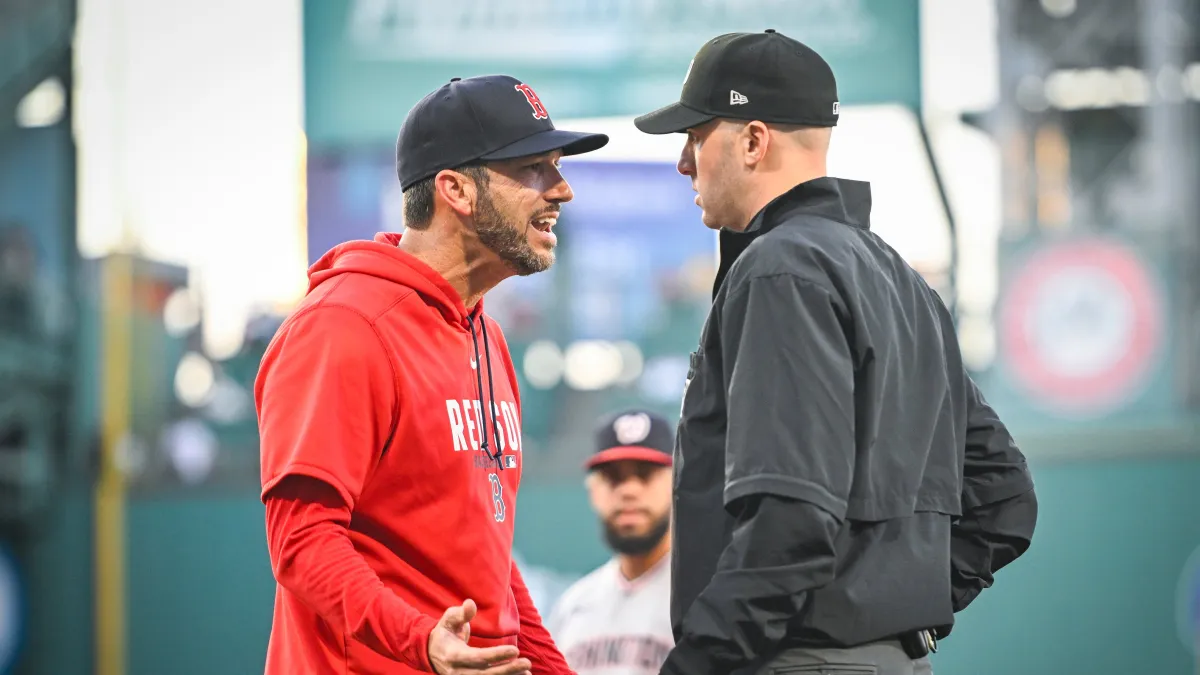
In the high-pressure world of Major League Baseball, where every decision is dissected by millions and a manager’s shelf life can be shorter than a summer breeze, Chad Tracy is carving out a quiet sanctuary of his own making. Stepping into the high-stakes role of interim manager for the storied Boston Red Sox is daunting enough under normal circumstances, but doing so amidst the swirling, chaotic tempest of the annual trade deadline requires a unique psychological armor. With the clock ticking down toward the league’s hard line for roster transactions, Tracy has made a conscious, survivalist decision to completely disconnect from the outside world, putting his phone on do-not-disturb and ignoring the relentless hum of the rumor mill. It is a choice born of necessity rather than ignorance; in a digital landscape where trade speculation spreads like wildfire and hypothetical blockbusters dominate the airwaves, maintaining focus on the game at hand is a monumental challenge. Tracy frankly admitted that keeping tabs on the endless notifications and speculative reports would be an absolute “disaster” for his mental clarity. By choosing silence over the constant pinging of insider reports, Tracy is attempting to preserve not just his sanity, but the focus of a clubhouse that looks to him for stability during one of the most volatile weeks of the baseball calendar.
The sheer scale of the rumors surrounding the Red Sox only justifies Tracy’s digital detox, as the names linked to Boston in various media reports represent a fantasy baseball draft of epic proportions. The baseball world has spent weeks speculating on the potential acquisition of generational talents and established stars, sending the Fenway faithful into a frenzy of anticipation. Imagining a lineup bolstered by the electric athleticism of Cincinnati Reds shortstop Elly De La Cruz, the pure hitting prowess of San Francisco Giants second baseman Luis Arraez, or the elite backstop presence of Baltimore Orioles catcher Adley Rutschman is enough to make any manager’s mouth water. Add to that the intriguing potential of Los Angeles Angels shortstop Zach Neto or the utility depth of Miami Marlins infielder Otto Lopez, and the emotional pendulum swings wildly between utopian optimism and agonizing suspense. For the fans, these rumors are the lifeblood of late-July excitement, but for a manager who must write a lineup card every afternoon based on the actual human beings occupying his locker room, these hypothetical scenarios are nothing more than a dangerous distraction.
Beneath the glittering surface of superstar trade rumors lies a much more pressing, practical emergency that the Red Sox front office is desperately scrambling to address before Monday’s 6:00 p.m. Eastern deadline. The team’s infield has been a revolving door of necessity, a vulnerability exposed in the harshest light by a cruel stroke of bad luck surrounding their newest acquisition, Curtis Mead. Brought in from the Washington Nationals to provide a much-needed spark and defensive stability at second base, Mead’s Boston tenure was tragically derailed almost before it could begin, as he found himself relegated to the injured list a mere forty-eight hours after putting on the Red Sox uniform. This sudden setback shattered the front office’s immediate plans and threw the coaching staff back into a state of reactionary improvisation. Now, with the deadline looming like a shadow over the team’s final pre-deadline clash against the powerhouse Los Angeles Dodgers, the urgency to push another deal across the finish line has reached a fever pitch, turning what was once a search for marginal improvement into an essential mission for positional survival.
While the front office works the phones in search of a permanent savior, the daily burden of keeping the Red Sox competitive falls onto the shoulders of a trio of unheralded players: Anthony Seigler, Andruw Monasterio, and Romy Gonzalez. These are the men currently holding down the fort up the middle, playing through an atmosphere of profound uncertainty where they are fully aware that their roster spots could be sacrificed at any moment for a shiny new acquisition. There is a deep, often overlooked human element to this dynamic; these athletes are not just names on a depth chart, but individuals fighting for their major league careers under the intense scrutiny of the Boston media market. Every ground ball fielded, every turn of a double play, and every plate appearance carries an added weight of survival, as they know a single phone call to Tracy’s office could signal the end of their run in a Red Sox uniform. Managing this delicate psychological landscape is perhaps Tracy’s most difficult task, requiring him to instill confidence in players who are simultaneously reading the writing on the wall.
This separation of church and state—the divide between the dugout where Tracy manages and the front office where the executives orchestrate the future—is the foundation of Tracy’s philosophy during this chaotic period. He understands that his role is not to play general manager, nor is it to stress over negotiations that he has absolutely no power to influence. By refusing to engage with the endless cycle of “insider” tweets and breaking news alerts, Tracy establishes a boundary that protects his focus and, by extension, the focus of his coaching staff. He recognizes that in the high-stakes game of professional sports, rumors are often currency used by agents and rival executives to manipulate leverage, containing only a fraction of actual truth. For Tracy, the only reality that matters is the one validated by an official phone call from the front office confirming a completed trade. Until that notification arrives through official channels, he remains fiercely committed to the roster at hand, refusing to waste mental energy on hypothetical lineups that may never materialize.
As the Red Sox prepare to take the field against the Los Angeles Dodgers on Sunday, the tension in the air is palpable, yet Tracy’s dugout remains a zone of deliberate focus. The upcoming 6:00 p.m. Monday deadline represents a watershed moment for the franchise, a line in the sand that will define the trajectory of their season and shape the identity of the team for the months to come. Yet, when the first pitch is thrown, the noise of the trade market will fade into the background, replaced by the timeless rhythms of the game itself. Chad Tracy will stand at the top of the dugout steps, his eyes fixed on the diamond, completely unplugged from the digital chaos that consumes fans and analysts alike. When the deadline finally passes and the roster is locked in, Tracy will finally pick up his phone, receive the official word on who is coming and who is going, and begin the arduous task of piecing together the puzzle of the Red Sox infield. Until then, he will continue to embrace the quiet, leading his men with a steady hand and proving that sometimes the best way to navigate a storm is simply to ignore the wind.