





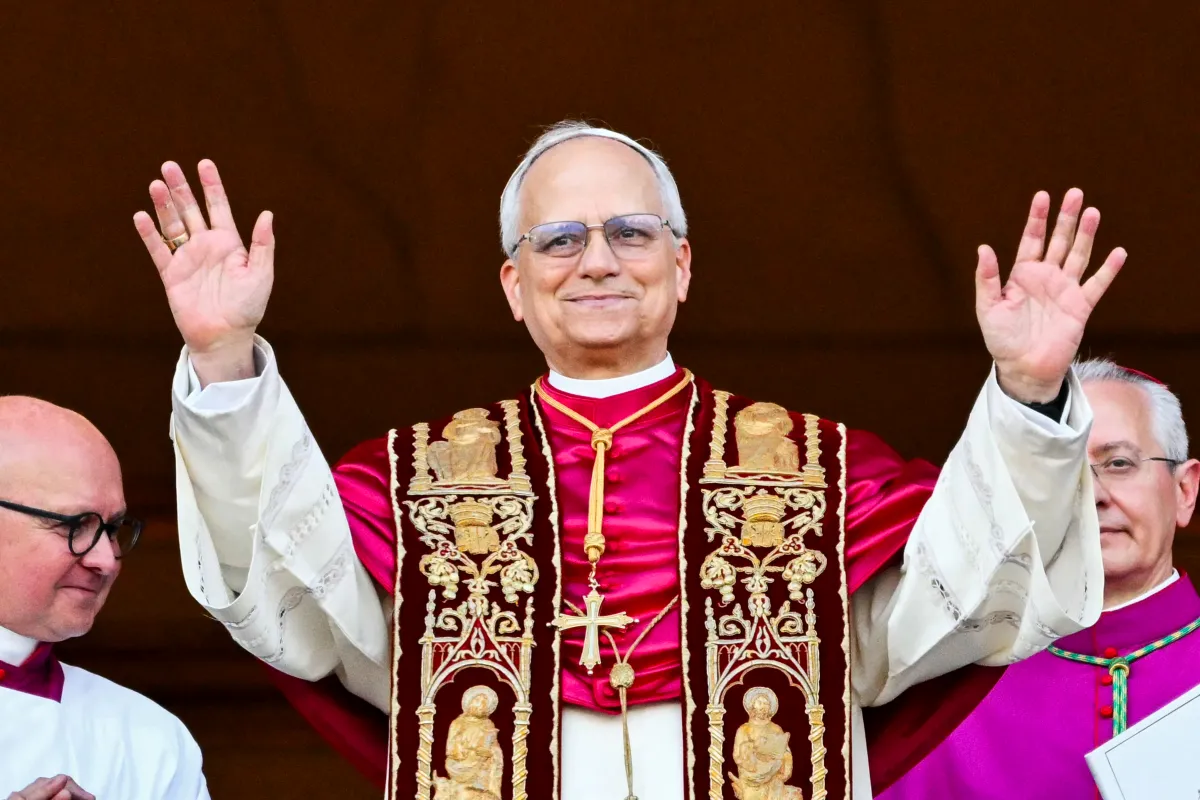
In a deeply symbolic pilgrimage that bridged the historical origins of American sanctity with the pressing geopolitical crises of the twenty-first century, Pope Leo XIV walked through the sun-drenched, historic streets of Sant’Angelo Lodigiano in northern Italy to honor Saint Frances Xavier Cabrini. For Leo, the first American pontiff in the history of the Catholic Church, this was more than a routine pastoral visit; it was a deeply personal homecoming to the birthplace of a woman who defined the immigrant experience. Kneeling in quiet contemplation before the tomb of Mother Cabrini, the patron saint of migrants, the Pope signaled a profound continuity with his predecessor, Pope Francis, reinforcing the defense of displaced peoples as the moral centerpiece of his pontificate. The atmosphere in the Lombardy region was thick with both reverence and contemporary relevance, as Leo used the memory of a delicate nineteenth-century nun—who left this very soil to care for destitute Italian immigrants in the crowded tenements of New York and Chicago—to address the sharp political fractures currently dividing his home country. In doing so, the American Pope sought to reframe the toxic debate surrounding global migration not as a matter of partisan border security, but as an urgent, non-negotiable spiritual obligation to recognize the dignity of the human person.
To truly understand the weight of Leo’s message, one must look beyond the plaster statues of Mother Cabrini and engage with the grit, sweat, and tireless resolve of her actual lived experience, which the Pope urged today’s youth to study with open hearts. Born in Sant’Angelo Lodigiano in 1850, Frances Xavier Cabrini was a woman of fragile physical health but ironclad spiritual determination: she crossed the Atlantic Ocean dozens of times in an era when such journeys were fraught with danger, establishing a vast global network of schools, hospitals, and orphanages for those who had nothing. Her journey ended in 1917 in Chicago—Leo’s own native city—where she died as a naturalized United States citizen, eventually becoming the first American to be canonized as a saint in 1946. Standing in her birthplace, Leo challenged the younger generation to look past modern superficialities and immerse themselves in Cabrini’s letters, travel diaries, and retreat notes to discover a vibrant “missionary charism” that remains astonishingly relevant today. The Pope poignantly asked his listeners to consider how Cabrini’s fierce, protective spirit would respond to the contemporary global refugee crisis, connecting her legacy directly to Pope Francis, who, as the child of Italian immigrants to Argentina, made the defense of the marginalized the guiding light of his own ministry. By holding up Cabrini as a mirror to modern society, Leo sought to humanize the statistical abstract of migration, reminding the world that behind every legal status is a human soul seeking safety and hope.
This insistence on the human cost of migration has placed Pope Leo XIV on a direct collision course with the prevailing political currents in the United States, most notably sparking a high-profile ideological clash with the Trump administration. The public tension between the Vatican and the American president over aggressive immigration enforcement has severely tested the traditional loyalties of American Catholics, creating deep ideological rifts that are now showing up in public opinion data. Recent polling from the Public Religion Research Institute highlights a highly polarized landscape: while Pope Leo remains remarkably popular overall, enjoying a fifty-six percent favorability rating compared to Donald Trump’s thirty-four percent, a closer look at a recent Pew Research Center survey reveals alarming partisan fractures within the pews. Favorability for the American Pope among his fellow U.S. Catholics has slipped from eighty-four percent to seventy-eight percent over the past year, a decline driven almost entirely by conservative-leaning, less-frequent churchgoers who find themselves torn between their political allegiances and their spiritual leader’s progressive social doctrines. This statistic illustrates a profound pastoral challenge for Leo, highlighting how deeply American faith has become entangled with partisan identity, where the radical Gospel mandate to “welcome the stranger” is increasingly viewed through a secular, political lens rather than a spiritual one.
Undeterred by domestic political pushback, Leo has chosen to elevate his advocacy by turning his public travels into a series of powerful, prophetic signs, including a highly anticipated trip to the Italian island of Lampedusa on the fourth of July. Choosing to spend American Independence Day on this remote, sun-baked Sicilian island—a primary landing point for migrants escaping extreme poverty and violent conflict in North Africa—carries an undeniable symbolic weight, recalling Pope Francis’s own historic, field-defining first apostolic journey outside of Rome. This upcoming pilgrimage follows closely on the heels of Leo’s recent exhausting two-day visit to Spain’s Canary Islands, another perilous frontier of global displacement where West African migration has strained local resources and tested European solidarity. In both of these fragile border regions, Leo’s message has remained unflinchingly consistent: he calls not just for the passive tolerance of refugees, but for their active integration, protection, and embrace into the societal fabric. By physically traveling to these volatile geographical edges of the Western world, the Pope insists that the moral health of a civilization is judged not by the height of its walls or the efficiency of its deportations, but by its willingness to open its doors to the most vulnerable.
Before arriving in Cabrini’s hometown to champion the cause of migrants, Leo began his day trip in the nearby ancient city of Pavia, embarking on a deeply personal pilgrimage to pray at the tomb of Saint Augustine of Hippo, the intellectual godfather of Western Christianity. For the Pope, who proudly declared himself a “son of Saint Augustine” on the historic night of his papal election and has integrated Augustinian theology into his dynamic teaching, this stop was an opportunity to confront the creeping secularization currently emptying European churches. Standing before the silent, majestic tomb of the fifth-century bishop, Leo spoke directly to the spiritual weariness of a modern Italy where traditional religious practices have steadily declined, marriages in the church have plummeted, and Sunday liturgies are increasingly unattended. In a society that has seemingly lost its spiritual appetite and no longer finds the ancient Christian message compelling or fashionable, Leo asserted that the Church’s primary and urgent task is to boldly reproclaim the joy of the Gospel. He pointed to Augustine not as a dry, historical relic of the intellectual past, but as a living source of hope for contemporary searchers, reminding the faithful that the journey of faith always begins with an honest, courageous examination of one’s own heart.
By weaving together the intellectual legacy of Saint Augustine with the active, hands-on missionary service of Saint Frances Xavier Cabrini, Pope Leo XIV presented a cohesive, beautiful vision for the future of the Catholic Church. Augustine—who was himself born in North Africa and crossed the Mediterranean Sea to Milan, where he famously converted to Christianity—wrote extensively about interiority, the profound spiritual practice of searching for ultimate truth and lasting peace within the quiet depths of the human soul. For Leo, this interior search for God is not an excuse to retreat from the world’s harsh realities, but is the exact spiritual fuel required to go out and serve the marginalized, transforming personal contemplation into active, radical social justice. The historical parallels of the day were striking and poetic: a North African philosopher-saint who traveled to Italy, an Italian nun-saint who traveled to America, and now the first American pope traveling back to Italy to defend the travelers of the modern world. In this grand circle of saints and travelers, Pope Leo XIV reminded a polarized global community that whether one is searching for God in the quiet pages of Augustine’s Confessions or serving the displaced on the dangerous shores of Lampedusa, the heart of the Christian faith remains a journey of love, encounter, and radical hospitality.