





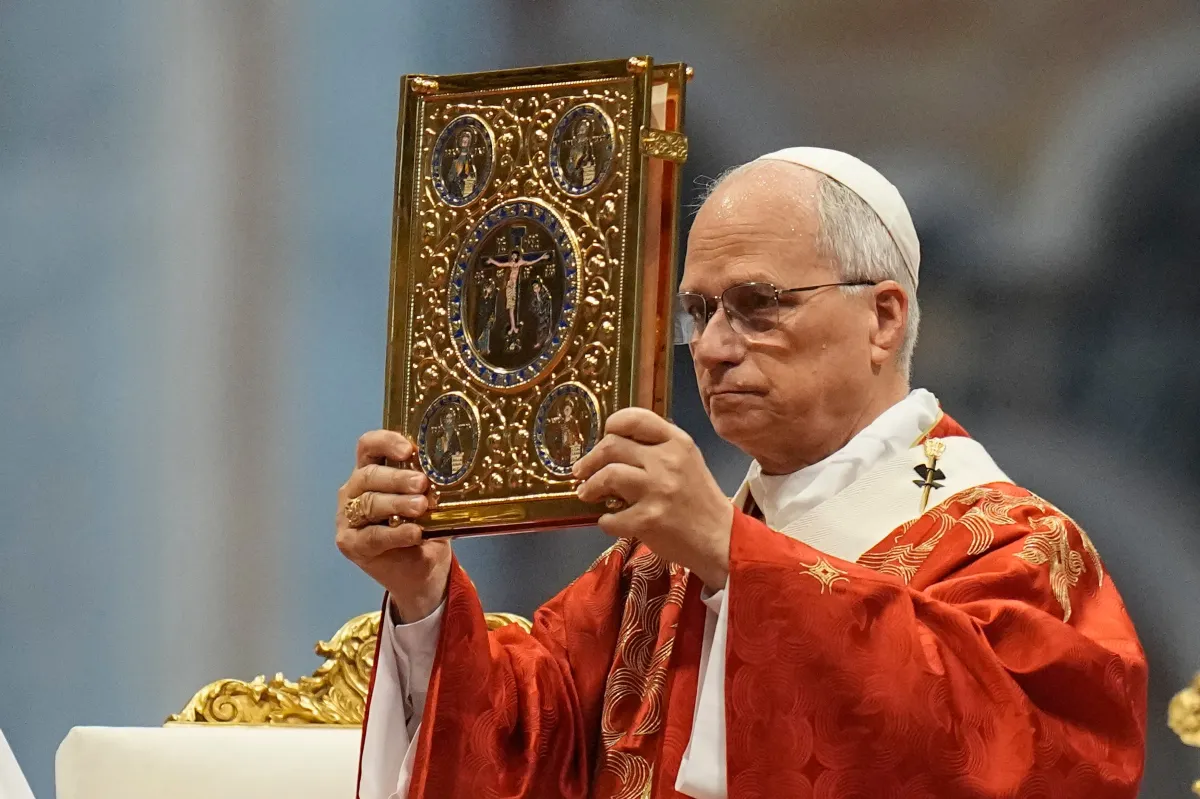
As the quiet alpine dawn broke over the small Swiss village of Écône on Wednesday morning, a heavy, almost suffocating silence hung over the international seminary of the Society of St. Pius X (SSPX), contrasting sharply with the feverish anxiety gripping the ancient, sun-baked stone corridors of the Vatican. At the center of this gathering storm stands Pope Leo XIV, a pontiff who suddenly finds himself grappling with the most profound and painful crisis of his young papacy—a looming, agonizing rupture that threatens to tear the fabric of the global Catholic Church apart. The immediate trigger for this high-stakes ecclesiastical drama is the SSPX’s defiant decision to move forward with the unauthorized consecration of four new bishops, an act that Rome has repeatedly warned crosses a definitive canonical red line. By laying hands on these four men without the explicit, formal mandate of the Holy See, the traditionalist priestly society has effectively chosen to step off a spiritual cliff, risking an immediate, automatic excommunication for all key participants and raising the terrifying specter of a permanent, formalized division within the Church. For Vatican observers and faithful Catholics worldwide, the unfolding sequence of events in Switzerland is not merely a bureaucratic disagreement over canon law, but a deeply human tragedy, highlighting the profound emotional and theological chasm that continues to separate the modernizing mainstream of the Roman Catholic Church from its most staunchly traditionalist, Latin-Mass-preserving sons and daughters.
To fully comprehend the deep, agonizing wounds that this current crisis has reopened, one must look back half a century to the turbulent aftermath of the Second Vatican Council, an era when the Catholic Church sought to throw open its windows to the modern world, changing its liturgy from the ancient Latin to the vernacular and radically altering its relationship with other faiths. It was during this period of monumental cultural and theological upheaval that a charismatic, deeply conservative French archbishop named Marcel Lefebvre founded the SSPX, driven by a profound conviction that the Vatican’s new reforms represented a dangerous betrayal of timeless Catholic dogma and the centuries-old Latin Mass. The tension between Lefebvre’s growing movement and the Holy See simmered for decades until reaching a catastrophic boiling point in the summer of 1988, when the aging archbishop, fearing that his traditionalist crusade would die with him, took the drastic, illicit step of consecrating four bishops at Écône without the consent of Pope John Paul II. That dramatic act of defiance resulted in the immediate, painful excommunication of Lefebvre and his newly ordained prelates, plunging the traditionalist world into a cold, decades-long exile and establishing a precedent of division that successive popes, most notably Benedict XVI, spent years of delicate, patient diplomacy trying to heal. Today, as the SSPX repeats the exact same illicit act in the very same Swiss seminary, the ghosts of 1988 have returned to haunt the Vatican, threatening to shatter decades of fragile dialog and undoing years of painstaking reconciliation efforts.
At its core, this bitter impasse is driven by two radically different, yet deeply held, spiritual worldviews, making the conflict as much a human struggle of conscience as it is a legal dispute over Church governance and authority. For the Vatican and the vast majority of the world’s 1.3 billion Catholics, the office of the Pope is the ultimate, visible symbol of the Church’s unity, and the act of ordaining a bishop without his direct permission is viewed as a direct, unacceptable assault on the apostolic succession that binds the worldwide flock together. In Catholic theology, bishops are not merely local administrators, but successors to Christ’s apostles, responsible for preserving communion with the Bishop of Rome; thus, to create bishops outside of this sacred communion is to fundamentally fracture the Church’s spiritual integrity, creating a parallel, rival hierarchy. Yet, for the priests, seminarians, and laypeople who make up the SSPX, the perspective is entirely different, rooted in a desperate, almost apocalyptic belief that the post-conciliar Church is suffering from a catastrophic crisis of faith, characterized by rampant secularization, liturgical abuses, and a watering down of traditional moral teachings. For these traditionalists, clinging to the ancient Latin liturgy and the undisturbed doctrines of the pre-Vatican II era is not an act of arrogant rebellion, but a heroic, agonizing duty to preserve the true Catholic faith for future generations, even if it means enduring the immense pain of being labeled outcasts by the very Rome they claim to love and honor.
This profound psychological and emotional divide was laid bare in a stunning, intensely personal exchange on the eve of the consecrations, revealing the deep humanity and quiet desperation of both leaders as they stared into the theological abyss. On Tuesday, as a final, desperate diplomatic effort, Pope Leo XIV took the extraordinary step of bypassing formal, icy curial channels to write a direct, deeply emotional letter to the Reverend Davide Pagliarani, the Superior General of the SSPX, pleading with him to halt the impending ceremony. “I plead with you and ask you with all my heart: please turn back!” Leo wrote, his words carrying the heavy, exhausting burden of a shepherd watching a portion of his flock willingly walk toward self-destruction. This raw, public appeal from the Pope bypassed the typical dry, legalistic phrasing of Vatican decrees, revealing instead the aching heart of a father figure begging his spiritual children to prioritize the fragile, essential gift of unity over their own theological certainties. The image of the head of the global Catholic Church begging a rebellious traditionalist superior to turn back underscores the sheer scale of the stakes, demonstrating that for Pope Leo, the preservation of communion is not about exercising bureaucratic power, but about maintaining the integrity of Christ’s mystical body.
Yet, the SSPX’s response to this heartfelt papal appeal was equally revealing, showcasing a complex, paradoxical blend of profound filial devotion and unyielding, stubborn defiance that has long characterized the traditionalist movement. In his respectful but firm reply to the pontiff, Father Pagliarani sought to assure the Pope of the Society’s ongoing loyalty, while simultaneously presenting a passionate, desperate defense of their controversial actions. “Far be it from us to separate ourselves from the Roman Church,” Pagliarani wrote to Pope Leo, framing the illicit consecrations not as an act of cold secession, but as an extraordinary, emergency measure born out of love for a suffering parent. “We desire, on the contrary, to serve her by means that are extraordinary, as one would assist a mother in distress who requires particular help, even if such help is not understood by everyone.” By using the evocative, deeply emotional image of a “mother in distress,” the SSPX leader sought to justify their canonical transgression as a spiritual act of mercy, arguing that the modern Church’s theological crises have created a state of absolute necessity that obligates them to act independently of Rome to ensure the survival of the traditional priesthood and the sacraments.
As the smoke from the incense clears in the chapel at Écône and the reality of the newly consecrated bishops sets in, the global Catholic community finds itself standing at a dangerous, highly uncertain historical crossroads. The immediate canonical consequences are clear and devastating: under the Church’s strict Code of Canon Law, the act of consecrating a bishop without a papal mandate triggers an automatic, self-inflicted excommunication (latae sententiae) for both the ordaining prelates and those receiving the sacrament, a penalty that signifies the severest possible rupture of spiritual communion. This tragic outcome represents a massive setback for Pope Leo XIV, whose early pontificate will now be permanently marked by this painful, historic division, forcing him to balance the defense of canonical discipline with his natural pastoral desire for reconciliation. For the ordinary, everyday faithful—families who attend SSPX chapels out of a simple devotion to the beauty of the traditional Latin Mass—this crisis brings immense emotional distress, leaving many caught in a painful limb, torn between their love for ancient tradition and their deep, insticitive desire to remain in full communion with Saint Peter. In the coming weeks and months, as Rome officially addresses the fallout of Wednesday’s event, the Church will have to grapple with the painful reality that in an increasingly polarized world, the threads of unity, once severed, are incredibly difficult to ever weave back together.