


There’s no pain in sports quite like the one that arrives in late September, when a team that spent all summer looking inevitable suddenly starts to come apart in slow motion. For the Philadelphia Phillies, that pain has become impossible to ignore. Three straight losses have turned what was a settled postseason picture into a desperate, nail-biting, ridiculous scramble. Just three weeks ago, FanGraphs gave the Phillies a 99.7 percent chance to make the playoffs. That number felt like a formality, a fancy way of saying “they’re in.” The team was supposed to be sharpening its edge for October, not clinging to the final weekend of the regular season like a nervous hitchhiker. But here they are, entering the last series needing a win just to keep their postseason hopes alive. Not a division title. Not a preferred bracket. Just survival. The best-case scenario is that they somehow find a way in, even with a lineup that has gone quiet, a bullpen that has become a national punchline, and a starting rotation that may be missing one of its most important arms. The worst-case scenario is even darker: the Arizona Diamondbacks, a team that looked dead not long ago, could sweep past them on the final day and take the last wild-card spot. Three weeks ago, that would have seemed absurd. Now it feels like the most predictable nightmare imaginable. And the numbers, as cruel as they are, don’t care about fan frustration or veteran leadership or all the good vibes from earlier in the season.
The situation has shifted so quickly that it almost doesn’t seem real. The Phillies were cruising. They were the team nobody wanted to face in October. They had experience, star power, and a proven track record of playing under pressure. But while they were busy looking ahead, the Diamondbacks were quietly doing exactly what they needed to do. Arizona entered its series opener against the San Diego Padres on Friday riding a five-game winning streak. And thanks to the mechanics of the baseball calendar, they couldn’t have asked for a better moment to keep rolling. The Padres had already locked up their own wild-card spot, which meant they had zero incentive to burn their best pitchers against Arizona. Why risk an injury or waste an ace in a game that doesn’t matter? The same logic applied to the Phillies’ opponent in the final weekend. The Tampa Bay Rays, the best team in the American League, have no reason to roll over, even if they might have preferred a different matchup down the stretch. They are too good, too deep, and too proud to simply hand the Phillies anything. And if that weren’t enough, the Phillies have to stare at the standings, knowing that a tie with Arizona isn’t good enough. The Diamondbacks hold the tiebreaker. That small, maddening detail could be what ultimately cost Philadelphia the season. It means the Phillies don’t just need wins; they need the Diamondbacks to lose at least once, or they need to win everything themselves and take control of their own fate. Either way, the margin for error has collapsed to zero. A team that once had a 99.7 percent chance of playing in October is now one bad afternoon away from a winter full of awkward questions and agonizing regret.
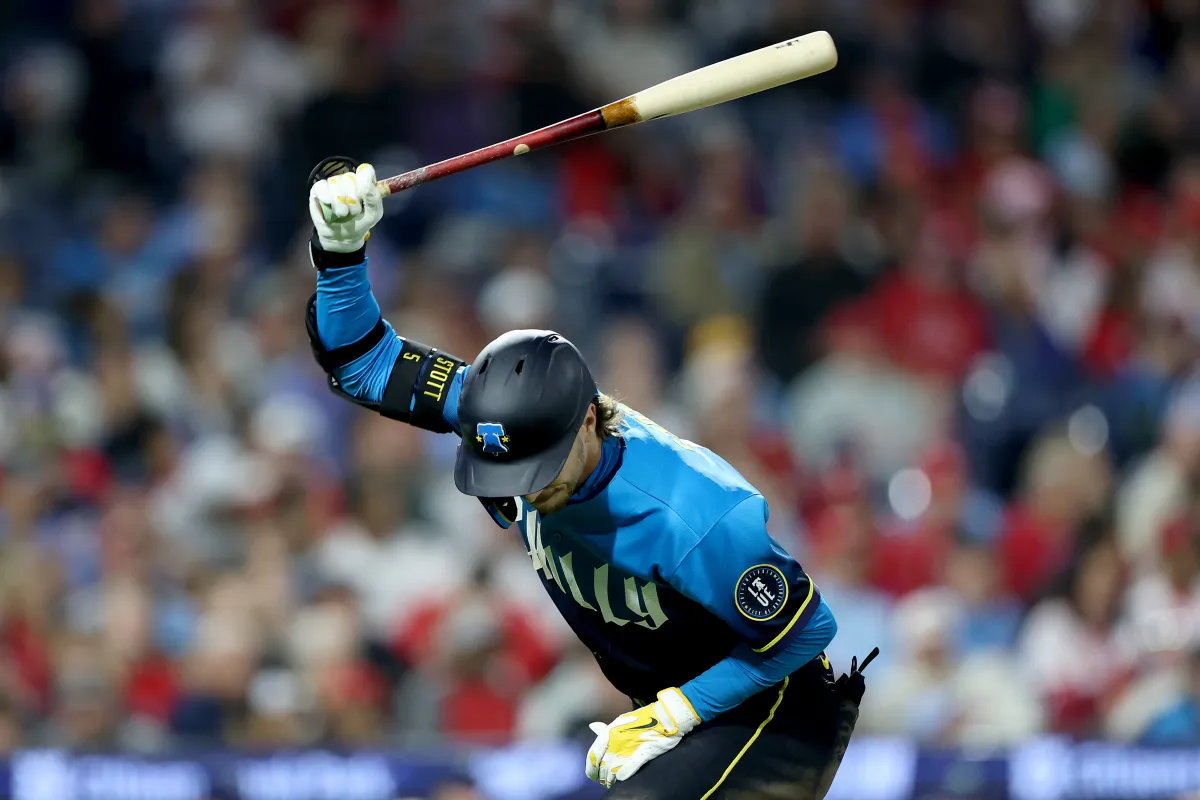
If the Phillies are going to survive, they need to start hitting—and quickly. Lately, that has been almost impossible to watch. Over their previous three series against the Washington Nationals, the New York Mets, and the Milwaukee Brewers, the Phillies hit a combined .201 with a painfully low .617 OPS. That’s not a slump; that’s a complete offensive breakdown. They’re scoring just 3.3 runs per game over that nine-game stretch, and far too often the games have followed the same heartbreaking script: base runners, wasted opportunities, a double play at the worst possible moment, and a reliever who eventually cracks under the weight of all those stranded traffic cones. On Friday, the Milwaukee pitching staff combined on a shutout, allowing just four hits and making the Phillies look helpless. Four. Hits. It was the kind of performance that gets hitters churning at night, replaying swings and misses and the sound of a breezing fastball clipping the outside corner. Then came the news about Luis Arraez. The Phillies’ clean-hitting specialist, the man who leads all of baseball with a .310 average, sprained his left ankle on Thursday and is now doubtful for the rest of the regular season. Arraez is not a prototypical slugger. He’s not going to hit 35 home runs or throw a hundred miles per hour. But he puts the ball in play, he grinds out at-bats, and he somehow reaches base even on nights when everyone else is hopelessly out of sorts. Losing him at this moment feels almost malicious, like the baseball gods decided to add insult to an already painful collapse. The Phillies have plenty of stars who can swing a bat, enough that Arraez might not be the reason they score or fail to score another run. But his absence leaves yet another hole in a lineup that can’t afford any more.
Then there is the pitching staff, which is where the Phillies’ hopes may be the most fragile. When the season began, the rotation was supposed to be a strength. And for a while, even with bumps along the way, the pieces seemed capable of carrying the team. Jesus Luzardo looked like the kind of midseason acquisition who could give the Phillies a legitimate difference-maker in the playoffs. Over a seven-start stretch, he posted a 1.08 ERA and performed as well as anyone on the staff. Then came the shoulder inflammation after his September 7th shutout of the Braves. He has been shut down, silenced, and placed in that baseball purgatory where every bullpen session feels like a clue and every doctor’s note feels like a verdict. Luzardo did throw a 30-pitch bullpen on Thursday, which was encouraging. But there are still major questions about whether he’ll be built up enough to pitch meaningful innings, or whether he’ll even be available as a reliever. It’s a frustrating puzzle for a team that needs a miracle just to get into the postseason. Meanwhile, the bullpen has been nothing short of disastrous in the middle innings. The fifth-through-seventh inning group has a combined 5.26 ERA, the worst in baseball. Orion Kerkering, once a reliable option, was optioned after allowing ten runs in just four September appearances. Ten runs. In four games. It was no longer about bad luck; it was about a bullpen running on fumes and bad memories. Even if the Phillies do somehow squeak into the wild-card round, can anyone honestly trust this relief corps to protect a lead? The answer, right now, is terrifying.
What makes all of this even more unsettling is the storm bearing down on the East Coast. There is not just tension in the air, but an actual Nor’Easter, a fitting metaphor for the chaos that has enveloped the Phillies’ season. On Saturday, with their playoff lives hanging by a thread, Philadelphia will turn to a bullpen game to try to beat the Tampa Bay Rays. A bullpen game. In the final weekend of the regular season. With a postseason berth at stake. If you’d told someone in September that this was the plan, they would have laughed in your face. But this is where the Phillies are, and this is what desperation looks like in a sport that often makes no sense. They cannot look ahead to Sunday. They cannot count on the Diamondbacks losing or the Padres suddenly remembering they have a rivalry to play spoiler in. The only thing they can control is what happens when they take the field, and so far, they have not given anyone a reason to believe they can handle the pressure. The pitching will be cobbled together. The offense will face a barrage of arms that have every reason to try their hardest. There is no room left for excuses or moral victories or “we showed heart” speeches. The Phillies need to win, plain and simple. And if they don’t, the collapse will go down as one of the most stunning in recent baseball history—a team that had a 99.7 percent chance of making the playoffs and somehow turned it into a month of self-inflicted wounds until there was no room left to hide.
But even now, with the odds suddenly pointing against them, baseball still leaves a sliver of room for something impossible. There’s a reason we watch the sport until the very last pitch. It has a way of creating fairy tales and tragedies out of the same moment, depending on who makes the play and who makes the error. For the Phillies, the story isn’t finished yet. They still have a chance, however small, to grab hold of the game with both hands and remind everyone what they were supposed to be. Maybe they’ll find the offense that has been hiding for weeks. Maybe the bullpen will somehow hold together. Maybe a team that has looked exhausted and fractured will discover a spark in the cold final days of September. Or maybe they’ll fall apart completely, and the Diamondbacks will dance into October while the Phillies are left to answer the same questions over and over again all winter long. That’s the cruel beauty of this game. For as much as we love the numbers and the analytics and the carefully constructed sabermetric projections, the game is played by humans. Humans who feel the weight of every pitch, every at-bat, every potential last game. It’s not a math equation. It’s a heartbreak waiting to happen. The Philadelphia Phillies know that better than almost anyone right now. They can still seize the season, still turn all of this suffering into a story they’ll tell for generations. But to do that, they’ll have to conquer more than just the Tampa Bay Rays. They’ll have to outrun their own bats, patch together just enough pitching, and somehow find the courage to believe again after so many disasters. It’s not the season they wanted. It’s not even close. But in baseball, you only need one game, one break, one swing to change everything. And for the Phillies, that one swing is still out there somewhere, waiting for the moment when the season hangs in the balance and the whole world seems to hold its breath.