






Paragraph 1: The Quiet Theater of August
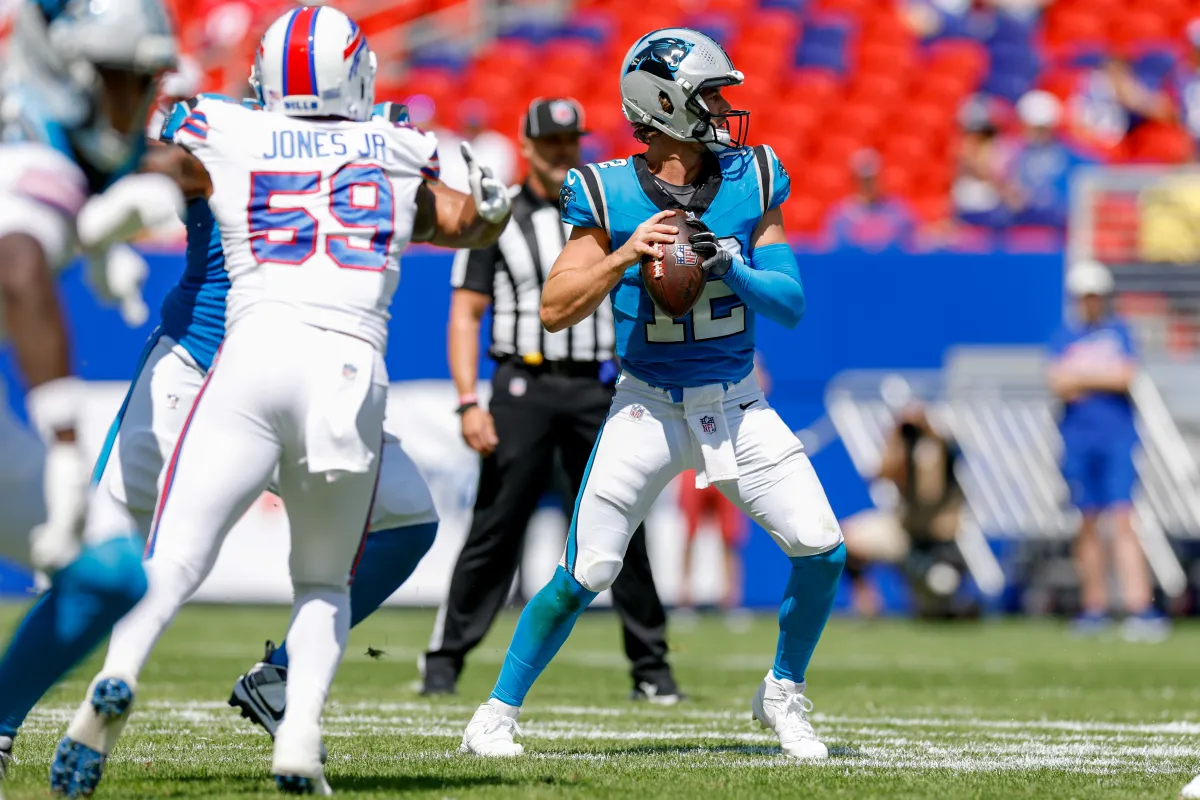
On the surface, the final scoreboard—Buffalo 29, Carolina 14—reads like a familiar refrain of frustration for Panthers fans, a stark reminder of a franchise still clawing its way out of the basement. But to view this preseason opener through the narrow lens of victory and defeat is to miss the entire point of this bucolic, sweat-soaked theater of August. This wasn’t a game meant to crown a champion; it was a laboratory, a carefully controlled environment where the coaching staff, general managers, and scouts traded the loud demands of a roaring crowd for the silent scrutiny of a clipboard. As the sun dipped over the stadium and the Bills starters gradually yielded to the third-string hopefuls, the true narrative unfolded in the margins—in the violent collision of a defensive end bending the corner, in the crisp spiral cutting through the humid air, in the rookie tackle’s trembling first rep against a veteran bull rush. The Panthers walked off the field with a loss, but they carried with them something infinitely more valuable than a “W” in a meaningless exhibition: a dossier of hope. This was the first public glimpse of a roster deliberately in flux, a team that had spent the winter and spring drafting, signing, and trading for new blood, and the collective heartbeat of the organization pulsed with a singular question—not “Did we win?” but “Who exactly are we?” The answer, delivered in fragments across four quarters, was a resounding and encouraging tapestry of individual excellence stitched together by gritty determination. It was the kind of night that makes a coach forget the cold weight of a 29-14 box score because the weight of potential is far heavier, and far more exciting. The score told a story of a team still figuring itself out, but the tape told a story of a team assembling the pieces of a formidable puzzle, one snap at a time. In this quiet theater, the Panthers weren’t losers; they were architects, drafting blueprints in the dirt and finding that the new steel beams were holding up magnificently under pressure.
Paragraph 2: The Thunder of New Age Pass Rushers
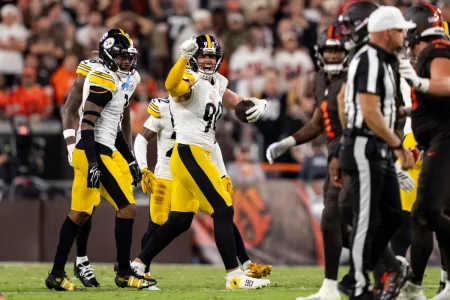
The opening drive set the tone, not just for the defense, but for the entire philosophical direction of this new Panthers squad. When Jaelan Phillips, the high-profile edge rusher acquired to terrorize opposing quarterbacks, lowered his shoulder into the turf and exploded off the line of scrimmage, the defensive identity of this team suddenly came into sharp focus. He wasn’t just playing a game; he was making a statement. On that first possession, Phillips registered a sack that reverberated through the sideline, a violent, unyielding collision that sent the Bills’ offensive linemen back pedaling with a mix of fear and respect. But it wasn’t just the sack itself—it was the relentless motor that followed. Back-to-back pressures left the Buffalo quarterback scrambling, his pristine pocket collapsing into a maelstrom of white jerseys. The purity of pressure is often unquantified in stat sheets, but on that drive, it forced the Bills to abandon their game plan and settle for a paltry field goal. This was the kind of start Carolina had dreamed of when they inked his contract, and the usually stoic defensive coordinator allowed a rare, approving nod to escape his lips. But the symphony of disruption didn’t end with Phillips. On the second series, it was Devin Lloyd, the inside linebacker with a nose for the ball, who stepped into the spotlight. As running back James Cook III attempted to bounce a run to the outside, Lloyd diagnosed the play with an almost preternatural speed, reading the pulling guard’s hips and the running back’s eyes. He exploded forward with controlled violence, shedding a blocker with a flick of his shoulder and closing the gap in a blink. The collision—a solid, shuddering smack of pads—sent Cook reeling backward for a loss, the tackle for loss eliciting a primal yell from the defensive huddle. This wasn’t just individual brilliance; it was a defensive symbiosis. Phillips was the lightning that shattered the peace, Lloyd was the thunder that followed, and together they created a cacophony of chaos that left the Bills’ offense disoriented and gasping. For the Panthers, it was a beautiful, terrifying glimpse of a defense that could potentially flip games on its head—a unit that doesn’t wait for the offense to make mistakes, but aggressively manufactures them. Watching them work in tandem, the sideline erupted in the kind of spontaneous, guttural celebration that cannot be scripted.
Paragraph 3: The Steady Hand and the Rookie’s First Steps
While the defense spawned chaos, the offense, surprisingly, offered a calming, methodical counterpoint, orchestrated by the unflappable Kenny Pickett. In the backup quarterback role, Pickett had the task of managing the second and third units, yet he performed less like a roster bubble player and more like a confident field general auditioning for a starting role. His stat line—16 completions on 19 attempts for 92 yards and a touchdown—was pristine, but the numbers only hinted at the poise he displayed. He used the entire field, checking down to running backs with the patience of a seasoned surgeon, threading a pass into the tightest of intermediate windows, and successfully navigated a pressure situation that could have easily flustered a younger mind. There was an economy to his motions, a crispness to his releases that set a rhythm for an offense that too often last season looked like a chicken without a head. He engineered sustained drives, moving the chains methodically, and capped it all with a touchdown that seemed to say, “I am here, and I intend to stay.” His confidence was contagious, breathing life into a group of receivers and tight ends fighting for a place on the 53-man roster. Meanwhile, in the trenches, a different kind of story was being written—one of raw, unpolished potential just beginning to crystallize. First-round pick Monroe Freeling, the towering rookie right tackle, logged a mere nine snaps in his professional debut, but those nine snaps were a masterclass in composure. For a rookie, the speed of the NFL game is often a blur, a relentless hurricane of blitzes and stunts. Yet, Freeling held his ground with a sturdy, wide base, absorbing the initial power rush of his opponent and anchoring firmly. He didn’t get beaten cleanly, didn’t compromise the pocket, and provided enough of a wall for the quarterback to step up and deliver. While nine snaps is a microscopic sample size, it was a vivid, promising portrait of a mountain of a man finding his footing in uncharted territory. As he jogged off the field, his helmet still strapped tightly, one could almost see the invisible weight of anxiety lifting from his shoulders. He had survived his first test, and the small nod from the offensive line coach was worth its weight in gold. It was a baby step, yes, but in the brutal world of professional football, baby steps can be the foundation of a giant’s ascent.
Paragraph 4: The Cinder Block Stories of the Underdogs
Beyond the stars and the first-round picks lie the true heart of the preseason—the undrafted free agents, the veteran journeymen, and the late-round prospects for whom every rep is a job interview. Their performances often define the underdog spirit of the team, and the Panthers had their fair share of pleasant surprises on Friday night. Take Aaron Hall, the undrafted defensive lineman who entered the game with everything to prove but nothing guaranteed. Against the Bills’ backup offensive line, Hall showcased a relentless motor, his hands heavy and his pad level low, consistently disrupting the interior of the pocket. He earned his keep as a pass rusher, generating pressure not through elite athleticism but through sheer grit and a non-stop, lunch-pail mentality. Just as compelling was Cam Gill, the returning outside linebacker who is attempting to carve out a niche as a situational rusher. Gill displayed a veteran’s savvy, timing the snap count beautifully and using a nifty inside spin move to flush the quarterback from his spot. While he may never be a Pro Bowler, his ability to contribute meaningful snaps in a rotation is invaluable, and his performance was a testament to the doggedness required to stick in this league. Then there was Zakee Wheatley, the fifth-round safety who has been turning heads in training camp with his athleticism. In this game, he translated that athleticism into the most fundamental, unforgiving aspect of the game: tackling. In the open field, Wheatley was a heat-seeking missile, breaking down his angles perfectly and delivering a couple of emphatic, legal pops that stopped ball carriers dead in their tracks. He wasn’t just wrapping up; he was imposing his will, sending a message to both the receivers he covered and the coaches watching from above. These performances—from Hall, Gill, and Wheatley—are the lifeblood of a football team. They don’t receive the headlines, but they carry the water. They are the safety nets, the reserves who understand that a single bad play could end their dreams, yet choose to lay it all on the line anyway. Their collective flashes on Friday were not only uplifting to the fans but absolutely essential to the roster-building process, giving the front office painful, yet pleasant, decisions to make in the coming weeks as they trim the roster down to 53 men.
Paragraph 5: The Coach’s Eye—Beyond the Losing Score
To the casual observer, 29-14 is a damning indictment of a team’s readiness. But to the discerning eye of the coaching staff, the final score is often a byproduct of several disconnected variables—the rotation of players, the strategic restraint on play-calling, the desire to give every available player a live-action evaluation. As the head coach watched the game unfold from the sideline, his mind was not churning on the point differential, but on the individual snap counts, the execution of specific responsibilities, and the emotional resilience of his players. He saw Phillips and Lloyd turning back the clock on a dynamic Bills offense, proving that the defensive backfield could buy time for the offense to find its footing. He saw Pickett running the offense with a veteran’s ease, demonstrating that the backup position isn’t just a holding tank, but a potent insurance policy. He saw a rookie tackle in Freeling not look completely lost; he saw unheralded names like Hall and Gill consistently disrupting the timing of the opposing pass game. The loss was simply the cost of doing business, the tax paid for gathering vital intelligence. In a real sense, the Panthers coaching staff received a gift—a clear, unobstructed view of what their new pieces could do against a playoff-caliber opponent. The mistakes, of which there were several, were easily correctable. The missed assignments, the penalties, the occasional lapses in coverage—these are the normal, expected growing pains of a team learning to play together. But the physicality, the effort, and the flashes of high-level execution were not abnormalities; they were evidence of a culture shift. The coaching staff will stay up late into the night in their cramped offices, the glow of the projector illuminating their tired eyes, dissecting the tape. They will freeze-frame on the subtle nuances of a hand placement or a defensive back’s backpedal. But beneath the clinical analysis will lie a subdued, deeply felt satisfaction. They didn’t need to see a victory; they needed to see validation that their vision is working. And as the final whistle blew, a quiet, unspoken confidence settled over the sideline—a feeling that perhaps this year, the long road back to relevance has finally begun to smooth out.
Paragraph 6: The Seed of Optimism for the Season Ahead
When the lights dimmed and the stadium emptied, the Panthers left behind more than just an empty field; they left a tangible seed of optimism planted firmly in the soil of a new season. The scoreboard’s glare was harsh, but it could not overshadow the sheer volume of positive signals that radiated from the individual performances. Jaelan Phillips’ relentless pass rush is not a mirage; it is a legitimate weapon that opposing offensive coordinators will have to game plan around for weeks to come. Devin Lloyd’s hummingbird-like instincts in the middle of the defense suggest a formidable run-stopping unit. Kenny Pickett’s precision under center provides a security blanket that the offense sorely lacked, a safety net ensuring that the quarterback room won’t be a liability if disaster strikes. And while Freeling’s nine snaps are just a blip in a long season, they are a blip that speaks volumes about the quality of his coaching and his own innate football intelligence. The performances of the underdogs—Hall, Gill, and Wheatley—round out the roster with a much-needed layer of depth and competitive fire. The Panthers ultimately fell to the Bills on the scoreboard, but they rose high in the estimation of everyone who truly understands the sport. The preseason is a time of great deception and great revelation, and the Panthers were rewarded with a revelation—they might just have the pieces to not only compete, but to surprise people. The journey is long, the adversities plentiful, but for one crisp August night, the narrative shifted from one of rebuilding and despair to one of anticipation and promise. The coaching staff wanted to see a foundation for the future, and they saw it—brick by brick, pressure by pressure, tackle by tackle. With the bad taste of the loss quickly forgotten and the footage of their new talent running through their minds, the Carolina Panthers can head into the rest of the preseason with a smile, knowing that while they didn’t win the war on Saturday, they may have just won a crucial battle in the war for their own progression. The pieces are here; the vision is clear; and the only thing left is to let it all grow.