






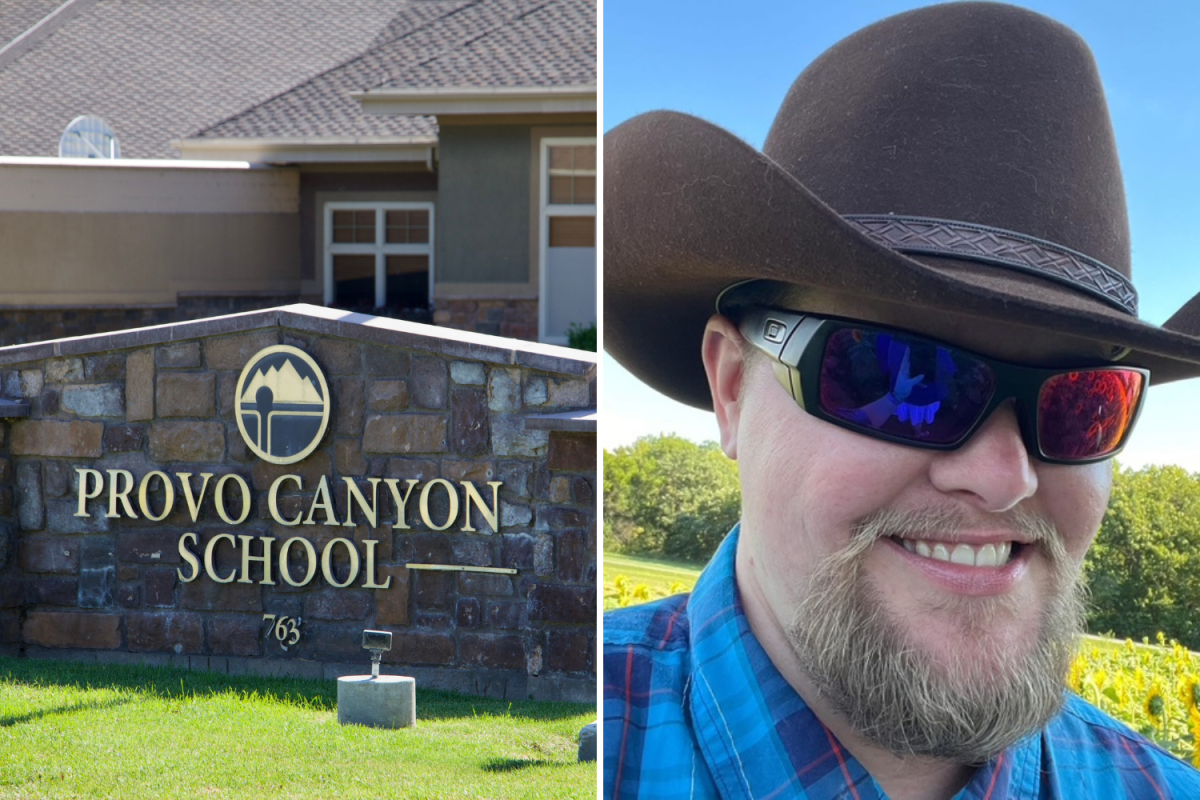
For Hunter Rainer, a forty-year-old husband and father who has spent decades carrying the invisible scars of his youth, the news that Utah regulators had finally revoked the license for Provo Canyon School’s girls program felt entirely surreal. Rainer sat in disbelief, reading the announcement over and over as a profound wave of relief washed over him. As a teenager in 2000, Rainer had been sent to the facility’s girls campus—before transitioning later in life—and has since fought tirelessly alongside countless other survivors to expose the systemic abuse, neglect, and trauma cloaked as “rehabilitative treatment” inside its walls. For the first time in his life, the state of Utah seemed to be listening, ordering the notorious Springville campus to permanently shut down its operations by August 6, unless a successful legal appeal is launched.
Rainer’s agonizing journey to Provo Canyon School began in the dark of night, a terrifying and sudden abduction practice that survivors of the troubled teen industry bitterly refer to as being “gooned.” After growing up in an abusive and unstable household where he was constantly bullied, he woke up one night to find physical transporters standing over his bed, ordering him to leave immediately. The moment he crossed the threshold of the facility, he knew his safety and humanity had been stripped away. Upon arrival, he was immediately stripped of his identity and assigned a number—303—which was callously engraved into everything he owned, including his eyeglasses, reducing a vulnerable child to nothing more than a number and a last name.
Life inside the facility was a highly controlled, regimented, and psychologically exhausting nightmare designed to break a child’s spirit. Rainer vividly recalls the daily monotony of marching in rigid lines, navigating a punitive level-based system, undergoing invasive medical examinations, and enduring constant supervision that left deep emotional scars. While Universal Health Services (UHS), the corporate giant that currently owns the school, declines to comment on individual cases due to privacy laws and notes that they only acquired the school later in 2000, survivors maintain that the culture of institutional cruelty has been consistent for decades, leaving thousands of former residents to struggle with lifelong post-traumatic stress.
The state’s decisive shutdown order comes on the heels of a damning investigation by Utah’s Department of Health and Human Services, which uncovered severe and systemic violations at the Springville girls campus. Regulators documented a horrifying failure to protect children from harm, multiple incidents of neglect, the use of unnecessary physical restraints, and major deficits in staffing and oversight. While the boys program remains open and UHS actively disputes the state’s decision—claiming they are evaluating legal appeals to preserve their “high-quality care”—the revocation represents a historic victory for advocates who have long argued that the facility prioritizes corporate profit over the basic human rights of children.
While survivors have voiced these allegations for over fifty years, the movement gained explosive national momentum in 2020 when media icon Paris Hilton publicly shared her own harrowing experiences of abuse at the school during the late 1990s. Hilton has since leveraged her massive global platform to testify before lawmakers, spearhead legislative reforms, and champion lawsuits against the troubled teen industry. Reacting to the closure, Hilton released a powerful statement reflecting on the decades of ignored cries for help, declaring that the state has finally validated what survivors have always known: that Provo Canyon School failed the children it was trusted to protect, and that those still inside now know someone is finally coming to save them.
For Rainer, the closure of the facility offers a bittersweet milestone on a lifelong road to recovery, proving that the truth can eventually triumph over powerful institutions. Even after twenty years of building a beautiful life as a husband and father, Rainer admits that his body still reacts to the phantom terrors of his childhood, proving how deeply trauma embeds itself in the nervous system. Yet, the shutdown of the Springville campus offers him and countless others something they have been denied for decades—the space to finally stop fighting, to safely grieve the childhoods they lost, and to begin truly healing, knowing that the doors to their nightmare have finally been locked shut.