






On a late summer day, a teenager from central North Carolina went into a world of grief that no family should have to know. The teen had been hospitalized after contracting a rare and devastating infection caused by Naegleria fowleri, the microscopic organism widely known as the “brain-eating amoeba.” State health officials first announced on August 27 that the young patient was critically ill and receiving medical care, but they offered few details out of respect for the family’s privacy. Then, on August 31, the North Carolina Department of Health and Human Services confirmed the devastating news: the teenage patient had died. In a public statement, state epidemiologist Dr. Zack Moore expressed his condolences, saying, “Our hearts go out to this teen’s family, friends and loved ones as they navigate this difficult time.” He also reminded North Carolinians that while these infections are extraordinarily rare, the amoeba exists in the state and across the United States. The agency asked for privacy and declined to release further information, but the loss is a heavy one, not only for the family and friends but for the wider community that now understands, all too painfully, how a beautiful summer day at a lake or river can turn to tragedy.
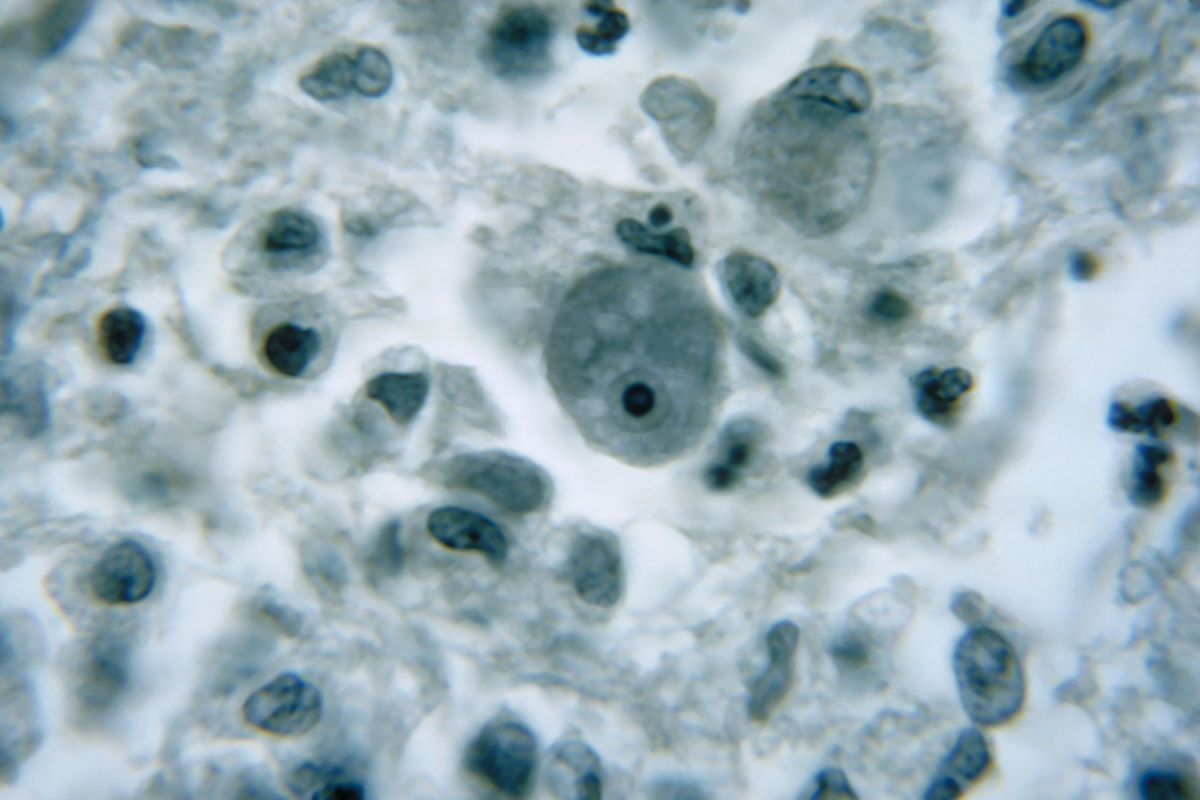
To understand what happened, it helps to understand the organism behind the infection. Naegleria fowleri is a single-celled, living amoeba that occurs naturally in warm freshwater environments. It lives in lakes, ponds, rivers, and hot springs, and it thrives best when water temperatures rise, sometimes up to 115 degrees Fahrenheit. It is not found in saltwater, and it is not typically found in properly maintained and chlorinated swimming pools, although federal health officials note that in very rare cases it has been discovered in poorly maintained pools, splash pads, and even tap water. Despite the terrifying nickname, the amoeba does not infect people by swallowing contaminated water. Instead, the route of infection is through the nose. When a person swims, dives, jumps, or plays in warm freshwater in a way that forces water up into the nasal passages, the amoeba can enter the body. From there, it travels along the olfactory nerve toward the brain, where it causes a destructive and almost always fatal disease called primary amebic meningoencephalitis, or PAM. Once the amoeba reaches the brain, it triggers severe inflammation, destroys brain tissue, and causes swelling that can rapidly overwhelm the body’s ability to survive. The disease is so rare that many doctors will never see a case in their entire careers, but the speed and brutality of the illness make it one of the most feared infections known to medicine.
The symptoms of PAM begin suddenly and worsen with terrifying speed. In the early stages, the infected person may experience a severe headache, fever, nausea, and vomiting—symptoms that can easily be mistaken for a common viral illness or heat exhaustion. But unlike most infections, PAM does not stay mild. Within a short time, the disease progresses to a stiff neck, confusion, seizures, hallucinations, and eventually coma. According to the North Carolina Department of Health and Human Services, once symptoms begin, the disease usually causes death within about five days. That narrow window of time is part of why this infection is so devastating; by the time many patients and families realize that something is deeply wrong, the damage to the brain is already catastrophic. Health officials have long emphasized that anyone who develops a sudden, severe headache, fever, or neck stiffness after swimming in warm freshwater should seek emergency medical care immediately and tell the doctor about their freshwater exposure. While there is no simple treatment that guarantees survival, early diagnosis may offer the only chance, and doctors need to know what they are facing as quickly as possible.
The tragedy is made even more painful by the fact that these infections are astonishingly rare. In the United States, fewer than ten people are typically infected with Naegleria fowleri each year, even though millions of people swim in lakes, rivers, and ponds every summer. The federal data cited by health officials shows that between 1962 and 2024, only 167 cases were reported in the United States, and of those, only four people survived. That is a survival rate of less than three percent, which makes PAM one of the deadliest infectious diseases humanity knows. Still, the rarity of the disease offers little comfort to the families who have lost loved ones. The infection most often occurs during the summer months, especially during periods of prolonged hot weather when water temperatures climb and water levels drop, creating conditions that make it easier for the amoeba to multiply. Children and teenagers are overrepresented among reported cases, likely because they are more likely to engage in activities like diving, jumping, and playing in shallow, warm water, all of which can push water high into the nose. The North Carolina teen’s death fits that pattern, and it is a tragic reminder that even extremely unlikely events can become real in an instant.
Because Naegleria fowleri occurs naturally in the environment, it cannot be eliminated from the lakes and rivers where it lives. Public health officials therefore focus on prevention and harm reduction rather than trying to remove the organism from natural bodies of water. The Centers for Disease Control and Prevention recommends several simple precautions for anyone who spends time in warm freshwater. Swimming in a way that keeps water out of the nose is the most important step: people can hold their noses shut, wear nose clips, or keep their heads above the water while wading or swimming. Jumping and diving into warm freshwater should be avoided, especially during periods of high water temperatures and low water levels. Swimmers should also avoid stirring up sediment in shallow, warm freshwater areas, because the amoeba can be present in the mud and muck at the bottom of lakes and ponds. Another important rule is to never submerge your head in untreated hot springs or thermal waters, where the organism thrives at especially high temperatures. These precautions are simple, but they can make an enormous difference, and health officials stress that the goal is not to discourage people from enjoying nature but to help them do so more safely. In the wake of the teen’s death, the North Carolina Department of Health and Human Services said it was coordinating closely with the CDC and local health departments to investigate all possible sources of the infection, a process that may help future prevention efforts but cannot undo the painful loss.
In the end, this is not just a story about an amoeba; it is a story about a young life cut short and a community left to grieve. The teenager who died was more than a case number or a headline. That person had friends who loved them, family members who gathered by their bedside, and a future full of possibilities that will now never be realized. The brain-eating amoeba may be the scientific explanation, but the human reality is far more profound: a family is mourning, a circle of friends is shattered, and a community is trying to understand why something so rare happened to someone so young. Health officials have responded with compassion and a commitment to investigation, but there are no words that can comfort a grieving family. The best that anyone can do is to honor the teen’s memory by raising awareness of the simple steps that reduce risk, by being kind to one another, and by remembering that even in the beauty of a hot summer day by the water, the natural world holds dangers that cannot always be seen. This death is a terrible reminder of how fragile life can be, but it is also a chance to pause and hold our loved ones a little closer, to practice gratitude for ordinary moments, and to say, with the same heartfelt sympathy offered by public health officials, that our hearts go out to the family, friends, and community impacted by this loss.