





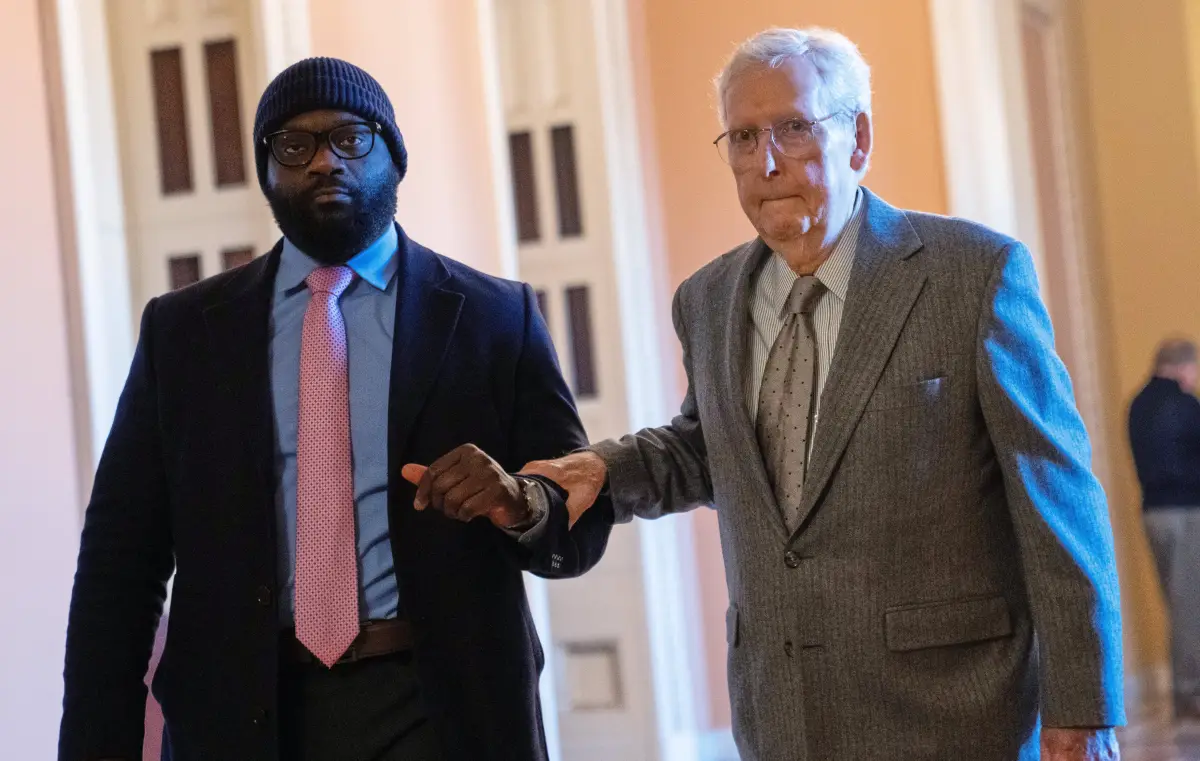
For the better part of two months, Senator Mitch McConnell has been absent from the public stage in a way that has unnerved even his closest allies. The 84-year-old Kentucky Republican, who spent decades as the master architect of Senate strategy, vanished from the national conversation after a June 14 hospitalization that was initially described in vague terms but later revealed to involve a stay at an inpatient rehabilitation facility. Since then, the silence has been deafening: no floor speeches, no press conferences, no spontaneous encounters with reporters in the Capitol hallways. His office assured the public last week that he had been discharged and was continuing his recovery at home, but the senator himself had not addressed the people he represents, or the nation at large, leaving room for rumor, anxiety, and legitimate questions about his capacity to finish the job. Into that void stepped Scott Jennings, a conservative commentator and longtime McConnell confidant, who told CNN on Tuesday that he had spoken directly with the senator and found him in what he called an “improving position.” The update, while not a formal medical report or a public statement from McConnell, offered a glimpse of a man still very much engaged with the political world he helped shape.
Jennings described a phone call that was both personal and professional, the kind of conversation that reveals how deeply ingrained political instincts remain even in moments of vulnerability. McConnell, Jennings said, called him directly from his own phone and sounded markedly better than he had in an earlier conversation following the hospitalization. “Being at home is better than being in the hospital, that’s for sure,” Jennings said, a simple but human reminder that recovery is often as much about environment and emotional comfort as it is about medical treatment. But what seemed to most impress Jennings was the senator’s mental sharpness and his obvious focus on the races and issues that will define the final months of his tenure. McConnell reportedly discussed the Michigan Senate race with specific interest, along with Maine and the broader Republican electoral math heading into November. He talked about the farm bill, the National Defense Authorization Act, and the preservation of the Senate filibuster—institutional priorities that have long been part of his legislative identity. For a man who has spent more than three decades in the Senate and nearly two decades as his party’s leader, this was not idle chatter; it was evidence that the fire inside McConnell, though perhaps quieter now, has not gone out.
The timeline of McConnell’s health struggles has been murky, and that ambiguity has only amplified the concern. He was hospitalized on June 14, and while his office characterized the situation initially as a minor issue, subsequent reports revealed a more serious episode that required inpatient rehabilitation. For weeks, there were no photographs, no video, no sightings of the senator leaving his home or speaking with neighbors. Last week’s announcement that he had been discharged and would continue recovering at home was welcomed by supporters, but the absence of any direct communication from McConnell himself left many Kentuckians wondering whether they would ever see him again in public life. According to Jennings, the plan is for McConnell to return to the Senate when lawmakers reconvene on September 14. “I think their plan is to hopefully get him back to the Senate,” Jennings said, noting that several legislative priorities remain important to the senator before he leaves office in January. McConnell announced earlier this year that he would not seek reelection, meaning this is the twilight of a consequential career, and the notion that he might never again take his Senate floor chair—the place where he famously froze twice during press conferences in 2023—has become a source of deep sadness for those who have worked alongside him.
Not everyone is willing to wait patiently for McConnell to emerge from his private recovery. Kentucky’s Democratic Governor, Andy Beshear, has publicly questioned the senator’s continued silence, arguing that constituents deserve a direct update from the man himself. Beshear said he has not heard personally from McConnell and suggested that the lack of public communication has raised legitimate concerns about the veteran lawmaker’s ability to continue serving. It is a delicate political moment: Beshear, who is popular in Kentucky despite the state’s Republican tilt, may have his own reasons for drawing attention to McConnell’s absence, but his point is not without merit. In a democracy, voters rely on their representatives to be present, accountable, and transparent about any condition that might impair their judgment or stamina. Yet McConnell has always been an intensely private person, a polio survivor who has long been reluctant to discuss health matters, and Jennings pushed back on the criticism by framing it as an unfair expectation for a man who has never liked the spotlight on his personal life. Jennings also revealed that McConnell is well aware of the speculation swirling around him, and that he is “somewhat frustrated” by the public scrutiny. “I know this is an unusual circumstance. I’m sitting here, the doctors tell me I don’t have any life-threatening issues. It must seem rather strange,” McConnell reportedly said, a poignant acknowledgment of how bizarre his prolonged absence must appear to outsiders.
Despite his physical absence from the Capitol, McConnell has not entirely vanished from the inner workings of the Senate. Jennings described a man who remains engaged behind the scenes, holding meetings with staff, speaking with fellow senators by phone, and carefully following legislative developments. That may seem like thin gruel for a politician who once dominated the chamber, but it is also a reminder that even in decline, McConnell’s mind remains a formidable political instrument. He has not voted in the Senate since June, which means he has missed a significant number of roll call votes, but his influence on his Republican colleagues was never solely about being present; it was about persuasion, strategy, and timing. As Kentucky prepares to elect his successor in November, the state is effectively witnessing the end of an era. McConnell’s decision not to seek reelection was announced months before his health scare, but the current situation has given that farewell a heavier weight. He may no longer be the intimidating figure who could freeze a bill in its tracks or negotiate with presidents from a position of strength, but he still cares deeply about the outcome of the next election and the future of the Senate as an institution. Jennings made clear that McConnell’s mind is still on the game, even if his body is not yet ready to return to the arena.
In the end, this is a story about human fragility and political resilience, about the uncomfortable moment when a public figure’s mortality collides with the expectations of the office they hold. McConnell has spent his entire adult life in public service, building a reputation as a calculated, sometimes ruthless strategist who understood the rules of power better than almost anyone. Now he sits at home, recovering from a health scare that has sidelined him from the very world he used to command. There is something undeniably human about his situation: the desire to recover in private, the frustration of having one’s condition endlessly dissected by strangers, and the stubborn hope of returning to what you know best. Jennings’ account suggests that McConnell is not ready to write his final chapter, and that if his body cooperates, he will be back in Washington to cast votes, fight for the farm bill, and watch his successor’s race unfold from his front-row seat. Whether he returns on September 14 or slips back into public life more gradually, what matters most is that he retains the dignity and agency to make that decision himself. The speculation about his health, Ohio, will continue, because that is the nature of politics. But for now, perhaps the kindest thing is to allow this aging titan the time and space he needs to heal, while hoping that the voice that once shook the Senate floor will be heard one more time.