

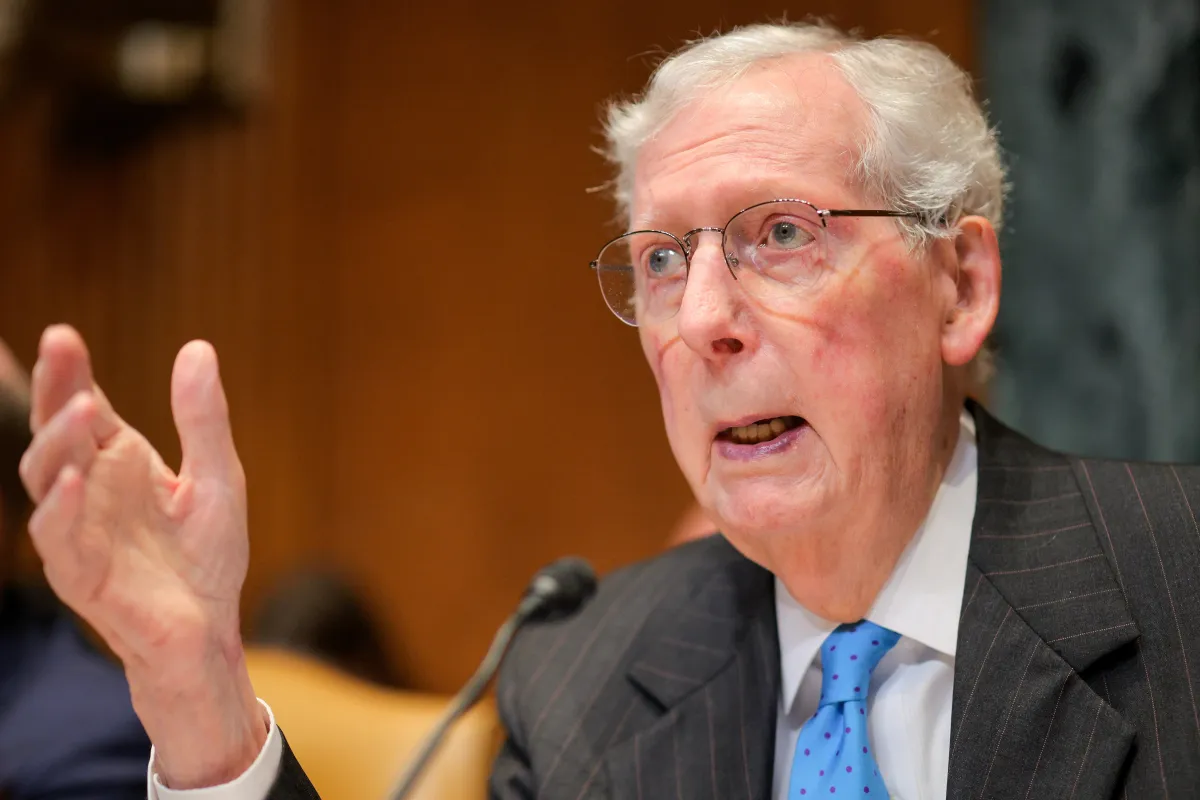
Mitch McConnell, the 84-year-old political titan from Kentucky, has spent decades navigating the corridors of Capitol Hill, earning a reputation as one of the most calculating and enduring figures in modern American politics. However, the sheer vulnerability of human aging caught up with the veteran lawmaker in June, when a sudden fall at his Washington, D.C. home left him temporarily unconscious and hospitalized. For a man who has spent virtually his entire adult life in the public eye, managing the transition from an all-powerful Senate leader to a quiet patient in a rehabilitation facility has been a stark and deeply private struggle. This recent physical trauma has been severely compounded by McConnell’s history as a survivor of childhood polio, a devastating illness that left him with lifelong mobility challenges. The lingering, late-stage effects of polio have returned to complicate his current recovery process, creating a formidable physical hurdle as he works intensely to regain his strength and basic mobility. Today, his days are defined not by high-stakes committee meetings or backroom political deals, but by the slow, exhausting work of physical therapy, supported closely by his wife, former Transportation Secretary Elaine Chao. In a recent personal photograph and statement, McConnell acknowledged that while his mind remains clear, his body has not yet received the medical clearance required to return to the active, physically demanding environment of the Senate floor. This quiet battle for physical independence serves as a stark reminder of the fragile human beings behind the powerful institutions of governance, illustrating how even the most formidable political figures must eventually confront the inescapable physical realities of time, health, and aging.
The prolonged absence of such a critical political figure inevitably sparked a frenzy of rumors, forcing McConnell to eventually break weeks of silence on July 12 to clarify the true nature of his condition. In a reassuring yet sobering address to his constituents, accompanied by a rare personal photograph with his wife, McConnell explained that his medical team had thoroughly investigated his symptoms to rule out a stroke, heart attack, concussion, brain tumor, or hemorrhage. However, his recovery journey was further complicated when he contracted a mild case of pneumonia during his hospital stay, necessitating intensive treatments and extensive cardiac and neurological testing. Despite optimistic reports from close allies like West Virginia Republican Senator Shelley Moore Capito—who shared that recent visitors found McConnell to be remarkably clear-minded and mentally active—others on Capitol Hill have grown increasingly restless. This lack of visible, public appearances has triggered a passionate debate over the standard of transparency required of our nation’s most senior leaders. High-profile progressive voices like New York Representative Alexandria Ocasio-Cortez and Kentucky’s own Democratic Governor Andy Beshear have publicly demanded more rigorous updates regarding McConnell’s prognosis and his expected date of return. Beshear’s office pointedly noted that the governor’s formal requests for public proof of the senator’s fitness to serve have gone unanswered, creating a growing sense of frustration among both political opponents and anxious Republican colleagues. This ongoing tension highlights a fundamental modern dilemma: the delicate, often painful conflict between an aging leader’s right to personal medical privacy and the democratic necessity for public accountability when the balance of national power hangs in the suspension of a single recovery.
Even as his physical body remains confined to temporary rehabilitation, McConnell’s legendary political machinery has continued to hum, allowing him to cosponsor and introduce vital pieces of legislation from his bedside. This remote legislative activity has borne a deeply emotional weight, occurring alongside the sudden and tragic passing of one of McConnell’s longtime Republican colleagues, South Carolina Senator Lindsey Graham, on July 11. In the wake of this loss, McConnell directed his staff to cosponsor “The Lindsey O. Graham Sanctioning Russia Act of 2026,” a powerful, bipartisan effort introduced by Graham’s sister, Darline Graham. This sweeping legislation seeks to severely punish the Russian state by freezing the global assets of high-ranking Kremlin officials, including President Vladimir Putin, while penalizing foreign entities that facilitate military aid to Moscow or assist in bypassing Western sanctions. Beyond this solemn tribute to his deceased colleague, McConnell has leveraged his remote authority to influence major international policies from his hospital room, co-authoring the Burma Sanctions Amendment to choke off resources to Myanmar’s brutal military junta and establish a dedicated U.S. special envoy to the region. He also threw his weight behind a critical national security measure requiring the U.S. military to share practical battlefield intelligence and advanced drone tacticians with Ukraine, as well as the Open Technology Fund Amendment to reorganize the entity as an independent nonprofit dedicated to fighting internet censorship globally. This intense pattern of remote work reveals a leader who is desperately attempting to maintain control and influence over the global stage, refusing to let his physical incapacitation silence his voice on the pressing foreign policy issues of our era.
Yet, no matter how many digital documents a senator signs or co-sponsors remotely, a physical absence on the Senate floor leaves an empty seat that reverberates through the entire legislative ecosystem. McConnell’s struggle to recover has occurred during a uniquely chaotic and high-stakes legislative session, forcing the Senate to vote on crucial spending packages, federal judicial nominations, and systemic social reforms without his crucial input. The sheer scale and variety of the domestic issues voted on in his absence underscore just how much of the nation’s business must forge ahead without his input. Roll call votes have proceeded on bills as diverse as the Recruiting Families Using Data Act and the Lieutenant Osvaldo Albarati Stopping Prison Contraband Act, pointing to urgent needs in our foster systems and federal corrections facilities. Other missed votes touched on deeply personal community needs across the country, from the Saving the OOI Act and the Theodore Roosevelt National Park Wild Horses Protection Act, to crucial law enforcement support measures and the Affordable Prescriptions for Patients Act. In a Senate chamber where the Republican party holds a razor-thin, incredibly fragile minority, the loss of even one vote creates an immediate mathematical crisis for party leadership. Each time a crucial bill or amendment comes to the floor, McConnell’s empty seat dramatically narrows the margin of error for his GOP colleagues, forcing them to modify their legislative strategies, seek difficult compromises with Democrats, or abandon hardline partisan positions entirely.
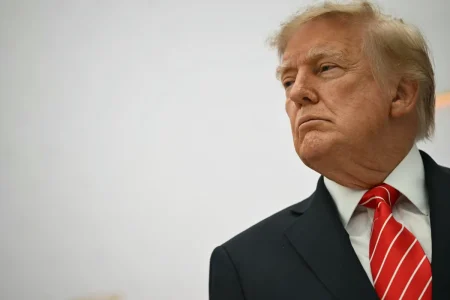
This strategic vulnerability has cast a shadow of doubt over several major conservative policy goals, most notably the highly polarized Safeguard American Voter Eligibility (SAVE) Act, a central pillar of the party’s election platform. The SAVE Act, which seeks to impose strict new documentation requirements on citizens registering to vote in federal elections, has become a fierce ideological lightning rod in Congress. Conservative advocates argue that the legislation is absolutely essential to restore confidence in democratic institutions and prevent voter fraud, whereas progressive and moderate critics argue that the bill’s stringent requirements would disenfranchise millions of eligible voters, particularly low-income citizens, students, and minorities. Because the margin of victory in the Senate is so microscopically tiny, McConnell’s persistent absence has severely weakened the Republicans’ ability to rally a unified front or apply necessary pressure to push such controversial voter legislation past the finish line. The situation has dragged McConnell into the broader political theater, with former President Donald Trump publicly commenting on the senator’s physical absence and his historic reluctance to dismantle the traditional Senate filibuster rules, which many populist conservatives believe is the primary obstacle to passing their sweeping legislative agenda. Beyond the debate surrounding the SAVE Act, McConnell’s absence has paralyzed critical progress on comprehensive foreign aid packages, agricultural policy extensions, and essential government spending bills, creating a sense of gridlock that threatens to stall the country’s basic legislative machinery.
As Mitch McConnell’s recovery drags on, his absence has evolved from a temporary political inconvenience into a profound systemic question about how the United States government manages the health and aging of its most powerful leaders. Representative Tim Burchett of Tennessee and other lawmakers have publicly pointed to this dynamic to argue that Congress must eventually implement a standardized, objective protocol to address the long-term “incapacitation” of its members, ensuring that constituencies do not remain unrepresented during critical national debates. Under the current system, there are no formal mechanisms to temporarily replace or reassign the voting power of a senator who is physically unable to attend votes due to severe illness or injury, leaving a modern democracy vulnerable to the frailties of the human body. This systemic paralysis highlights a deeply human truth: that the massive, complex apparatus of American government is ultimately built upon the physical health and endurance of individuals who are subject to the same biological limitations as the citizens they represent. McConnell’s grueling struggle to overcome a traumatic fall, compounded by the painful, late-stage returns of a childhood battle with polio, serves as a poignant, sobering metaphor for a legislative body that is itself struggling under the weight of its own historical patterns and aging leadership. Ultimately, his journey reflects the heavy, deeply personal toll of a lifetime spent in pursuit of political power, revealing the delicate balance between the public duty of statecraft and the universal, undeniable human need for rest, healing, and personal peace.