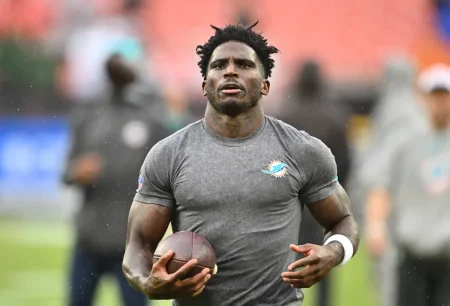






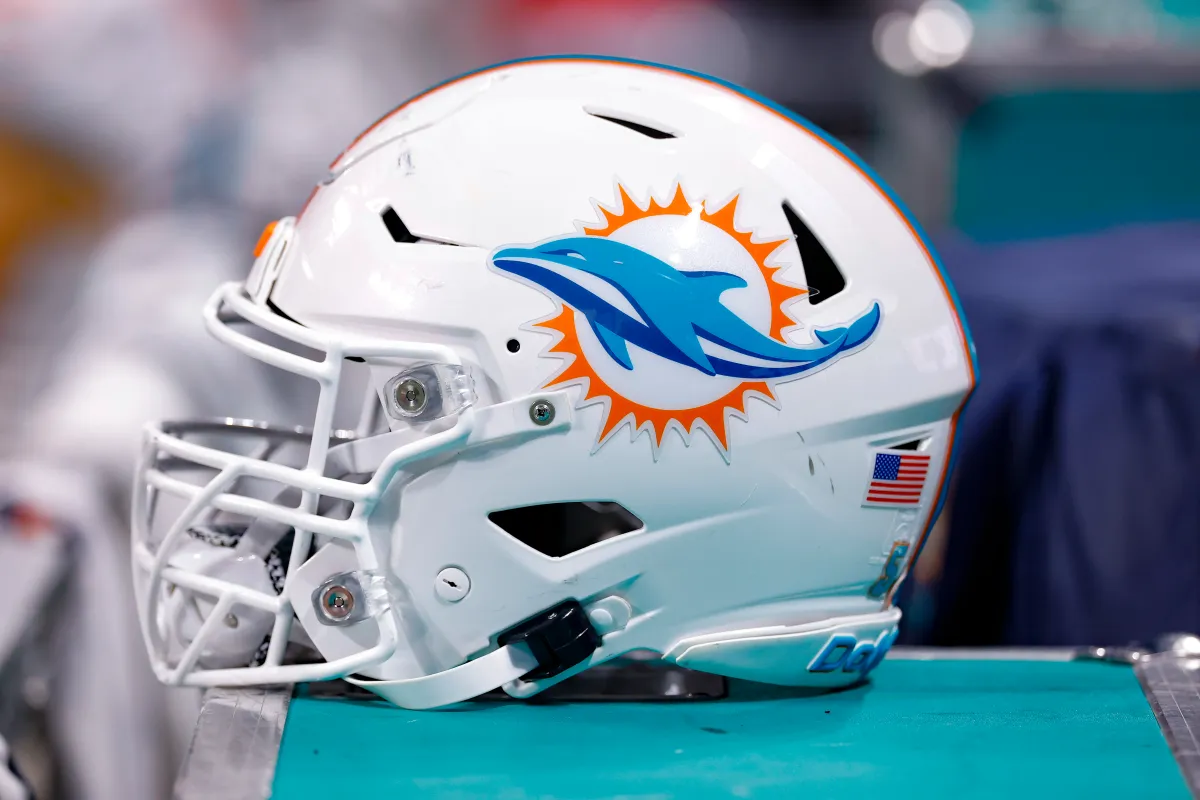
The tropical winds of change sweeping through Southern Florida this NFL offseason carry the distinct, biting chill of a total franchise demolition, leaving passionate fans and seasoned league onlookers alike clutching their heads in collective disbelief. In an athletic landscape where general managers typically prefer the safety of incremental progress and focus extensively on safe coach-speak, the newly installed leadership regime of general manager Jon-Eric Sullivan and head coach Jeff Hafley has instead chosen a road of maximum volatility. This was not a subtle recalibration, nor was it a quiet retooling of a competitive roster; rather, it was a scorched-earth, structural demolition of a team that had, for better or worse, captured the imagination of the football world for several seasons. For years, the Miami Dolphins were synonymous with track-meet offense, an electrifying circus defined by the breakneck speed of Tyreek Hill, the jaw-dropping acceleration of Jaylen Waddle, and the rapid-fire precision passing of quarterback Tua Tagovailoa. Yet, despite the routine regular-season fireworks that lit up the scoreboard and dominated the weekly highlight reels, the underlying reality was far less glamorous: Miami was a team that consistently melted under pressure, missing the postseason for two consecutive years when the stakes and temperatures were at their absolute highest. Recognizing that this flashy core had reached its developmental ceiling, Sullivan and Hafley did not hesitate to tear down the house. Before the free agency period could even officially commence, the brand-new decision-makers executed a series of maneuvers that felt like absolute madness to the uninitiated, releasing Tagovailoa, cutting ties with the transcendent Tyreek Hill, and moving on from star defensive end Bradley Chubb. If those departures were a brutal shock to the system, the subsequent trade of Jaylen Waddle to the Denver Broncos confirmed draft-day suspicions: this was a complete, unapologetic reset. Millions of fans watched in real-time as the team’s entire identity was wiped clean, replaced by a vacuum of uncertainty that challenges the very nature of active fandom.
This uncompromising, radical teardown of a once-explosive offense has naturally invited severe, microscopic scrutiny from the national sports media, where analysts are struggling to locate a cohesive thread within Miami’s seemingly contradictory sequences of maneuvers. Chief among these vocal critics is Matt Okada of NFL Media, whose sharp assessment of the Dolphins’ offseason highlighted the jarring discrepancies in Sullivan and Hafley’s emerging rebuilding strategy. To the outside observer, the moves seem to exist in a state of constant, frustrating paradox, characterized by decisions that appear to undermine the very concept of a traditional tank-and-rebuild model. Okada rightly pointed out that even within the calculated context of a multi-year reset, the actual execution of Miami’s plans felt disjointed, leaving many to wonder if the front office is working from a unified blueprint or merely reacting on the fly. The primary source of confusion stems from the highly unusual financial and positional commitments made right after purging the roster of its premier receiving talent. Rather than signing an inexpensive, disposable veteran under center to act as a financial and literal shield—the classic “bridge quarterback” role designed to absorb hits while preserving valuable cap space—the Dolphins opted to lock in former Tennessee Titans project quarterback Malik Willis to a three-year contract. To make matters even more perplexing for the analytics crowd, the front office simultaneously handed explosive running back De’Von Achane a massive four-year, $64 million contract extension. Securing a running back to a premium-market deal while actively trading away an elite, young wide receiver like Waddle to Denver represents an almost upside-down approach to modern football philosophy, which heavily prioritizes the passing game over handoffs. Okada’s public skepticism—that the foundational bricks of Miami’s future look misaligned and unstable—perfectly encapsulates the anxiety of a fan base trying to find logic in a plan that seems to trade away premium pass-catchers only to overpay for ball-carriers and unproven passers.
The skepticism surrounding the front office’s grand design reached a fever pitch during the high-stakes theater of the NFL Draft, a crucial juncture where Sullivan and Hafley had the perfect opportunity to quiet their detractors but chose instead to double down on their highly controversial, contrarian path. The focal point of the draft-day drama centered around safety Caleb Downs, a generational defensive prospect heralded by scouts as a plug-and-play superstar who could have immediately galvanized Miami’s secondary and provided a recognizable defensive identity for the next decade. Instead of running to the podium to secure this blue-chip, consensus star, the Dolphins chose to trade down in the first round, a move that many analysts quickly labeled as a classic case of overthinking the board. Yet, the human element of scouting is rarely about matching public consensus; it is about having the courage of one’s convictions, and Sullivan chose to prioritize the structural scaffolding of the trenches and boundary defense. By trading down, the Dolphins ultimately walked away with offensive tackle Kadyn Proctor and cornerback Chris Johnson, targeting two premium, high-value positions that dictate the geometric landscape of modern football. While a safety of Downs’ caliber is a luxury that can elevate an already competent defense, a dominant tackle like Proctor and a lock-down corner like Johnson are essential pillars without which a team simply cannot survive in the modern NFL. If Proctor develops into a reliable protector of the quarterback’s blindside and Johnson grows into a defender capable of erasing an opponent’s top receiving threat, the criticisms regarding the missed opportunity to draft Downs will eventually fade into statistical background noise. However, the phantom of Downs’ potential stardom will hover over every mistake these rookies make, serving as an unforgiving yardstick against which the front office’s draft-day wisdom will be measured for years to come.
Beyond the clinical whiteboards of the corporate executive suites and the simulated mock drafts of sports media pundits lies the intensely raw, competitive reality of the locker room—a place where professional athletes do not care about five-year plans, draft pick value, or strategic tanking. NFL players are fiercely proud, hyper-competitive human beings whose careers are notoriously short, physically brutal, and emotionally taxing. They do not put their yards and bodies on the line every week to help an organization secure a better draft slot for a collegiate quarterback they have never met; rather, they play for their families, their personal pride, and their next contracts. This inevitable friction between front-office long-termism and locker-room survival is what makes the acquisitions of Malik Willis and the extension of De’Von Achane so fascinating from a human perspective. While these moves may appear disjointed on paper, they serve as the crucial emotional life support systems for a team undergoing a painful, structural transition. Willis, a young quarterback eager to salvage his professional career after being quickly cast aside by his previous team, possesses the kind of raw, unpredictable athleticism that can ignite a huddle and win games on pure instinct. Paired with Achane, whose world-class track speed means the offense is always just one block away from a game-changing touchdown, the Dolphins still possess enough explosive firepower to remain competitive in weekly dogfights. For head coach Jeff Hafley, the coming season is a masterclass in psychological management, as he must motivate players who know they are widely expected to lose while simultaneously maintaining a culture of accountability and effort that will carry over into the franchise’s eventual next chapter. No coach wants to guide a sinking ship, yet Hafley must steer this one with unwavering confidence, assuring his players that their individual efforts matter even when the broader institutional goals seem aligned with a high draft pick.
This immense pressure highlights the profound human burden resting squarely on the shoulders of the architects themselves, Jon-Eric Sullivan and Jeff Hafley, who must operate in the relentless spotlight of a sports-mad South Florida community. Undertaking a complete roster demolition requires an extraordinary level of personal and professional fortitude, as it involves willingly accepting the role of the most unpopular figures in the city for the foreseeable future. It is incredibly easy to construct a clean, beautiful multi-year rebuild plan in the quiet comfort of a January planning meeting, but it is an entirely different challenge to stand before a firing squad of reporters in late November to defend a six-game losing streak. The human element of NFL leadership is a crucible of isolation, where Sullivan and Hafley must tune out the constant hum of internet criticism, survive the harsh write-ups of analysts like Okada, and remain absolutely steadfast in their internal evaluations. They have traded away the safety and comfort of a respectable, eight-win team for the terrifying, high-stakes gamble of a total reset, putting their professional reputations entirely on the line. If their developmental programs fail to materialize, or if the locker room culture fractures under the weight of constant losing, they will not be given the time to see their vision through to completion; they will simply be swept away like the players they just released. This stark reality serves as a poignant reminder that behind the sterile terminology of NFL transactions and cap space management are real human careers, families, and dreams hanging in a delicate, high-tension balance. The psychological toll of this public trial is immense, forcing both men to rely heavily on mutual trust as they attempt to construct a lasting monument out of the ashes of a beloved era. They can only hope that their internal compass points true, because the map they are using is drawn over treacherous and uncharted territorial waters.
In the final analysis, the destiny of the Miami Dolphins’ audacious, high-risk offseason experiment will not be written by the immediate grades handed out by pundits today, but by the slow, unyielding passage of time over the next few seasons. Professional football is ultimately a narrative of belief, and while the current landscape in Miami appears barren, confusing, and disjointed, it also represents a clean canvas waiting for its defining strokes. Rebuilding a franchise is a deeply collective human journey that requires everyone involved—from the wealthy executives pulling the strings to the passionate fans screaming from the upper decks—to endure a cold and painful winter of transition in the hopes of earning a warm, championship-caliber spring. If Kadyn Proctor and Chris Johnson blossom into perennial Pro Bowl players, and if Malik Willis and De’Von Achane can form a dynamic, resilient offensive partnership that keeps the team competitive, the chaotic moves of this offseason will eventually be hailed as a stroke of executive genius. Conversely, if these gambles fail to pay off, it will serve as another cautionary tale of an overconfident front office that destroyed a competitive roster in pursuit of an illusion. Only time will tell if Sullivan and Hafley have planted the seeds of a future championship dynasty or merely cleared the ground for another grueling decade of frustration, but in refusing to accept the comfortable trap of mediocrity, they have guaranteed that the journey will be anything but boring. Under the intense heat of the Miami sun, this organization has opted for a trial by fire, discarding the familiar routines of the past in a desperate, high-stakes bid for modern dominance. As the stadium lights ignite for a new season, the transition from paper theory to gridiron reality begins, carrying with it the hopes, fears, and ultimate redemption of an entire football city.