



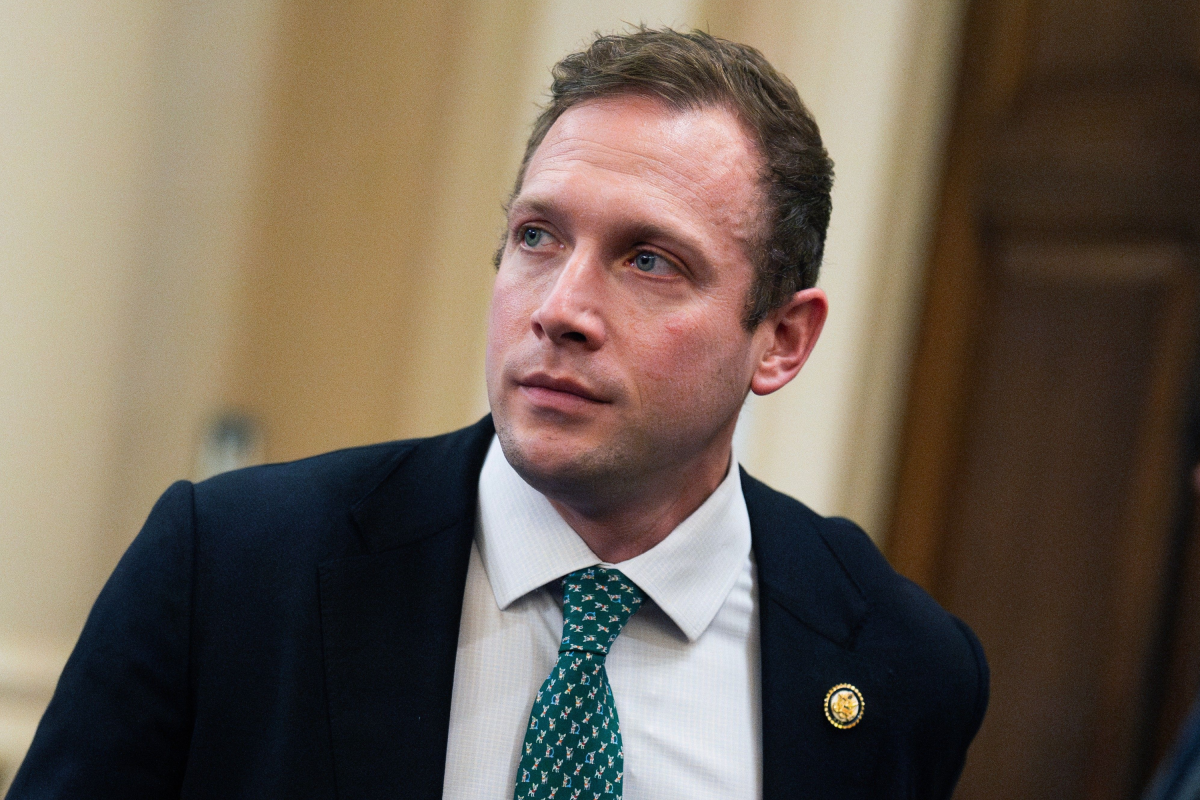
In the quiet corridors of Ohio’s 7th Congressional District, where the rolling landscapes of Northeast Ohio meet the steadfast work ethic of its suburban and rural communities, a political storm is brewing that threatens to reshape the state’s electoral map. For incumbent Republican Representative Max Miller, what once seemed like a secure journey toward reelection in a historically conservative stronghold has suddenly transformed into a nerve-wracking, deeply personal test of survival. The district, which comfortably backed Donald Trump by roughly eleven percentage points during the 2024 presidential election, has long been regarded as a safe haven for the Republican brand. However, as the political machinery gears up for the pivotal 2026 midterm elections, the ground beneath Miller’s feet is showing unexpected, dramatic signs of instability. This shifting landscape is not merely a consequence of changing national political winds; it is a deeply human drama fueled by raw personal controversy, emerging local fatigue, and a growing sense among voters that political representation should be defined by stability rather than scandal. As Democrats eagerly eye this once-impenetrable district as a potential path to taking back control of the House of Representatives, they are finding that the quiet, everyday anxieties of local families are clashing directly with the loud, chaotic realities of national political ambition, turning this particular congressional race into one of the most compelling and highly watched battlegrounds in the country.
At the dark heart of Miller’s mounting political vulnerability lies a deeply painful, highly publicized domestic tragedy that has transcended the privacy of the courtroom to become central to his public identity. The collapse of Miller’s marriage to Emily Moreno, the daughter of prominent Republican Senator Bernie Moreno, was not just the end of a relationship, but the fracturing of two of Ohio’s most influential conservative families. In the wake of their December 2025 divorce, a series of harrowing accusations of domestic abuse have resurfaced, thrusting the former couple’s private pain into the harsh glare of media scrutiny from national outlets like CNN and Rolling Stone. Moreno has made serious, troubling allegations in court documents and police interviews, accusing Miller of several instances of physical assault and claiming he once threatened her with a firearm during their marriage. Miller has fiercely and repeatedly denied these allegations, dismissing them as a calculated smear campaign linked to an ongoing, bitter custody dispute over their child. In his defense, Miller has publicly counter-attacked, claiming that no official police reports were ever filed at the time of the alleged incidents and even publicly suggesting that his ex-wife struggles with undiagnosed bipolar disorder—a claim that Moreno’s attorney, Subodh Chandra, has vigorously refuted, stating she has no such medical diagnosis. While no criminal charges have been filed and the allegations remain unproven in a court of law, the human cost of this public unraveling is undeniable, forcing voters to grapple with the uncomfortable task of weighing an incumbent’s personal integrity and domestic life against his performance as a public servant.
Standing in stark contrast to Miller’s high-society pedigree and headline-grabbing personal drama is the Democratic nominee, Brian Poindexter, a man whose life story reads like a tribute to the classic Rust Belt ethos of Northeast Ohio. Poindexter, an active union ironworker and a dedicated city councilman from the working-class community of Brook Park, represents a political archetype that has historically resonated deeply with the region’s blue-collar electorate. He did not rise through the ranks of elite political networks; instead, his hands-on experience in building the literal framework of his community has earned him a reputation as an authentic, down-to-earth advocate for ordinary people. While Miller’s campaign has struggled under the heavy weight of legal disputes and defensive public relations maneuvers, Poindexter has quietly positioned his campaign as an oasis of predictability and working-class advocacy. His platform focuses squarely on bread-and-butter economic issues, the preservation and expansion of affordable healthcare, and fierce protection for organized labor, which remains a vital component of the district’s cultural identity. Until recently, Poindexter’s run was viewed by national party strategists as a commendable but ultimately doomed effort in a deeply red district. However, by offering a calm, policy-oriented alternative to an electorate that is increasingly weary of chaotic personal headlines, Poindexter has managed to transform himself from a long-shot candidate into a formidable challenger who embodies the quiet aspirations of many voters who simply want their government to work for them without the constant distraction of personal drama.
The reality of Poindexter’s surge and Miller’s corresponding decline was brought into sharp, undeniable focus with the release of a stunning June survey commissioned by Democratic-aligned interests. The poll, conducted by the respected firm GBAO between June 18 and June 20, sent shockwaves through the political establishment by revealing that Miller and Poindexter are locked in a statistical tie, with Miller holding a nominal and razor-thin lead of just 44 percent to Poindexter’s 43 percent—a gap well within the survey’s 3.5 percentage point margin of error. Perhaps the most alarming data point for the Miller campaign is Poindexter’s commanding 17-point lead among self-described independent voters, a crucial demographic that historically decides the outcome of close races in swing districts. This polling indicates that the independent suburban voters who once comfortably backed Republican candidates are experiencing a profound sense of fatigue with the status quo. Additionally, the poll revealed a surprising vulnerability for the broader Republican brand in the area, showing that while Donald Trump carried the district handily in 2024, his current local standing is under water, with a 44 percent approval rating compared to a 54 percent disapproval rating mockingly reflecting a changing local mood. While political insiders caution against over-reliance on a single poll, particularly one commissioned by partisan interests, the sheer competitive nature of these numbers suggests that the personal allegations against Miller are indeed sticking in the minds of voters who may have previously looked past such controversies in favor of party loyalty.
As if the polling data were not enough to rattle the Republican leadership, the highly respected and non-partisan Cook Political Report officially validated the competitiveness of the race by shifting its rating of Ohio’s 7th Congressional District from “Solid Republican” to “Likely Republican.” In the sophisticated world of congressional campaign strategy, such rating changes are rarely made on a whim; they reflect a holistic assessment of fundraising trajectories, candidate viability, and shifting national political tides that signal to major donors and national political action committees that a once-ignored race is now a viable battlefield. This institutional shift has been mirrored in the dynamic world of online prediction markets, where the collective wisdom of thousands of everyday traders has turned the race into a high-stakes guessing game. On platforms like Kalshi, traders recently priced Miller’s chances of retaining his seat at a precarious 55 percent, while rival site Polymarket showed a razor-thin partisan gap with Republicans at 51 percent and Democrats at 48 percent. These digital wager markets act as a real-time, unvarnished mirror of political anxiety, stripping away partisan spin to reveal that moneyed interests and political enthusiasts alike no longer view Miller as an untouchable incumbent. This sudden vulnerability has forced national Republican leadership to contemplate the uncomfortable prospect of spending precious campaign resources defending a seat they had completely taken for granted, potentially diverting crucial funds from other competitive transition districts across the nation.
Ultimately, what is unfolding in Ohio’s 7th Congressional District is a poignant micro-narrative of a much larger, national struggle for the soul of American politics as the country marches toward the 2026 midterms. The race encapsulates the profound tension of the modern political era: the collision between a candidate’s turbulent private life and the hard, economic realities of the constituents they are elected to serve. Whether Democrats can successfully pull off one of the greatest upsets of the election cycle and flip this historically red seat will depend not only on how deeply the allegations of domestic abuse continue to erode Max Miller’s support, but also on whether Brian Poindexter can maintain his momentum as an authentic working-class voice in the face of an inevitable Republican counter-offensive. For the voters of Northeast Ohio, the choice ahead is deeply human and intensely significant, forcing them to decide whether a party brand and past loyalties outweigh their desire for steady, stable leadership at a time when the world feels increasingly unpredictable. As campaigns on both sides intensify their operations and prepare for a grueling, high-stakes battle, Ohio’s 7th District stands as a powerful reminder that in the arena of representation, no seat is truly safe, no incumbent is entirely untouchable, and the ultimate power still rests in the quiet, reflective hands of everyday voters casting their ballots.