





The term “frozen assets” carries a clinical, administrative coldness, but the reality it represents is deeply human and intensely felt. Behind the dense legalese of international banking sanctions lies the lived experience of over 91 million ordinary Iranians who have spent decades navigating an economy under siege. Ever since the historical rupture of the 1979 Islamic Revolution, the relationship between Iran and the United States has been defined by financial warfare, with successive waves of U.S. sanctions steadily constricting the flow of goods, medicines, and capital. Designed to target the state’s nuclear ambitions, human rights transgressions, and regional posture, these measures have inevitably trickled down to the kitchen tables of regular citizens. Today, the Iranian people endure the exhausting weight of astronomical inflation, a collapsing currency, and the cumulative anxieties of regional conflict, resulting in a society under immense psychological and financial strain. When we look at “frozen assets”—which are essentially the accumulated oil revenues and foreign currency reserves generated by the nation’s labor and resources—we are looking at the locked-up wealth of a society. The potential release of these billions represents far more than an abstract diplomatic triumph; it is a vital injection of resources that could offer tangible economic relief, stable employment, and basic security to a population that has spent generations caught in the crossfire of international diplomacy.
Tracing the physical geography of these frozen billions reveals a vast, quiet labyrinth of global finance where enormous sums of money reside in a state of legal limbo. Estimates of the total value of Iran’s restricted foreign holdings vary-wildly depending on who is doing the counting, reflecting the opaque nature of international diplomacy and shadow banking. While some conservative Western estimates place the total figure at under $50 billion, optimistic Iranian officials suggest that the accumulative sum of their blocked sovereign wealth could be as high as $100 billion. At the center of this global asset map sits China, long the primary patron of Iranian crude oil exports and a geopolitical heavyweight, which is widely believed to hold the largest concentration of these frozen funds, with estimates ranging from $20 billion to upwards of $50 billion. Before the implementation and subsequent unraveling of the historic Obama-era nuclear agreement, the Joint Comprehensive Plan of Action (JCPOA), India stood as the second-largest buyer of Iranian oil, resulting in its own significant reserves of locked capital. Neighboring Iraq, paradoxically dependent on Iranian exports for its domestic electricity and natural gas grids, holds approximately $15 billion in escrow accounts, desperately wanting to settle its energy debts but constrained by global sanctions. Other critical portions of Iran’s wealth are scattered across bank vaults in Japan, South Korea, Luxembourg, Qatar, Oman, and even the United States itself, demonstrating how the intricate machinery of modern international finance can instantly freeze the commerce of an entire nation.
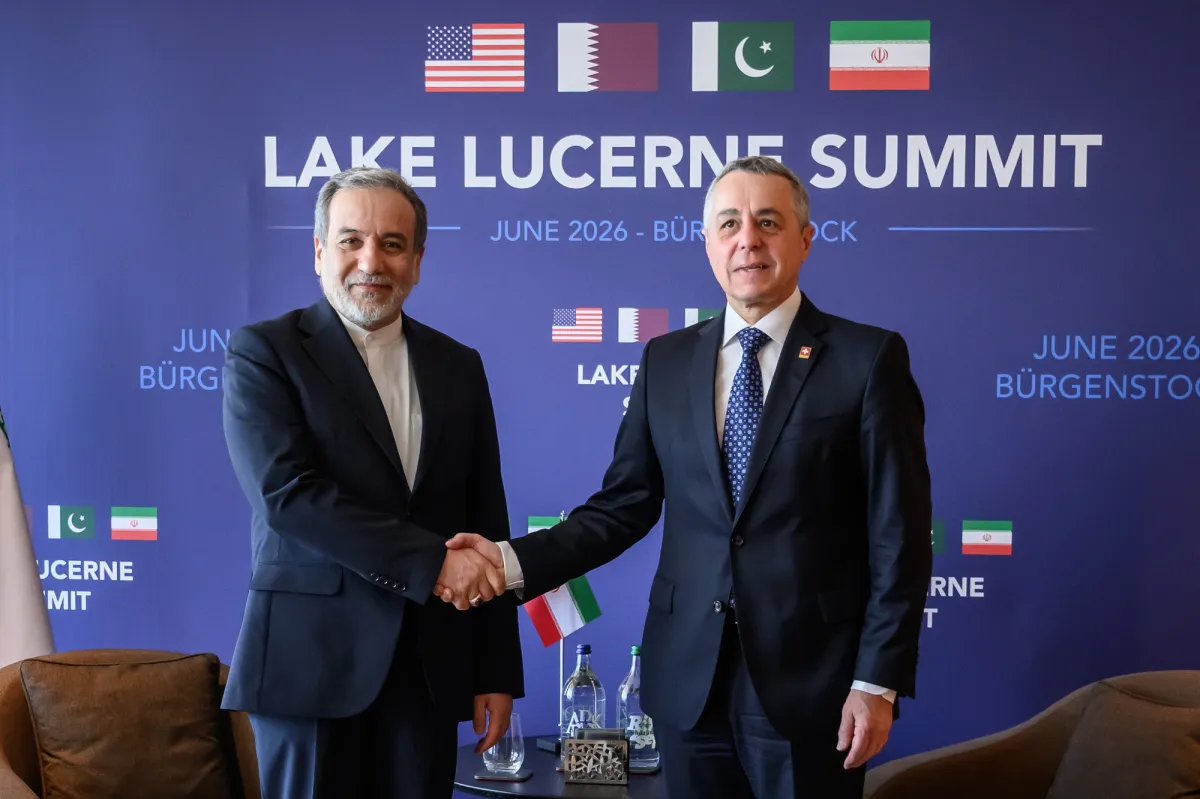
The path toward reclaiming these idle billions was formally illuminated on Friday, June 17, with the signing of a breakthrough fourteen-point Memorandum of Understanding (MOU) between Tehran and Washington. This document, representing a fragile and hard-fought diplomatic compromise between two long-standing adversaries, contains highly specific provisions designed to unlock the economic gridlock. At the heart of this agreement is the crucial Paragraph 11, a clause that outlines the technical mechanics and legal obligations governing the repatriation of these frozen assets. Under this provision, the United States explicitly undertakes the responsibility to make Iran’s restricted funds and assets fully available for utilization upon the official implementation of the memorandum. To make this possible, Washington is obligated to issue all necessary regulatory licenses, legal authorizations, and waivers required to bypass existing sanctions architecture. Crucially, the MOU dictates that these funds, whether they remain secured in their original foreign bank accounts or are safely routed through newly designated third-party financial institutions, must be rendered entirely usable for payments to any ultimate beneficiary selected by the Central Bank of Iran. By committing both nations to mutually agree on the practical, step-by-step procedures of this massive asset transfer, Paragraph 11 attempts to replace decades of fiscal hostility with a structured, legally sound pathway toward reconciliation.
However, the signing of the agreement immediately ignited a fierce war of words over the ownership, intent, and moral narrative of the transaction. In the United States, where any diplomatic engagement with Tehran is met with intense domestic political scrutiny, the Trump administration quickly sought to frame the release of these billions in a manner that appealed directly to its own domestic base, particularly the American agricultural sector. President Donald Trump publicly asserted that the unfrozen capital would not be a blank check for the Iranian government, but would instead be systematically funneled back into the United States economy to purchase American agricultural goods. Framing the transaction as a benevolent humanitarian endeavor, Trump argued that the funds would go directly to American farmers in exchange for desperately needed food supplies to sustain Iran’s struggling population of 91 million people. This narrative served a dual political purpose: it deflected domestic criticism that the administration was appeasing a geopolitical rival, while simultaneously painting a picture of American economic dominance, suggesting that even in concession, the United States could dictate how an adversary’s sovereign wealth is spent, converting frozen oil revenues into a direct stimulus for rural American communities.
This paternalistic framing by the United States was met with swift, uncompromising resistance from Iranian officials, who viewed the American narrative as a patronizing violation of their national dignity and sovereign rights. Speaking to the international press corps on the neutral ground of the United Nations headquarters in Geneva, Ali Bahreini, Iran’s ambassador to the UN, delivered a sharp, unequivocal rejection of any foreign attempts to supervise or restrict the use of their assets. Bahreini made it clear that the Islamic Republic of Iran is a sovereign nation and the sole authority entitled to decide how its unfrozen financial resources will be allocated, completely dismissing any claims that a foreign power would have a say in their domestic spending choices. From the Iranian perspective, these assets are not a gift, a charitable handout, or a loan from the West; they are the rightful and hard-earned property of the Iranian people, generated from their own oil exports and trade, which had been unjustly withheld by what they characterize as economic bullying. This sharp rhetorical clash highlights the deep-seated ideological divide that persists even during moments of diplomatic cooperation, proving that while financial agreements can be negotiated on paper, the underlying struggles for sovereignty, respect, and national pride remain incredibly difficult to resolve.
Providing concrete numbers to this ongoing diplomatic tug-of-war, Iranian Parliament Speaker Mohammad Bagher Ghalibaf brought the physical scale of the immediate agreement into clearer focus by announcing that the deal encompasses the release of $12 billion in frozen assets. According to international reports, this substantial sum is scheduled to be discharged in two separate, carefully monitored tranches of $6 billion each, providing a highly structured and sequential release designed to build trust between the two nations as the MOU is implemented. As these first billions prepare to move through the international banking system, they carry the heavy weight of a nation’s expectations, offering a crucial buffer to stabilize a volatile domestic market, halt the freefall of the national currency, and fund essential civilian infrastructure. The ultimate success of this historic agreement will not be measured by the dry, legalistic language of Paragraph 11, nor will it be defined by the political posturing of leaders in Washington or Tehran. Instead, its true impact will be felt in the daily lives of millions of school teachers, medical workers, market vendors, and ordinary families across Iran, who hope that these thawed resources will finally bring an end to a long winter of isolation and pave the way for a more stable, dignified future.