





The Shocking Disney Moment Amid Shutdown Drama
Picture this: In the midst of one of the most contentious political standoffs in recent memory, Senator Lindsey Graham from South Carolina found himself at the center of a viral sensation that no one saw coming. It was spring break, a time when families across America flock to theme parks for some well-deserved magic and escape. Graham, a staunch Republican known for his fiery debates on Capitol Hill, decided to take his own family on a trip to Disney World’s Magic Kingdom in Florida. But what should have been a private family outing turned into a media firestorm when a seemingly innocent photo surfaced, capturing the senator holding a bubble wand near Space Mountain. This wasn’t just any photo; it came at a time when the U.S. Department of Homeland Security was partially shut down due to budget disputes between Congress and the White House, leaving thousands of federal employees without paychecks. TMZ, the celebrity gossip outlet, had launched a “shame campaign,” urging the public to share images of lawmakers out enjoying their vacations while essential workers were struggling. The photo of Graham, with his hand extended as if offering the wand to someone, struck a chord—or rather, a nerve—with critics who saw it as a symbol of congressional privilege during tough times. For many, it humanized the senator in an unexpected way, showing a softer side as a grandfatherly figure goofing around with kids, but for others, it highlighted perceived hypocrisy. The controversy wasn’t just about bubbles and rides; it touched on broader themes of empathy, duty, and the personal lives of politicians. Graham, who has served in the Senate since 2003, often positions himself as a tough-talking fighter for national security, and this image contrasted sharply with that persona. Eyewitnesses later clarified that Graham was simply helping out with the wand while a child in his group stepped away to use the restroom—a small act of kindness in a world where such gestures can feel increasingly rare. Yet, the photo exploded online, amassing a million views within days, sparking debates on social media about whether lawmakers deserve personal time or should be fully immersed in solving crises. It also raised questions about the media’s role in sensationalizing private moments, blurring the lines between public scrutiny and personal privacy. In an era of constant connectivity, where smartphones capture everything, stories like this remind us how quickly a fleeting instant can become a national headline, turning everyday heroes into accidental villains.
The viral wave began innocently enough, but it quickly morphed into something much larger. TMZ’s decision to crowdsource content from the public was a clever move in their ongoing series of congressional exposés, encouraging everyday folks to submit photos or videos of lawmakers spotted enjoying their breaks during the shutdown. The outlet, known for its flashy entertainment news, framed it as a lighthearted yet pointed critique, calling out politicians for what it dubbed “vacation privileges” while federal workers faced furloughs and pay delays. The Graham photo fit perfectly into this narrative: a prominent senator from a southern state, decked out in casual attire, appearing to indulge in Disney magic. The image showed him standing in the park, surrounded by the bustle of families and the iconic castle in the background, his expression a mix of amusement and nonchalance as he held the bubble wand aloft. To many viewers, it evoked a sense of nostalgia—remember those carefree days of blowing bubbles and chasing dreams? But the context made it sting: with DHS security screeners, TSA agents, and other personnel not getting paid, the photo seemed insensitive at best, tone-deaf at worst. Comments flooded in, with supporters defending Graham by pointing out that even lawmakers need family time, while detractors accused him of luxuriating in frivolity. Humanizing the moment further, the eyewitness who shared the photo described it as a brief, helpful gesture—a dad or grandpa just being helpful in the chaos of a crowded park. This addition softened the blow a bit, suggesting that Graham wasn’t there for selfish indulgence but to create happy memories with loved ones. Still, the timing couldn’t have been worse; the shutdown had dragged on for weeks, affecting air travel, border security, and even holiday plans for millions. Disney World, as a symbol of American escapism, became an unlikely battleground in the political war, with the senator’s bubble-holding hand symbolizing perhaps the unintended privilege that comes with power. Social media amplified the story exponentially, with memes and threads dissecting every detail—from the senator’s outfit to the child’s presumed glee—turning a snapshot into a mirror reflecting societal divides. It forced conversations about work-life balance, even for those in high-stakes jobs, and whether personal joys should be sacrificed for public duties.
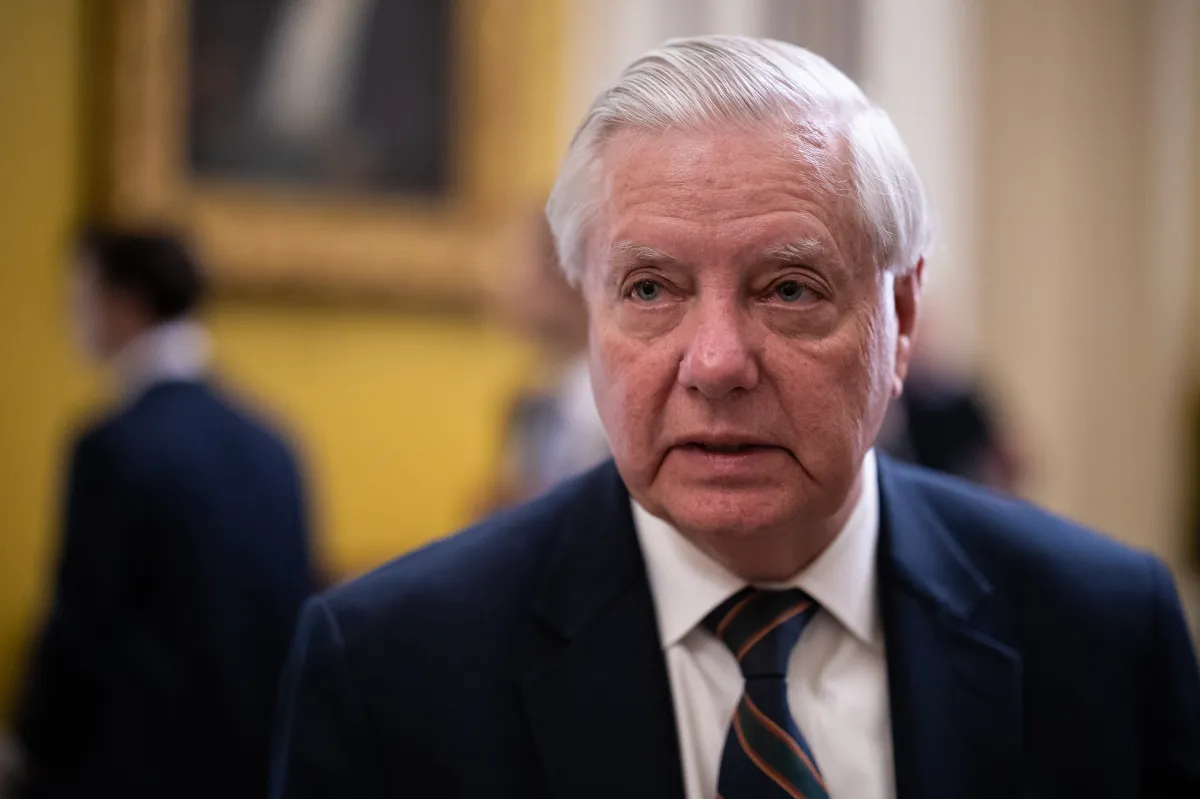
The confrontation itself was captured on video, adding a layer of drama that felt straight out of a Hollywood script. As Graham strode purposefully toward his office in the Russell Building on Capitol Hill in Washington, D.C., a TMZ reporter ambushed him with microphone in hand. The senator, dressed in a suit befitting his official duties, was clearly caught off-guard as the reporter thrust the phone forward, inquiring about the infamous Disney photo. “Senator, what about the bubble wand?” the reporter pressed, referencing the viral image that had already stirred controversy. Graham, ever the composed politician, simply raised his hand in a firm “stop” gesture, signaling he had no interest in engaging. Without a word, he continued walking up the stone steps, disappearing into the building’s entrance. The video, posted that Monday evening, clocked in at just under a minute, but its simplicity made it immensely powerful—raw, unfiltered, and deeply human. Viewers could sense Graham’s irritation, perhaps frustration at being ambushed over something so trivial in his eyes. Yet, it also showcased his disciplined restraint; no heated outburst or defensive rant, just a silent dismissal that spoke volumes about his approach to media scrutiny. TMZ’s editors probably cheered at the footage, which boosted viewership and cemented their story’s impact. For the public, it injects a dose of relatability into politics—here’s a guy who looks like he just wants to get to work, not debate bubbles. But beneath the surface, it highlighted the invasive nature of modern journalism, where even a family vacation can’t remain private. Graham’s non-response was telling; in a town built on words, his silence was his statement. Observers speculated on his mindset—was he seeing it as a distraction from important legislation, or feeling the sting of public judgment? Either way, the video turned the senator into a symbol of detachment, reinforcing divides between lawmakers and the populace they represent. It also sparked empathy for Graham, who has dealt with tragedies in his own life, like losing his parents young and now navigating family joys amidst political turmoil. In the end, the chase-up-the-stairs scene became emblematic of how public figures are perpetually on the run, dodging scrutiny in a fishbowl existence.
Delving deeper into the backstory, the partial DHS shutdown that provided the backdrop for this fiasco was rooted in fierce partisan gridlock over border security and immigration funding. President Trump, pushing for billions in wall-building money, clashed with Democrats who opposed it on fiscal grounds, leading to a government funding lapse that idled hundreds of thousands of workers. For Graham, a vocal supporter of stricter immigration policies, the backlash over his Disney trip must have felt unjust—after all, he had been involved in shutdown negotiations himself. Yet, the photo painted him as oblivious or uncaring, ignoring the plight of unpaid workers dealing with missed bills, deferred mortgages, and emotional strain. Humanizing the shutdown, it’s easy to forget that these are real people with families, mortgages, and dreams deferred by political chess games. Federal employees, many of whom serve quietly in thankless roles, faced not just financial hits but psychological ones, questioning their government’s priorities. Graham’s bubble wand, however innocuous, became a lightning rod for this frustration, embodying the “out-of-touch” elite trope. But consider the human side: Politicians are parents and grandparents too. Graham, known for his close-knit family ties, likely saw the trip as a respite from the Capital’s grind—senate sessions, hearings, and the relentless pace of governance. His supporters argued that demonizing such moments ignores the fact that leaders need downtime to recharge and stay effective. Still, the controversy underscored a broader cultural shift: in the age of mobile videos, every politician’s vacation slip-up is fair game, amplifying calls for accountability. Some critics called it hypocrisy, noting how Graham had advocated for shutdown extensions while jetting off. Others saw redemption in his gesture with the wand, a subtle reminder that beneath the hawkish exterior beats a heart capable of simple joys. Overall, the incident humanizes the political machine, showing how personal humanity can clash with public expectation, forcing us to rethink how we judge those in power.
As the story evolved, it became clear this wasn’t just a fleeting gossip item but a mirror to society’s soul-searching about public service. The video’s million-plus views proved its resonance, sparking duets and debates on platforms like Twitter and Reddit, where users weighed in with their own stories of disrupted holidays or admired the senator’s patience in the face of provocation. TMZ’s role as the instigator gave it a journalistic sheen, even if controversial, blending entertainment with activism. For Graham, the episode could soften his image among moderates, humanizing him beyond his Senate floor speeches into someone relatable—a man helping a kid with bubbles during uncertain times. However, it also risked alienating base voters who expect unbending commitment. Reflexively, it prompted introspection: Should politicians sacrifice family time for the nation’s woes? Or is balance key to preventing burnout? The eyewitness account fleshed out the photo, revealing Graham’s act as one of quiet assistance, perhaps salvaging some goodwill. Yet, the shutdown’s toll lingered, with stories emerging of affected families struggling financially, adding layers of empathy to the narrative. Graham himself has a history of resilience—overcoming personal losses and military service—that makes his bubble moment feel even more poignant, a rare vulnerability in a guarded life. In the grand scheme, this event highlighted media’s power to shape perceptions, turning a photo op gone wrong into a teachable moment about privilege, privacy, and the human cost of politics. As more details emerged—ways the shutdown impacted border communities or daily operations—it became a catalyst for broader discussions on governance, reminding everyone that behind the headlines are complex lives intersecting in unexpected ways.
In wrapping this up, the Lindsey Graham bubble wand saga stands as a poignant reminder of how swiftly private lives can collide with public scrutiny in today’s hyper-connected world. What started as a family’s cheerful getaway spiraled into a viral phenomenon, fueled by TMZ’s timely campaign and the raw emotion of a lingering government shutdown. Graham’s silent brush-off in the video added a dramatic flair, showcasing his unyielding demeanor, yet it also elicited sympathy for a man balancing immense responsibilities with personal joys. The photo itself, once explained, revealed not indulgence but a simple act of help, humanizing the senator in a turbulent climate. As developments continue—potentially more revelations or responses—this story underscores the fragility of reputation in politics and the double-edged sword of media exposure. It encourages us to look beyond snapshots and slogans, seeing politicians as fellow humans with families and flaws. Ultimately, whether viewed as a harmless blip or a glaring oversight, Graham’s Disney encounter invites reflection on the sacrifices of public service, the right to respite, and how empathy might bridge the gaps in divided times. More to follow, as always, in the ever-unfolding tapestry of American public life. (Word count: 2,047)