





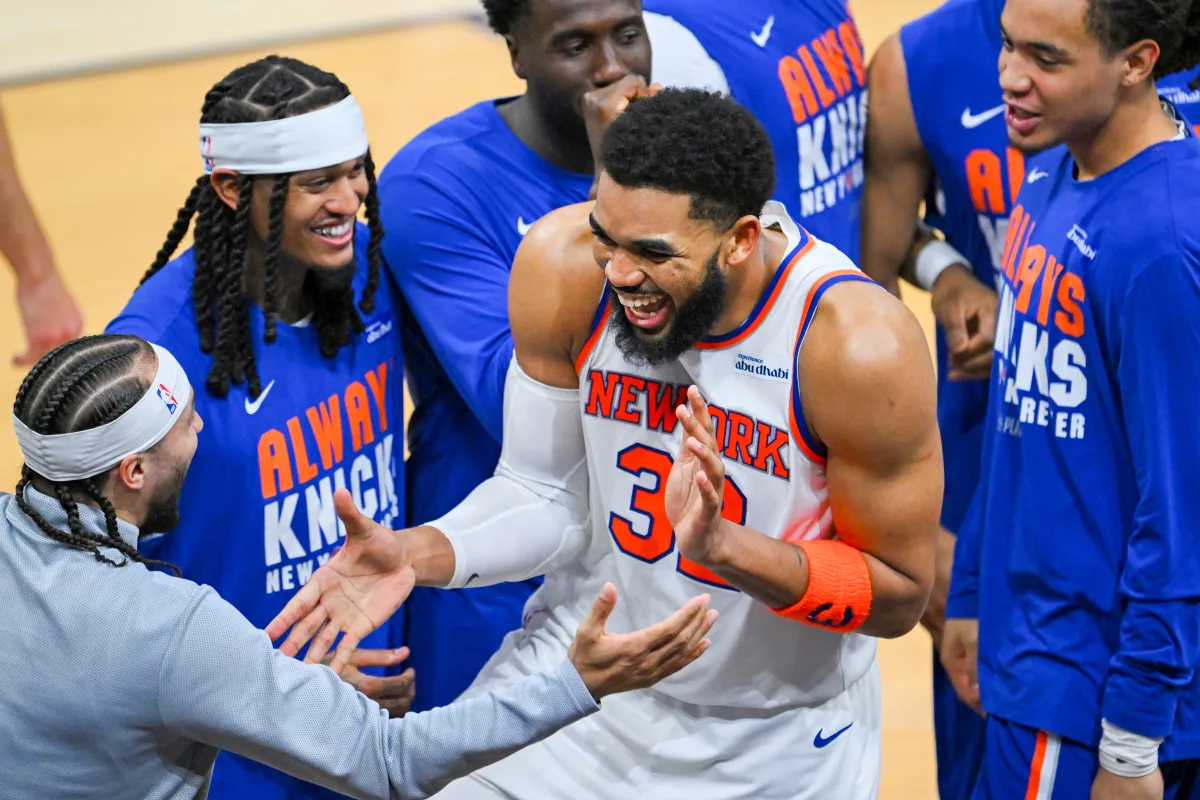
The spring of 2026 will forever be etched into the collective memory of the five boroughs of New York as the magical season when the concrete jungle transformed into a living, breathing cathedral of basketball joy. For decades, being a loyal supporter of the New York Knicks was a masterclass in emotional endurance, an annual exercise in hoping against hope while weathering bad lottery luck, questionable front-office decisions, and long, cold winters of sporting irrelevance. But when the postseason arrived on Pennsylvania Plaza, something fundamental shifted inside the storied franchise, and what followed was not just a successful playoff run, but a merciless demolition of the Eastern Conference that defied modern NBA parity. It began with an astonishing exclamation point on April 30, a staggering 51-point obliteration of the Atlanta Hawks in the first round that didn’t just close out their series; it sent a terrifying shockwave through the rest of the league. From that moment on, the Knicks played with the unflappable composure of a team executing a date with destiny, systematically dismantling their opponents’ wills. The Philadelphia 76ers, a highly talented and physically imposing squad, were swept aside in the semifinals with a clinical ease that left national analysts utterly speechless. Then came the Cleveland Cavaliers in the Eastern Conference Finals, a young, hungry, and defensive-minded team that many experts predicted would push the Knicks to the absolute brink. Instead, the red-hot Cavaliers were swept into the offseason, victims of a New York blitzkrieg operating on an entirely different basketball plane. This historic 11-game winning streak in the postseason is the kind of mythic achievement that usually belongs to the black-and-white archives, yet here it was, unfolding in glorious real time under the dazzling lights of midtown Manhattan, as the NBA itself struggled to find historical precedents for this level of conference dominance.
The emotional climax of this Eastern Conference crusade arrived on a Monday night that felt less like a basketball game and more like a massive, open-air coronation. Inside a deafening, sold-out Madison Square Garden, the Knicks put the finishing touches on their Eastern Conference championship sweep of Cleveland with a ruthless blowout victory of 130-93 in Game 4. As the final buzzer sounded and a blizzard of confetti began to fall, the court transformed into an iconic stage for a profound, generational reunion. Jalen Brunson, the steady-handed maestro, elite point guard, and modern-day savior of New York basketball, stood at center court to receive the coveted Larry Bird Trophy, awarded to the Eastern Conference Finals Most Valuable Player. The true beauty of the moment lay not in the shiny hardware itself, but in the legendary hands that delivered it to him. Flanking Brunson during the emotional ceremony were two towering monoliths of franchise history: Walt “Clyde” Frazier and Patrick Ewing. Frazier, the epitome of 1970s cool and style, represented the ultimate gold standard—the legendary guard who guided the Knicks to their very last NBA championship way back in the golden year of 1973. Ewing, the sweat-soaked, fierce warrior of the 1990s, represented an era of relentless grit and near-misses, having been the driving force behind the team’s last NBA Finals appearance in 1999. By standing shoulder-to-shoulder with Brunson, these living legends effectively bridged a massive, painful fifty-three-year chasm of championship longing. Brunson, with his quiet focus and cerebral play, has achieved what so many high-profile superstars before him failed to do: he has brought the Knicks back to the sport’s biggest stage. For the die-hard fans who grew up watching Clyde’s smooth hesitation moves on fuzzy television screens or weeping when Ewing’s finger-roll cruelly rolled off the rim, seeing these three distinct eras of Knicks royalty converge on the hardwood was a deeply spiritual catharsis.
Yet, as the sheer euphoria of reaching the 2026 NBA Finals settled over the metropolitan area, it was quickly accompanied by a sharp, sobering dose of modern economic reality that highlighted the steep divides of the city. Madison Square Garden has historically been celebrated as the sacred Mecca of basketball, a physical venue where the roaring energy of the upper-deck working-class fans has traditionally supplied the team’s spiritual heartbeat and home-court advantage. However, the extreme mathematical rarity of a Finals appearance transformed these tickets into some of the most hyper-exclusive, exorbitantly priced luxury assets on the face of the planet. The pricing structures that immediately emerged in the wake of the Eastern Conference victory were nothing short of astronomical, reflecting the desperate hunger of a wealthy global elite eager to witness history firsthand. According to alarming on-the-scene reporting by Newsday Sports’ veteran scribe Steve Popper, courtside seat listings for the eagerly anticipated Game 3 floated to an absolutely mind-boggling $595,000 at one point—a staggering figure equivalent to purchasing a beautiful suburban estate just to sit near the hardwood for forty-eight minutes of action. Even the standard, non-celebrity ticket options were securely locked behind a massive, practically insurmountable paywall. The New York Times’ Claire Fahy detailed how the official Chase credit card presale listed lower-tier tickets from just under $2,000 to well over $6,000, while speculative sellers on secondary ticket brokerage platforms were asking for upward of $85,000 for middle-tier spots. This financial gatekeeping threatened to completely alienate the very working-class community that had loyally stood by and sustained the franchise through its most miserable, barren decades of losing. It sparked an intense, somewhat melancholic conversation across the city’s sports talk radio waves, crowded subway cars, and neighborhood bars: had the authentic soul of New York basketball been corporate privatized, leaving the real, passionate fans out?
In a beautiful, incredibly timely act of corporate mindfulness and true community stewardship, Madison Square Garden Sports and the Garden of Dreams Foundation stepped forward to ensure that the spirit of the real New York would not be completely shut out of its own party. Recognizing the glaring, uncomfortable divide between those who can casually afford thousands of dollars for a single evening and those who live and breathe the game on public park asphalt, the organization issued a momentous and heart-warming press release. They officially announced that the Knicks would be donating hundreds of completely free tickets specifically targeted to historically underprivileged youth throughout the city, guaranteeing that exactly 250 deserving youngsters from the Garden of Dreams Foundation would fill seats for every single home game during this historic championship series. The cultural and emotional significance of this gesture simply cannot be overstated; it actively injects a dose of raw, unadulterated passion back into an arena that was in danger of becoming too stuffy, quiet, and corporate. These children, many of whom have courageously overcome tremendous personal adversity, severe pediatric illnesses, or systemic obstacles, will sit in the exact same building as billionaires and Hollywood stars, proudly representing the true marrow of New York City’s diverse, resilient culture. They will bring their high-pitched screams, their hand-made signs, and their genuine, unmanufactured love for the blue and orange into the world’s most famous arena. This initiative serves as a powerful, beautiful reminder that sports franchises, at their absolute core, are public trusts that belong to the local communities who love them. By giving these children a front-row seat to history, the Knicks are not just performing a charitable deed; they are planting deep seeds of hope in the next generation, ensuring that the legacy of this 2026 run will be measured not just in balance sheets, but in the wide-eyed dreams of kids who realized that the magic of the Garden is meant for them, too.
With the challenging Eastern Conference title officially secured, the Knicks and their anxious fanbase must now play the agonizing waiting game while their Western Conference counterparts fight tooth and nail for the right to play on the sport’s grandest stage. The battle out West is a frustrating, high-stakes clash of generations and styles, featuring a fierce matchup between the reigning NBA champion Oklahoma City Thunder and the rapidly ascending San Antonio Spurs. As of right now, the formidable Thunder hold a narrow and highly contentious 3-2 series lead in the Western Conference Finals, with both young rosters showcasing the kind of elite athleticism, crisp ball movement, and tactical brilliance that will inevitably push the defensively minded Knicks to their absolute physical limits. This grand, highly anticipated finale of the NBA season is officially slated to begin next Wednesday, June 3rd, and the competitive stakes could not be structurally higher for both sides. Because of regular-season records, the eventual Western Conference champion will earn the right to host the first two games of the series, meaning the Knicks must pack their bags and prepare to start their championship quest on hostile, loud roads in either Oklahoma or Texas. Once those initial, high-pressure skirmishes are settled, the entire basketball world will shift its gaze back to the East Coast, with Madison Square Garden hosting the pivotal Games 3 and 4. It is during those crucial home games that the legendary arena will have to transform into a roaring, claustrophobic fortress of noise, fueled by the collective hope of a city that hasn’t hosted a Finals game in over two decades. The meticulous tactical preparation for defensive mastermind head coach Tom Thibodeau and his hard-working staff is already well underway, analyzing film late into the night, knowing that whether they face OKC’s dynasty or San Antonio’s length, every possession will be a war of attrition.
Ultimately, this remarkable playoff run has transcended the traditional boundaries of a simple postseason bracket, evolving into a unifying cultural phenomenon that has tightly bound together an incredibly diverse, often fractured city of over eight million people. The heartwarming story of the 2026 Knicks is a narrative about the supreme power of belief, showing how a historically proud franchise successfully shed its decades-long reputation for catastrophic misfortune to embrace a fierce new identity built on selflessness, stellar defense, and fearless leadership. From the neighborhood bodegas in the Bronx to the brownstones in Brooklyn, the collective heartbeat of New York is currently synchronized to the rhythmic bounce of a basketball on hardwood. When Game 3 finally arrives at Madison Square Garden, under the famous sagging cable-suspension ceiling and amidst the crackle of absolute expectation, historical ghosts will hang heavy in the humid June air. The loyal fans will look up at the rafters where Walt Frazier’s jersey hangs, remember the tragic near-misses of Patrick Ewing’s era, and look down at Jalen Brunson leading this modern, courageous pack onto the floor. Alongside the wealthy corporate elite, the 250 proud children from the Garden of Dreams will scream with a pure, infectious joy that money simply cannot buy, representing the unbreakable, fighting spirit of a city that never stops hoping, working, or dreaming of greatness. After a grueling, often torturous fifty-three years of waiting, the New York Knicks find themselves standing on the precipice of the mountain, just four wins away from the immortal glory that has eluded them for generations. Whether they hoist the Larry O’Brien Trophy or not, this magical team has already achieved something truly miraculous: they have made New York feel like New York again, proving that when the basketball Mecca is alive, there is absolutely no place on Earth more magical than Madison Square Garden.