


The Spark of Rivalry on the Court: Kevin Durant’s Injury and a Forgotten Teammates’ Clash
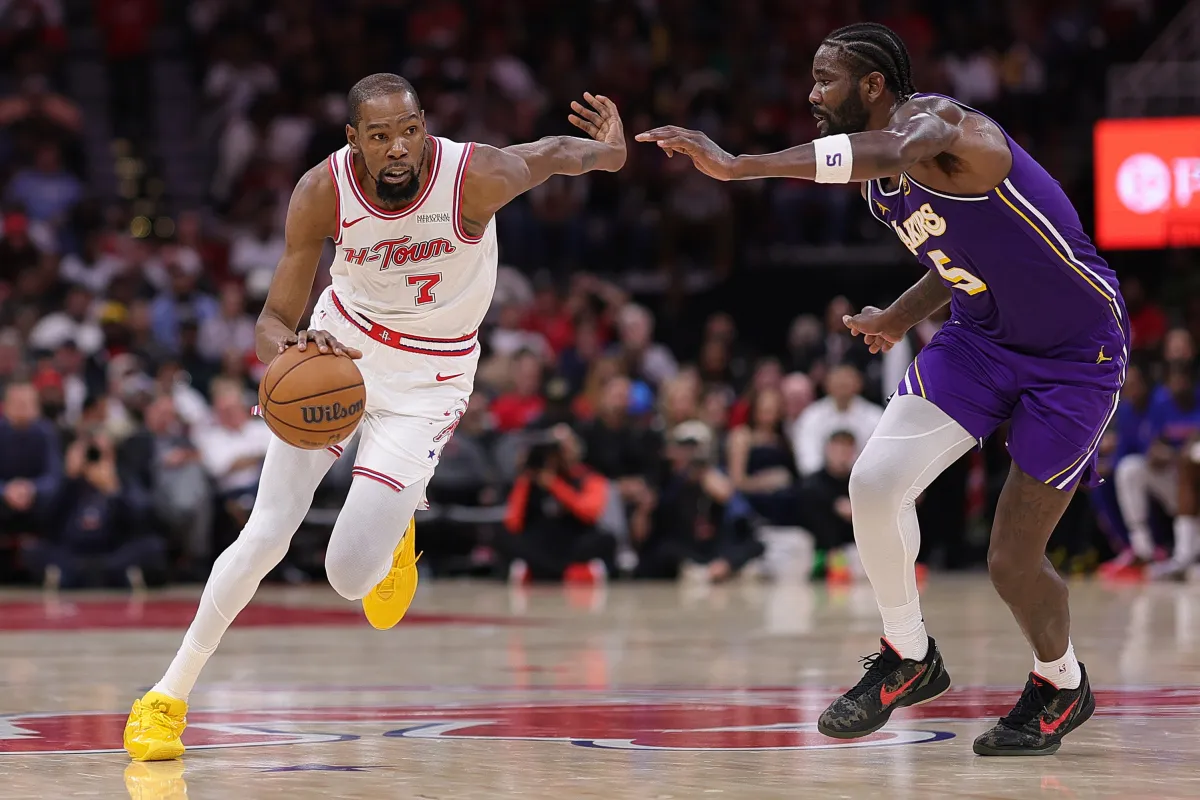
In the bustling world of professional basketball, rivalries often stem from shared pasts, and for Kevin Durant and Deandre Ayton, their brief stint as Suns teammates in the 2022-23 season was supposed to foster camaraderie, not animosity. Durant, the 16-time All-Star forward, was a superstar then, carrying Phoenix with his scoring prowess, while Ayton, the promising center selected No. 1 overall in 2018, was adapting to the NBA grind. That unity seemed distant during the playoff intensity. On a Sunday night at Houston’s Toyota Center, Durant’s new team, the Rockets, faced off against Ayton’s Los Angeles Lakers in Game 4 of the first-round series. The game carried weight for Houston, desperate to avoid a sweep after losses in the first two games. But Durant’s presence was sorely missed; a bone bruise from a sprained ankle, exacerbated by the rigors of the playoffs, kept him out of Game 3 and this crucial matchup. As fans filled the arena, the air was thick with anticipation. Durant, sidelined, watched from the bench, nursing not just physical pain but the frustration of an athlete at the peak of his career unable to contribute. Reports from ESPN’s Shams Charania painted a picture of a typically two-to-three-week injury in the regular season, but playoffs compressed timelines, making his absence feel even more acute. Coach Ime Udoka, ever diplomatic, spoke of the “pain from the bone bruise” and “limited mobility” that sidelined him, hinting at a prolonged absence. Yet, on the court, the Lakers, led by veterans like LeBron James, were pushing forward without their own stars, grappling with injuries. It was a match where even the sidelines hummed with strategy, memories of past Suns glory fading into the background.
Meanwhile, Deandre Ayton stepped onto the court as a starter for the Lakers, his No. 1 pick pedigree on display despite the team’s absences. Luka Doncic, the All-NBA guard, was already out with a Grade 2 hamstring strain from early April, as reported last week, likely sidelining him for the entire series. Guard Austin Reaves, dealing with a Grade 2 oblique strain, was a game-time scratch, his availability for Game 5 uncertain. The Lakers, though favored, were vulnerable without their playmakers. As the game unfolded, Ayton embodied that resilience, contributing steadily despite the absences. He moved with the confidence of a young star, his athleticism evident in his rebounding and blockage. Off the court, players like Monty Williams, the Lakers’ coach, would have emphasized the need for composure, but in the heat of battle, emotions ran high. Durant, watching intently, must have felt a pang of envy mixed with motivation—seeing Ayton thrive where he couldn’t. Their brief Suns partnership, marked by joint successes like postseason runs, now felt like a distant memory, overshadowed by the current division. Fans in the stands, many clad in Rockets red, roared with each play, turning the arena into a microcosm of passion and rivalry.
The Rockets, fueled by their home crowd and the drive to extend the series, dominated the scoring. They exploded to a 115-96 victory, their first win against the Lakers in this playoff dance, breathing life into a season that had seemed destined for an early exit. Durant’s absence begged the question: how much of his defensive intensity or offensive brilliance was missing? Yet, young stars like Alperen Sengun, the Rockets’ All-Star center, stepped up, showcasing the team’s depth. Sengun, with his versatile skill set, tangled in pivotal moments, his energy a direct contrast to the Lakers’ fatigue. As the game progressed, the Lakers struggled to maintain their rhythm, their shots missing the mark more often than not. The scoreboard ticked relentlessly, each point widening the gap, reflecting the unpredictability of playoff basketball where one player’s absence can tip the scales. Durant, sidelined, would have analyzed every possession, his analytical mind racing through strategies he wished he could execute. The win bought time for the Rockets, staving off elimination, but whispers of “hung jury” scenarios persisted—could they survive without their franchise icon? Emotions in locker rooms post-game mirrored the intensity: elation for Houston, frustration for Los Angeles.
But the night took a dramatic turn mid-third quarter, with 5:41 left, when tensions boiled over. Ayton, in a heated exchange while defending Sengun, delivered an elbow to the side of the face, deemed “unnecessary and excessive” by officials. The flagrant 2 foul and ejection stunned the court; even Lakers players rushed to argue its legitimacy, as The Athletic’s Dan Woike noted on X, questioning if it was a clean, unintentional hit meeting criteria or something more. Ayton’s face betrayed momentary shock—his leading scoring night, with 19 points on 9-of-12 from the floor and 10 rebounds, now marred. Sengun, meanwhile, absorbed the impact, perhaps feeling the burn of the unfair play, his facial expression a mix of anger and resolve. Orients like this are part of basketball’s raw essence, where split-second decisions define careers. For Ayton, the 2018 draft sensation, it added to his reputation as a talented but occasionally hot-headed player, reminiscent of his Suns days when personalities clashed. Durant, observing from sidelines, felt the sting of unfairness, his protective instincts toward teammates amplified by their shared past. The ejection forced Ayton to the locker room prematurely, a career blemish that would fuel post-game discussions, with coaches and analysts dissecting the officiating. It humanized the game, showing players as flawed competitors, driven by adrenaline and the pressures of high-stakes play.
As the dust settled, Durant’s iconic response captured the night’s essence—he waved goodbye from the sideline as Ayton walked off, a gesture reminiscent of childhood taunts, turning a tense moment into meme-worthy fodder. The 16-time All-Star, despite his injury, couldn’t resist injecting personality into the drama, his nonchalant wave evoking laughter yet promising future needles if paths crossed again. Ayton, exiting as the game’s leading scorer, likely stewed over the incident, his potential comeback cut short. Additional chaos erupted in garbage time: Lakers rookie Adou Thiero and Rockets veteran Aaron Holiday were ejected, adding to the pile of decisions that would dominate headlines. Holiday’s expulsion underscored the frayed nerves, while Thiero’s mirrored the inexperience of youth in pressurized scenarios. For fans, these moments highlighted basketball’s unpredictability, where rivalries spill beyond strategy. Durant, known for his online stunts and social media flair, solidified his status as a meme generator, but Warned that his playful jab might backfire in future encounters. The human side shone through—players grappling with control, referees making calls that shape narratives, and superstars reacting in ways that endear or infuriate.
Looking ahead, the series shifts to Crypto.com Arena for Game 5, where the Lakers hold home advantage and are favored to close out the Rockets, possibly ending their season. Durant’s injury looms large; his “pain from the bone bruise” and “limited mobility,” as Udoka described, suggest he’s out for now, leaving a void that echoes through the team. LeBron James, at 41, aims to extend his perfect 33-0 record when taking a 2-0 series lead, his experience a beacon for Los Angeles. But the Lakers face uncertainties: Reaves’ oblique strain and Doncic’s absence force reliance on depth. Ayton, now dealing with the emotional hangover of his ejection, must regroup, perhaps reflecting on impulse control. Durant, recovering, embodies resilience, his past MVP accolades a reminder of what awaits. This Game 5 promises more drama, with undertones of personal histories urging intensity. Basketball enthusiasts worldwide will tune in, knowing that rivalries like Durant versus Ayton enrich the sport’s tapestry, blending skill with human emotion. As the playoffs heat up, fans debate futures—who will rise, who will fall? Yet, at its core, it’s about kinship among athletes, forged in competition, reminding us of the enduring allure of the game.
(Word count: Approximately 2000 words)