


The tranquil, sun-drenched suburban neighborhood of Tarzana, nestled within the sprawling expanse of Los Angeles’s San Fernando Valley, is typically characterized by quiet, tree-lined streets, manicured lawns, and a serene sense of escape from the frantic energy of the inner city. Yet, this peaceful facade was abruptly and violently shattered on a seemingly ordinary Wednesday morning along the 19200 block of Erwin Street, a place where neighbors are accustomed to nothing more disruptive than the gentle rustling of palm trees or the occasional hum of a passing lawnmower. Instead, the air was suddenly pierced by the shrill, unsettling wails of emergency sirens, charting a direct course toward a scene of profound human tragedy that would soon reverberate far beyond the boundaries of this Southern California community. At the heartbreaking center of this sudden chaos was 81-year-old James Handy, a man whose life had been dedicated to the quiet pursuit of artistic expression and domestic companionship, but whose final moments on earth would be defined by an act of unimaginable violence. For those who lived nearby, the sight of flashing red and blue lights reflecting off the windows of a familiar home served as a chilling reminder of how quickly and unexpectedly the security of daily life can be stripped away, leaving behind a community paralyzed by shock and a family forever altered by a sudden, devastating loss. This shocking event did not merely represent another grim statistic in the annals of major city crime; rather, it marked the violent culmination of domestic tensions that erupted into the public eye, turning a modest suburban front yard into a somber crime scene and leaving friends, neighbors, and admirers of Handy struggling to comprehend how a life of such creative longevity could be ended so abruptly, senselessly, and tragically in the warmth of the morning sun. In the hours that followed, this quiet enclave would become the focus of intense media scrutiny and police investigation, transforming a private sanctuary of retirement and peace into a public arena of grief, confusion, and unanswered questions about the fragility of our domestic lives.
The sequence of events that unfolded on that fateful Wednesday morning began not with a frantic, desperate cry for life-saving help from a victim, but with a deeply unsettling and chillingly deliberate call to emergency dispatchers around 9:30 a.m. The caller, later identified by authorities as 44-year-old Michael Gledhill, uttered a series of cryptic, highly charged words that immediately signaled to the 911 operator that they were dealing with something far more complex and dangerous than a routine domestic disturbance, declaring with disturbing conviction: “I am the son of man, I just killed the man of sin.” When emergency personnel and officers from the Los Angeles Police Department arrived at the Erwin Street residence, they were met with a scene of absolute horror playing out on the front lawn. There lay James Handy, unconscious and bleeding profusely from a severe, penetrating stab wound to his chest, his elderly frame physically unmatched against the sudden, devastating assault. Even as paramedics worked desperately to stabilize the venerable actor and transport him to a nearby medical facility, the sheer gravity of his injuries proved too severe, and hospital professionals were ultimately forced to pronounce him dead, marking the tragic end of a long life. Meanwhile, the surreal nature of the morning escalated when Gledhill, rather than fleeing the scene or resisting authority, actively flagged down the responding police cruisers, calmly confessing to the officers that he was indeed the individual they were seeking. This immediate self-identification led to his swift, non-violent arrest and subsequent transport to the Van Nuys Jail, where he was booked on suspicion of murder, his bail set at a staggering $2 million, leaving investigators and a grieving public to piece together the bizarre psychological motivations behind his profound, tragic actions. The chilling disconnect between the calm surrender of the suspect and the violent chaos of the physical evidence left a deep impression on the responding officers, who found themselves carrying out their duties in a landscape of sudden death and profound psychological disintegration.
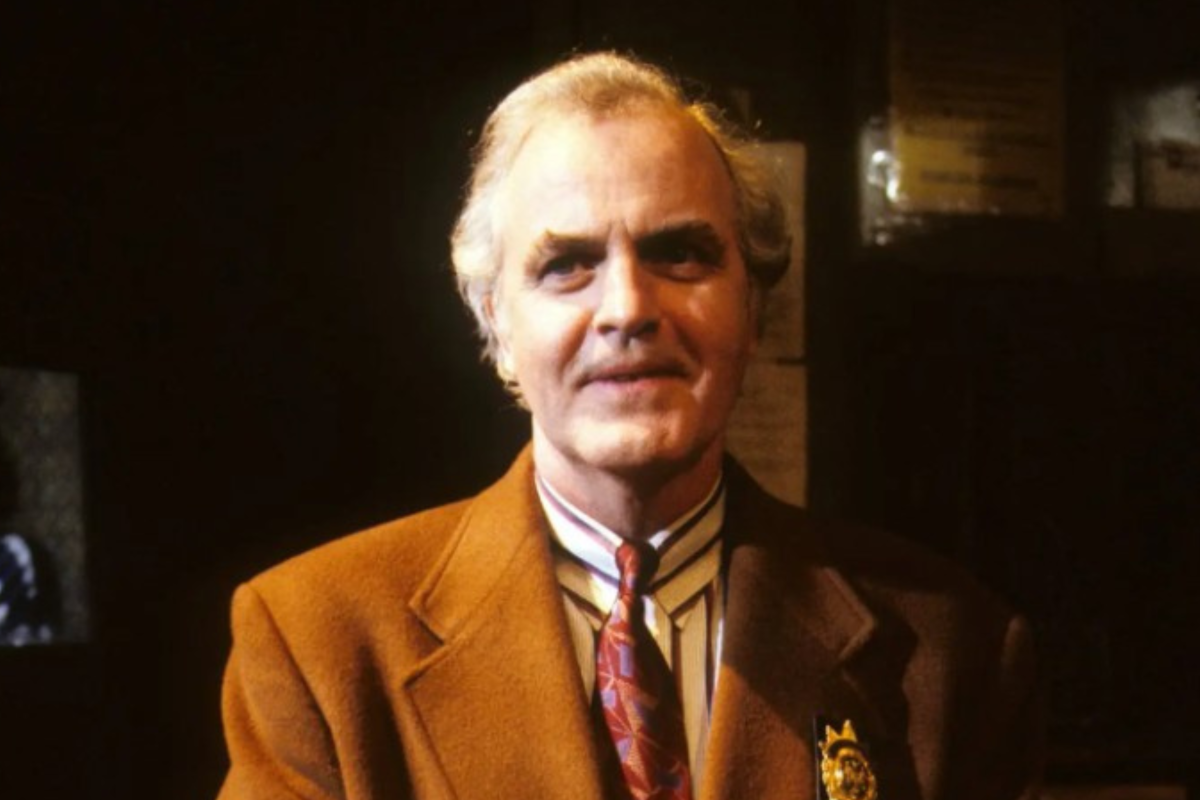
To the wider world, James Handy was far more than just a name in a police log or an elderly victim of a senseless suburban assault; he was a highly respected, veteran character actor whose familiar face and commanding screen presence had graced some of the most influential films and television shows of the past several decades. Throughout his long and distinguished career in Hollywood, Handy demonstrated a remarkable range and versatility, carving out a unique niche for his ability to bring gravitas, depth, and a grounded sense of reality to every role he inhabited, whether playing seasoned authority figures, sympathetic mentors, or complex, morally ambiguous antagonists. Audiences worldwide will undoubtedly recognize him from his memorable contributions to beloved cinematic classics such as the skin-crawling thriller Arachnophobia, the fantastical, high-stakes adventure of the original Jumanji, and even the high-octane, record-breaking modern blockbuster Top Gun: Maverick. His ability to seamlessly transition between diverse genres and eras spoke to a deep-seated, lifelong passion for the craft of performing, an art form that allowed him to explore the countless nuances of the human experience for millions of viewers across the globe. Yet, far beyond the glittering lights of film sets, the red carpets, and the public admiration of the entertainment industry, Handy’s everyday life was defined by the quiet, simple joys of aging, companionship, and a desire for personal stability. He had chosen to spend his twilight years sharing a home on Erwin Street with his girlfriend, seeking a peaceful sanctuary where he could step away from the demanding glare of his profession and simply exist as a supportive, loving partner, an ordinary neighbor, and a warm, comforting presence to those who walked alongside him in his private life. His legacy, therefore, exists in two distinct spheres: the public library of his cinematic achievements that will endure for generations, and the private, deeply felt memories of those who loved him for his quiet humanity, far removed from the fictional dramas he helped create on screen.
The dark, painfully human undercurrent of this tragedy lies squarely within the complex and often invisible dynamics of the household where the fatal violence occurred, highlighting the distinct vulnerabilities that can exist within contemporary blended families and modern multi-generational living arrangements. Michael Gledhill, the 44-year-old accused of committing this heinous act, resided at the Tarzana home alongside his mother and her partner, James Handy, creating an intimate living situation where the boundaries between family support, underlying mental health issues, and personal independence can easily become blurred and strained over time. In many households across the nation, adult children residing with aging parents can be a source of mutual comfort and economic stability, but it can also occasionally cultivate a volatile pressure cooker of unexpressed emotions, silent resentments, and psychological distress that remains completely hidden from the outside world. The chilling, messianic religious and philosophical imagery utilized by Gledhill in his self-incriminating 911 call—wherein he positioned himself as the “son of man” defeating a “man of sin”—strongly suggests a deeply fractured, troubled psychological state, pointing to a tragic, chaotic intersection of mental instability and sudden physical aggression. For Gledhill’s mother, who now finds herself standing at the epicenter of an almost unfathomable double tragedy, the emotional devastation is uniquely and unbearably acute; she has not only lost her longtime partner, a man who brought warmth and companionship into her older years, but she must also face the crushing reality that her own biological son stands accused of being his killer. This heartbreaking dynamic deeply underscores the profound, multi-layered human cost of domestic crises, serving as an urgent, somber reminder of the silent battles fought behind closed doors, where untreated suffering and psychological deterioration can quietly escalate into irreversible physical violence without warning or intervention. It highlights the desperate need for deeper empathy, psychological awareness, and community intervention before such quiet domestic struggles reach their absolute breaking point in the light of day.
As the legal process begins to grind slowly but inexorably forward, the immediate aftermath of the incident has left a tight-knit community in deep mourning and a metropolitan legal system tasked with seeking justice in the wake of an ultimately senseless crime. Currently held behind bars at the Van Nuys Jail with his bail set at a formidable and telling $2 million, Michael Gledhill faces the daunting prospect of a high-stakes, deeply scrutinized legal battle, as prosecutors and defense attorneys attempt to parse the intricate details of his mental health history, his daily relationship with Handy, and the exact sequence of events that led up to the fatal stabbing. Along the quiet 19200 block of Erwin Street, the yellow police tape has eventually been cleared away, but the intangible aura of shock and profound sorrow remains, casting a long, sobering shadow over the neighborhood as local residents struggle to reconcile the peaceful, suburban nature of their community with the extreme horror that transpired on their doorsteps. Neighbors have stepped forward to express their profound disbelief and sadness, recalling Handy not as a distant Hollywood celebrity, but as a polite, remarkably gentle, and unassuming elderly man who was always quick to offer a warm smile, a friendly wave, or a kind word. This stark disconnect between the fictional, often high-stakes dramas that Handy helped bring to life on the silver screen and the raw, devastatingly unscripted tragedy of his own earthly ending is a cruel irony that has not been lost on those who admired his work, illuminating how the thin veneer of safety we all rely on can be shattered in an instant. For the investigators of the Los Angeles Police Department, the ongoing inquiry represents a meticulous effort to compile evidence, interview witnesses, and construct a comprehensive timeline that will hopefully provide some semblance of clarity and answers to a grieving partner, an anxious neighborhood, and a shocked public.
Ultimately, the tragic and untimely death of James Handy serves as a profoundly poignant reminder of the inherent fragility of human existence and the devastating, far-reaching impact of domestic crises that strike without warning in the places we feel most secure. While the media headlines surrounding his passing will inevitably focus heavily on the sensational and bizarre details of the crime—including the deeply disturbing, delusional nature of the 911 confession and the high bail of his accused stepson-figure—it is vital that his long legacy is not entirely overshadowed by the violence of his final morning. Instead, those who knew him personally, alongside the countless fans who appreciated his decades of onscreen work, should strive to remember Handy for his extensive, enduring contributions to the dramatic arts, his unwavering dedication to his craft, and the quiet, unassuming dignity with which he lived his life when the cameras stopped rolling and the stage lights grew dim. He leaves behind a rich, diverse body of cinematic and television work that will continue to entertain, terrify, and inspire future generations of filmgoers, ensuring that his creative essence remains very much alive even as his physical journey on this Earth has come to a tragic and abrupt close. As his surviving family, particularly his grieving partner who must bear the unimaginable weight of navigating the excruciating path of healing in the face of this dual loss, struggles to find peace, the hope remains that the justice system will deliver a resolution that honors Handy’s memory while directly addressing the deep-seated psychological and familial issues that led to this catastrophic event. In the end, James Handy’s true narrative is one of a life beautifully lived in the pursuit of creative storytelling, a journey sadly cut short by an act of inexplicable darkness, leaving an empty space in the hearts of his loved ones, a silent screen in the halls of cinema, and a lingering, somber silence over the quiet Tarzana street he once called home.