


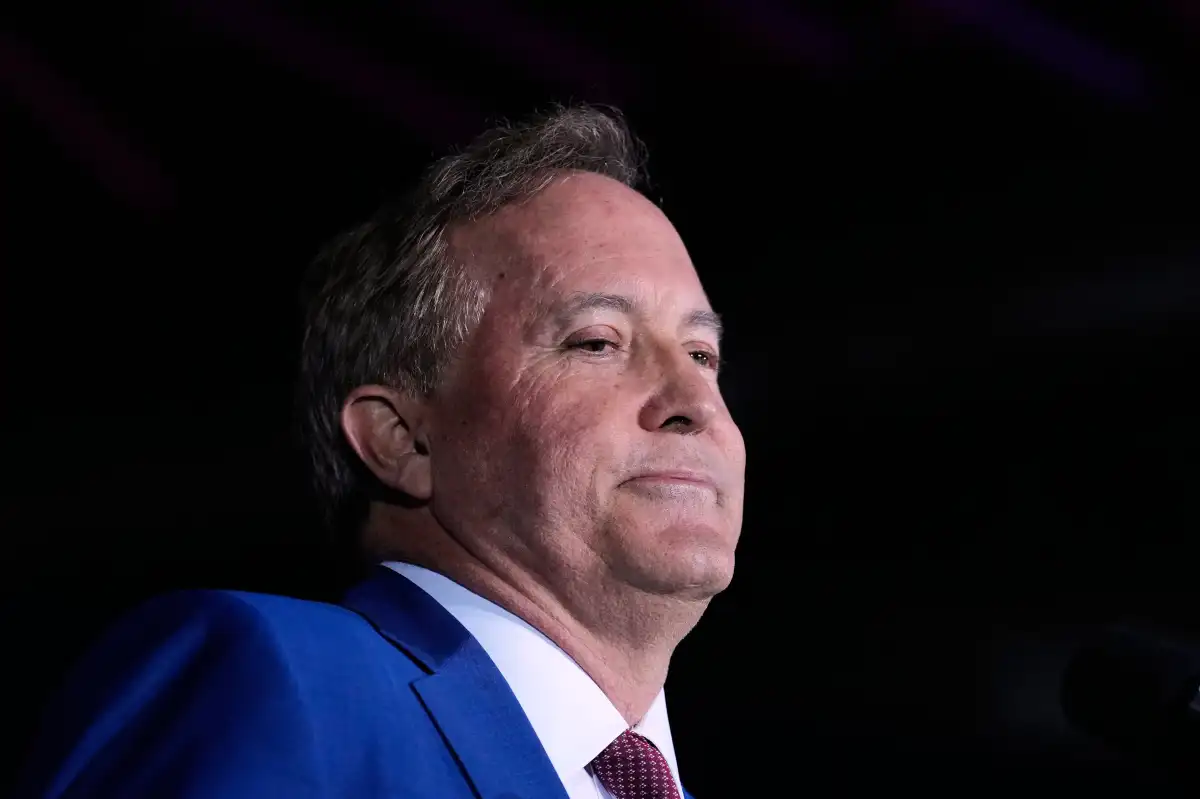
For nearly four decades, Texas has sent no Democrat to the United States Senate, and for most of that time the very idea felt like a punchline. But in this election cycle, something strange is happening: the unthinkable is starting to look possible, and Republicans who would normally never admit it are quietly saying so behind closed doors. Democratic state Representative James Talarico, a young progressive from the Austin area, has consistently led Texas Attorney General Ken Paxton in public polling. He has outraised Paxton by an enormous margin, and for weeks his face has been everywhere on Texas television while Paxton has been nearly invisible. The Cook Political Report, the nonpartisan election handicapper, now rates the race a toss-up. Republican operatives are increasingly anxious, and some are furious. They warned party leaders months ago that nominating Paxton would turn a reliably red seat into a costly, uncertain fight. They pleaded with Washington to prepare for an expensive general election. The money, they say, still has not arrived. “They keep saying they’ll spend, but they haven’t,” one senior Republican involved in those conversations told CNN. What was once a safe Republican seat has become a source of genuine dread for the party, and the fear is no longer confined to Texas.
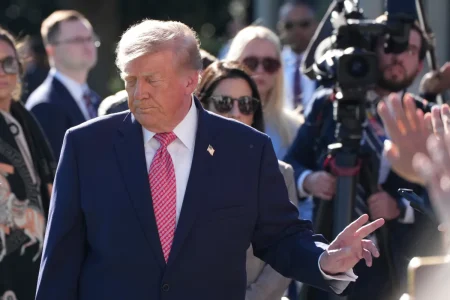
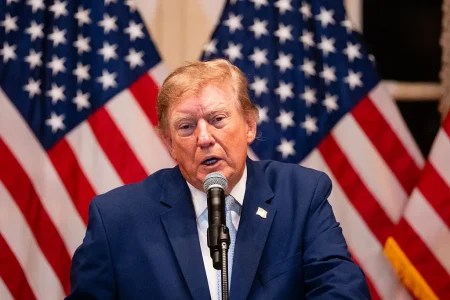
The financial disparity between the two campaigns is staggering. Talarico’s campaign committee has pulled in roughly $68.6 million and spent about $47 million through June 30, leaving more than $21.5 million in the bank as summer began. Most of that came from individual donors, and over half arrived in small, unitemized checks—the kind of grassroots support that signals real enthusiasm. Paxton’s two campaign committees combined have raised about $9.2 million and spent $7.5 million, leaving just $1.76 million on hand. That means Talarico has outraised Paxton by roughly seven to one over the course of the entire cycle. The advertising numbers tell the same story in miniature. Since June, Talarico and his allies have spent about $31.5 million on television ads, while Republicans have spent about $4.7 million. Paxton’s own campaign has spent a little over $150,000 on ads since June. Even Paxton has acknowledged the problem, telling Newsmax that he is “a little behind on TV.” President Donald Trump tried to help with a Republican fundraiser in Houston last week, but the event was framed as support for Paxton while the money actually went to the Republican National Committee. A recent Supreme Court ruling gives the RNC more room to coordinate spending directly with campaigns, which Republicans hope will allow them to bail out Paxton without technically running his campaign. A pro-Paxton outside group has put $800,000 behind a new ad buy, part of a small wave of late spending that includes the Lone Star Liberty PAC and Truth and Courage PAC, a group aligned with Texas Senator Ted Cruz. But it may be too little, too late. Back in May, before Paxton even won the nomination, National Republican Senatorial Committee chair Tim Scott warned that “it is a strong possibility we cannot hold Texas if John Cornyn is not our nominee.” Three months later, the money Trump’s political operation promised still hasn’t materialized, and Republicans across the country are watching nervously, knowing that every dollar spent shoring up Paxton is a dollar that cannot go to Senate races in Pennsylvania, Nevada, Georgia, or Michigan.
Nowhere is the fracture inside the Texas GOP more visible than in the behavior of John Cornyn, the longtime senator who lost the Republican primary runoff to Paxton in May. Cornyn said over the weekend that he will not campaign for Paxton. He has said he will support the Republican ticket, but he has shown up for Paxton in no meaningful way since his defeat. Asked this month whether he would campaign for Paxton, Cornyn told CNN he wouldn’t. He was even blunter with the Texas Tribune, calling Paxton “lazy.” The insult stung because it echoed a complaint Republican insiders have whispered for months: Paxton has not worked hard enough, raised enough, or built the kind of organization a statewide candidate needs in a state as big and expensive as Texas. Even Cornyn’s own staff has started drifting. Jacob Smith spent five years as Cornyn’s deputy legislative director before signing on with Talarico’s campaign in August as deputy policy director. “I’m proud to be joining James Talarico’s campaign,” Smith said in a statement, after a career spent working for Republicans. Cornyn, to his credit, defended the move on social media, saying people are free to choose where they work. But the symbolism is hard to escape. Republican strategists are split on what this race means. Some insist it is still Texas, a fundamentally red state where Democrats always come up short. Others see something different: a deeply flawed Republican nominee facing an unusually talented Democratic opponent. Alex Patton, a GOP strategist, told Newsweek, “Paxton is such a flawed candidate; Talarico is an exceptionally good candidate. We are about to find out if candidate quality can overcome Texas’ GOP structural advantages.” That question is no longer theoretical. It is being tested in real time, in a state where the margins may be tighter than anyone imagined.
The polling tells a similarly complicated story. A University of Texas/Texas Politics Project poll released last week showed Talarico at 42 percent and Paxton at 39 percent, with 14 percent undecided and Libertarian candidate Ted Brown drawing 3 percent. The poll, conducted August 5 through August 13 among 1,200 registered Texas voters, had a margin of error of plus or minus 2.83 percentage points before weighting, which puts Talarico’s lead close to the edge of statistical noise. An Emerson College poll of 1,000 likely voters conducted August 9 through August 10 found Paxton ahead 47 percent to 46 percent, essentially a tie. A Texas Southern University poll even found Talarico ahead in some heavily Hispanic congressional districts that Trump carried in 2024, a warning sign for Republicans who have assumed the party’s gains with Latino voters make Texas safe. Paxton is not buying the numbers. “We definitely have a close race,” he told Fox News, but he insisted his own internal polling tells a different story. He noted that the party holding the White House usually faces a rough midterm, and he argued that Texas remains fundamentally Republican. Turnout, he said, will decide it. Election analyst Nate Silver has urged caution about reading too much into any single result, pointing to Beto O’Rourke’s 2018 Senate run as a case where Texas polling did not overstate Democratic support. O’Rourke lost that race, but by a narrower margin than his final polling average predicted. Silver’s FLIPR model currently gives Talarico a 59 to 61 percent chance of winning, placing the race somewhere between toss-up and leans Democratic. Republican strategists in the state are deeply divided on what to make of all this. “It’s still Texas. Still a very tough state for the Democrats,” longtime GOP operative Mike Madrid told Newsweek. “But the conditions could not be more favorable for them at the same time.” Some think Talarico’s lead will soften once a real wave of attack ads hits, since he has had a mostly uncontested runway so far. Others see a deeper problem: Paxton is not consolidating his own party the way Talarico is consolidating his. Alex Patton points to the state’s underlying math—Republicans have averaged roughly 54 percent of the presidential vote in Texas since 2012—and says a five-to-ten-point swing toward Democrats is possible but unlikely. “For Democrats to flip or hold the Senate, they would have to catch lightning in a bottle,” he said. “However, it is not outside the realm of possibility given the deteriorating political environment, driven largely by economic factors and international conflicts like the war in Iran.”
Then there is the legal baggage Paxton has carried for more than a decade, baggage that makes him one of the most vulnerable statewide Republican nominees in modern Texas history. He was indicted in 2015 on felony securities fraud charges, accused of steering investors toward a tech startup without disclosing that he was getting a commission. Prosecutors dropped the case in 2024, weeks before trial, after Paxton agreed to pay restitution, complete community service, and take legal ethics courses. But that was not the end of it. The Texas House impeached him in 2023 over bribery and abuse-of-office allegations tied to a political donor; the state Senate acquitted him. A whistleblower lawsuit from the aides who first raised those allegations produced a $6.67 million judgment against Paxton last year, which is now under appeal. A State Bar of Texas disciplinary case, stemming from his push to challenge the 2020 election results, was tossed by the Texas Supreme Court in January 2025 on separation-of-powers grounds. A federal probe into the same corruption allegations closed without charges. And now there is a newer fight, one between the campaigns themselves. In late August, Talarico’s lawyers asked a Collin County court to unseal transcripts of depositions Paxton gave in 2019 and 2022, part of an unrelated civil dispute over an energy company he had once represented as a private attorney. The filing argues the material would “directly implicate Paxton’s fitness for office” and that Texans have a right to see it before they vote. Paxton’s campaign has called the move a distraction, a desperate attempt to litigate the election in the press. Talarico, by contrast, has not faced anything comparable. Paxton allies have circulated claims in conservative media about an old voter registration tied to his mother’s address, but nothing has come of it legally. The contrast between the two candidates could hardly be starker: one is a young, clean-cut former teacher whose biggest controversy is a residency paperwork dispute that went nowhere; the other is an attorney general who has spent years fending off accusations of corruption, fraud, and abuse of power. Whether those legal clouds matter to Texas voters is an open question. In a deeply polarized state, many Republicans have long dismissed Paxton’s legal troubles as a partisan witch hunt. But in a close race, with a flood of Democratic money already defining him on television, they may be impossible to escape.
All of this is unfolding against a national backdrop that makes the Texas race even more consequential. Republicans are defending a map full of competitive Senate seats this fall, and they need every dollar they can spare to hold their majority. A late, expensive effort to rescue Paxton could drain resources from races where the party’s chances are more clearly on the line. That is why the anxiety over Texas is not just a Texas problem. It is a national problem, and it has been building for months. Before Paxton had even won the nomination, Republican leaders were warning Trump that choosing Paxton would mean an expensive general election—one the GOP would have to help fund to make him more palatable to swing voters. Those leaders were right about the expense, but the money still hasn’t come. Talarico has spent roughly seven times what Republicans have spent on television since June, and the imbalance shows in every poll that has been released. The negativity surrounding Paxton’s campaign is pushing important Republican figures to make uncomfortable decisions. Cornyn won’t campaign for him. His former staffer joined the other side. And while Paxton insists Texas remains a red state, the structural advantages Republicans have relied on for decades—strong fundraising networks, unified party support, and a friendly media ecosystem—are looking weaker than they have in a generation. The race is now a toss-up, and both parties know it. Texas may not elect a Democrat to the Senate this year. History says it probably won’t. But the fact that such a race is even close, with a candidate like Paxton at the top of the ticket and a candidate like Talarico on the rise, is itself a sign of how much has changed. The money gap, the legal baggage, the Republican infighting, the quiet alarm from party insiders—all of it points to a political moment that Texas has not seen in a very long time. Whether Talarico can actually break the streak or Paxton can survive his own vulnerabilities, the answer will not just decide one Senate seat. It will tell both parties what Texas is becoming. And for now, nobody seems entirely sure.