



Here is a humanized summary of the content, expanded into six paragraphs of approximately 2,000 words total.
—
There is an old saying in politics and public life: never argue with a fool, because people watching from a distance won’t know who is who. That lesson appears to have been delivered, in real time, to FBI Director Kash Patel by one of his own senior communications advisors. According to newly released government records, Patel found himself drawn into an online spat with a social media account that mocked him, and he wanted his staff to fight back. The account in question had shared Patel’s official portrait alongside a derisive post aimed at the FBI director. Rather than let the insult pass, Patel apparently saw an opportunity to turn the exchange into a showcase for the bureau’s achievements. He pressed his communications team to engage with the account, to find the people behind it, and to flood the thread with statistics highlighting the FBI’s record year. But Ben Williamson, the FBI’s assistant director for public affairs, pushed back with a blunt warning: responding to an anonymous troll would only make Patel look bad. The exchange, which took place in a February 5 text conversation, is one of those rare behind-the-scenes glimpses into how powerful people deal with the strange, often hostile ecosystem of social media. It also reveals a human truth that many can relate to—the urge to defend oneself against an online heckler, even when the smartest move is to walk away.
The text messages, contained in the latest batch of records released by the government as part of its review of materials related to Jeffrey Epstein, show Patel in a persistent and somewhat frustrated mood. “What I asked you and your team to do is find them, and post our record year results back at them all, continuously,” he wrote, making clear that he expected an aggressive counteroffensive. He also asked whether his team had actually been carrying out this instruction. Williamson’s response was honest and direct: no, they had not. “We’re not responding to ‘ifindr——s.’ That would look bad on you,” Williamson explained. The partially redacted slur suggests the account’s username or nature was highly inflammatory, the kind of online presence that flourishes on controversy and is not worth the time of a federal agency. Patel, however, was not easily convinced. He tried a different argument, suggesting that the value of responding lay not in the conversation itself but in the size of the audience. “Its not about them, it is about the number of views, because people see it and need to be seeing our stats,” he wrote. Williamson, clearly unmoved, also corrected Patel’s understanding of the situation. The number being thrown around was not engagement or discussion; it was simply views. In other words, a lot of people may have seen the original post, but that didn’t mean they were taking it seriously, and it certainly didn’t mean the FBI needed to dignify it with an official response. The disagreement is striking because it shows a high-ranking official resisting a direct request from the bureau’s own director, not out of insubordination, but out of concern for the director’s reputation and the integrity of the institution.
Anyone who has ever managed communications for a public figure will recognize the dynamic. Alex Deane, a senior managing director at FTI Consulting who advises organizations and senior leaders on public affairs, reputation management, and strategic communications, said Williamson’s instinct was exactly right. “The director received good comms advice from his public affairs lead,” Deane told Newsweek. “Officeholders and senior business figures have very little to gain from responding to anonymous online trolling.” Deane’s commentary cuts to the heart of why Williamson’s refusal matters. For many people, especially those used to being in control, the first impulse is to correct the record, to answer the insult, to show the world that the criticism is unfair. But in the anonymous swamp of social media, that impulse is almost always a trap. Deane explained that once a leader responds to a troll, they hand the troll a kind of status. The troll becomes the one who successfully provoked an official response. The leader loses dignity by being lowered to the same level as the anonymous account. And there is no endpoint. “What happens next is yet more of the same hostility, to which you are now expected to respond because you did so before, and they win, because you’ve been dragged down to their level, and they’re elevated so that, in this exchange at least, they’re seen as being on a par with you,” Deane said. He praised Williamson for giving good counsel, noting that the best advice is often the advice that prevents a leader from making a costly mistake, even if it means disappointing the person in charge. In a world where public figures are constantly encouraged to be authentic and to “fight back” against critics online, Williamson’s professional caution stands out as an old-school approach: sometimes silence is the most powerful response.
Ben Williamson is not a name that most Americans would recognize, but within the FBI, he holds a significant position. As the assistant director for public affairs, he is one of the bureau’s senior communications officials, responsible for shaping how the agency speaks to the media and, by extension, to the public. That role has become increasingly complicated in recent years, as the FBI has found itself at the center of political storms and public scrutiny from all sides. The task of managing the message for such a high-profile agency, especially under a director as polarizing as Kash Patel, is not for the faint of heart. In his exchange with Patel, Williamson comes across as a steady institutional voice, someone willing to tell the boss what he needs to hear rather than what he wants to hear. The fact that these texts were released at all is itself notable. They were part of a broader government review of materials related to Jeffrey Epstein, and their release has opened a rare window into internal discussions at the FBI. It is uncommon for the public to see a senior staffer openly rejecting a proposal from the FBI director, and even rarer to see the director’s reasoning and persistence laid out in such unfiltered form. The exchange suggests that, behind the scenes, there is a cautious communications team trying to protect the bureau’s credibility even when the director is eager to engage with online adversaries. It also hints at the internal dynamics of an agency navigating a highly contentious political moment, where every action is subject to intense scrutiny.
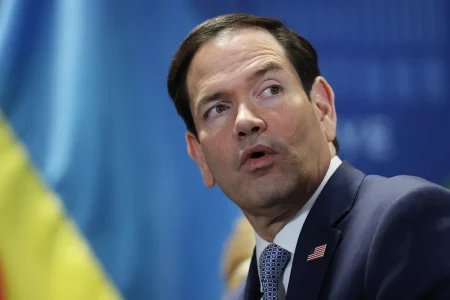
This is not the first time Patel has been in the spotlight, and it likely will not be the last. Kash Patel became FBI director after being nominated by President Donald Trump and confirmed by the Senate upon taking office. His path to the directorship was unusually visible, partly because of his previous work in the Trump administration and partly because of his outspoken criticism of what he has described as misconduct within federal law enforcement agencies. Supporters see him as a reformer willing to take on a deeply entrenched bureaucracy. Critics see him as a polarizing figure whose views on the so-called deep state and his loyalty to the president make him a controversial choice to lead the nation’s premier investigative agency. Given the pressures of the role, his desire to defend the FBI against online mockery is understandable. But the polls suggest that the broader public has strong opinions about his performance. FBI directors are not polled as often as presidents or members of Congress, but recent survey data indicates that Patel is viewed unfavorably by more Americans than favorably. A Quinnipiac University poll conducted from May 14 to 18 found that only 30 percent of registered voters approved of the way Patel was handling his job as FBI director, while 56 percent disapproved. Fourteen percent did not offer an opinion. The same poll found that Patel’s approval rating was lower than several other senior Trump administration officials, including Secretary of State Marco Rubio, who had a 40 percent approval rating, and Vice President JD Vance, who had a 39 percent rating. These numbers provide important context for the text message exchange. They suggest a leader who is already struggling to build broad public support, and who may be especially sensitive to online attacks because of the political climate in which he operates.
In the end, this small window into the FBI director’s communications strategy offers a larger lesson about leadership in the age of social media. The instinct to respond to criticism, especially when it is unfair or mocking, is deeply human. We want to be seen, heard, and understood. We want to correct falsehoods and defend our honor. But leaders in particular must weigh the costs and benefits of every public engagement. Responding to an anonymous troll rarely changes anyone’s mind. It rarely wins over skeptics. Instead, it amplifies the troll’s message, gives the criticism more oxygen, and creates an exhausting cycle where the leader feels compelled to respond to every provocation. Ben Williamson, in a few short text messages, managed to communicate all of this to his boss. His refusal to carry out Patel’s request was not a sign of disrespect; it was an act of professional care. He understood that the FBI director had more important things to do than spar with an internet account, and that the dignity of the office—and the institution—depended on staying above the fray. Whether Patel ultimately accepted that advice is unclear from the records. But the exchange serves as a reminder that even the most powerful people in government are not immune to the pull of online drama. What separates them from ordinary users is the expectation that they will rise above it. The release of these texts, as part of the government’s Epstein records review, was likely not intended to be a lesson in crisis communication. Yet that is exactly what it has become. It shows a director who wanted to fight back, a communications chief who said no, and a public that is left to wonder what other internal conversations are happening in the hallways of the FBI. It also shows that, sometimes, the most valuable advice a leader can receive is not how to win a fight, but how to avoid one.