


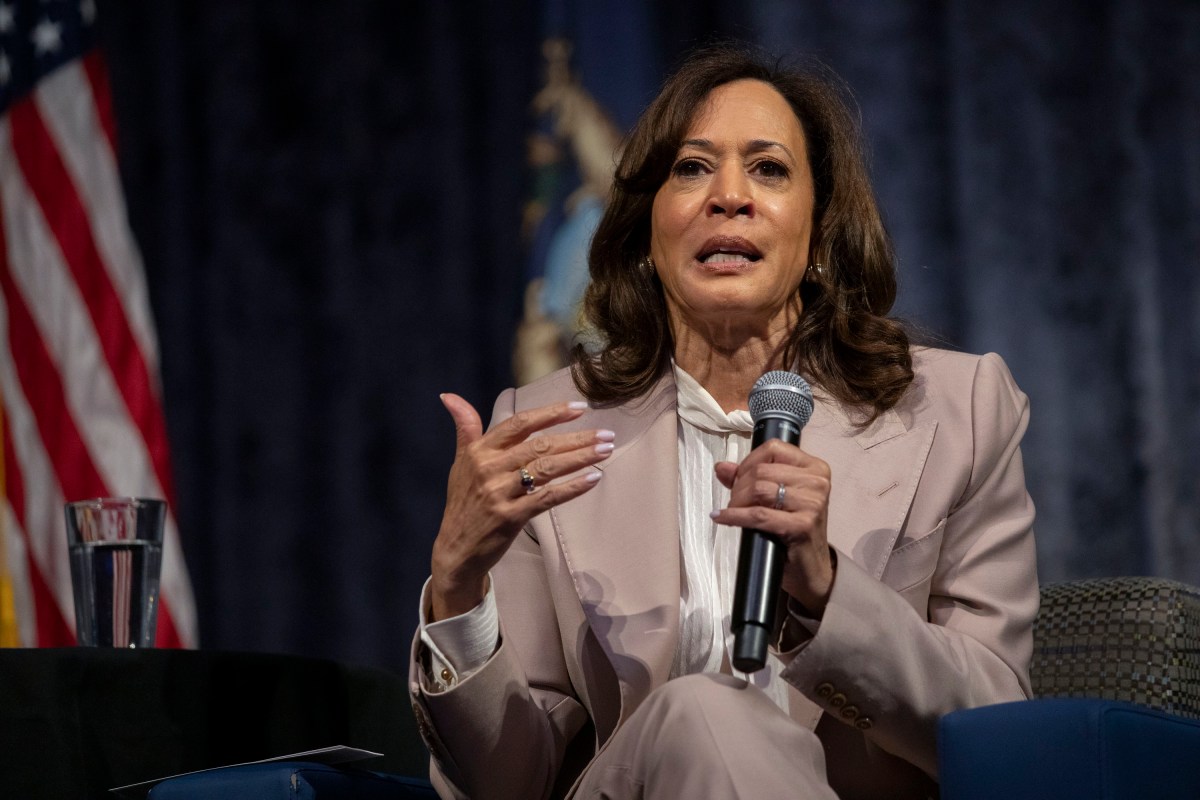
Kamala Harris is making waves again, folks. Picture this: as a former Vice President who stepped up to lead the country when President Joe Biden made that stunning withdrawal decision in 2024, she’s now surging in the early whispers about the 2028 Democratic presidential primaries. According to a fresh survey from the Center for American Political Studies and the Harris Poll, her support has jumped to a whopping 50 percent among Democrats, cementing her spot as the early frontrunner if she decides to throw her hat back in the ring. It’s a stark increase from just 41 percent in March and even lower numbers in January and February, showing she’s resonating more than ever. The poll, which surveyed a hearty 2,745 registered voters between April 23 and 26, with a tight margin of error of plus or minus 1.87 percentage points, really paints a picture of her strength. Insider chatter among political pros, like Robert Y. Shapiro, a sharp political science professor at Columbia University, calls her “a credible candidate” whose name recognition is giving her a leg up. Without a formal announcement yet, Harris is clearly someone voters are tuning into, especially as the party eyes a fresh start post-Trump era.
Why does this poll matter so much, you might ask? Well, we’re still a year out from the first primary votes in early 2028, but the buzz is already building. These early polls aren’t crystal balls—they don’t always predict the full outcome—but they act like a heartbeat monitor for candidates. Donors get excited or cautious based on these numbers, pouring in cash for viable contenders, and media outlets start spotlighting them, amplifying their messages far and wide. Think about it: Harris kicked off her 2020 bid in January 2019, right after the midterms, and history shows that’s a common playbook. So, with her support nearly doubling in a few months, this could supercharge her fundraising and visibility, making it easier to attract allies and build momentum. It’s not just about Harris; this sets the tone for the whole field, pressuring others to step up their games before the spotlight fully turns on.
Diving into the nitty-gritty of the Harvard/Harris poll, Harris towers over the competition, with 50 percent of Democrats rallying behind her. That’s almost three times the support for the next guy, California Governor Gavin Newsom, who comes in at 22 percent. Not far behind are Pennsylvania Governor Josh Shapiro with 9 percent, New York’s progressive firebrand Representative Alexandria Ocasio-Cortez at 8 percent, and Illinois Governor J.B. Pritzker with 6 percent. A solid 5 percent said they’d go with someone else entirely, showing there’s still room for dark horses. But here’s the catch: not every potential contender was on the poll’s radar. Names like Transportation Secretary Pete Buttigieg, New Jersey Senator Cory Booker, and Kentucky Governor Andy Beshear flew under the radar, which means their supporters might skew these numbers when more polls account for them. Shapiro, the Columbia prof, pointed out that rising trends for Harris could translate into bigger donor checks and more buzz, but he warned it’s premature to count out others gaining traction among the base. It’s all about who captures the voters’ imaginations early.
Meanwhile, Harris herself has been out there, dialing in her message in key battlegrounds that could swing everything. She’s no stranger to the spotlight, having campaigned across the nation, and recently, she’s been hitting the road again. Just this month, she addressed the Democratic Women’s Caucus in Michigan—a state she narrowly lost to Trump in 2024—and even spoke at Arkansas’s Democratic Party’s Fisher Shackelford Dinner in Little Rock over the weekend. South Carolina, that crucial early-voting state that boosted Joe Biden’s 2020 primary, saw Harris in Greenville and Columbia too. With her high-profile stint as VP and that last-minute pivot after Biden’s exit, Harris benefits from instant name recognition. Sure, some in the party argue for a total fresh face, especially after the 2024 loss, but others defend her, noting how she quickly improved on Biden’s poll numbers and potentially saved down-ballot Democrats from a total wipeout. It was a tough hand to play, building a campaign from scratch, but she stepped up. Oh, and there was that brief flirtation with California’s gubernatorial race, which she passed on, only fueling 2028 speculation. She’s clearly got the experience, from West Wing strategy sessions to Situation Room decisions, and her team isn’t commenting yet, but the signs point to her staying in the game.
How does all this stack up against the wider polling landscape? Harris isn’t just a blip—she’s consistently leading. A YouGov poll from mid-April showed her with 24 percent support, again ahead of Newsom at 12 percent, Ocasio-Cortez and Buttigieg both at 9 percent, Vermont’s independent Senator Bernie Sanders at 7 percent, and Arizona Senator Mark Kelly at 5 percent. That survey of 2,189 adults had a 2.8 percentage point margin of error, so it’s solid. Then there’s the Echelon Insights poll, which had Harris at 22 percent and Newsom right on her heels at 21 percent, with Buttigieg at 12 percent and Ocasio-Cortez at 10 percent—no one else cracking double digits. Polled 1,012 likely voters with a 3.5 point margin of error, it shows her edging out in a tight race. These aren’t flukes; they’re trends suggesting Harris has a real shot, especially if she leans into her broad appeal. Name recognition is her superpower right now, but as more candidates emerge, it could get competitive, much like how primaries shake out stories we’ve seen before.
And what is Harris saying about all this? She’s keeping it coy, hinting at possibilities without jumping in full force. During this month’s National Action Network convention, where several Democratic hopefuls wooed Black voters—a key bloc for the party—she told Reverend Al Sharpton that a 2028 run is on her mind: “I might. I am thinking about it.” It’s classic Harris: direct, reflective, drawing on her deep experience. She recalled serving just “a heartbeat away” from the presidency, spending countless hours in the West Wing, Oval Office, and Situation Room. “I know what the job is, and I know what it requires,” she emphasized, painting a picture of someone who’s not just a name but a seasoned pro. With that personal touch, she connects on a human level, sharing stories that remind voters of her commitment. No official announcement yet, but her words and travels suggest she’s seriously considering it, and with these polls backing her, who knows? The 2028 race is shaping up to be a story worth watching, full of heart, strategy, and that American dream spirit. Harris represents resilience, having bounced back from setbacks, and if she runs, it could redefine the Democrats’ path forward in a divided nation.