





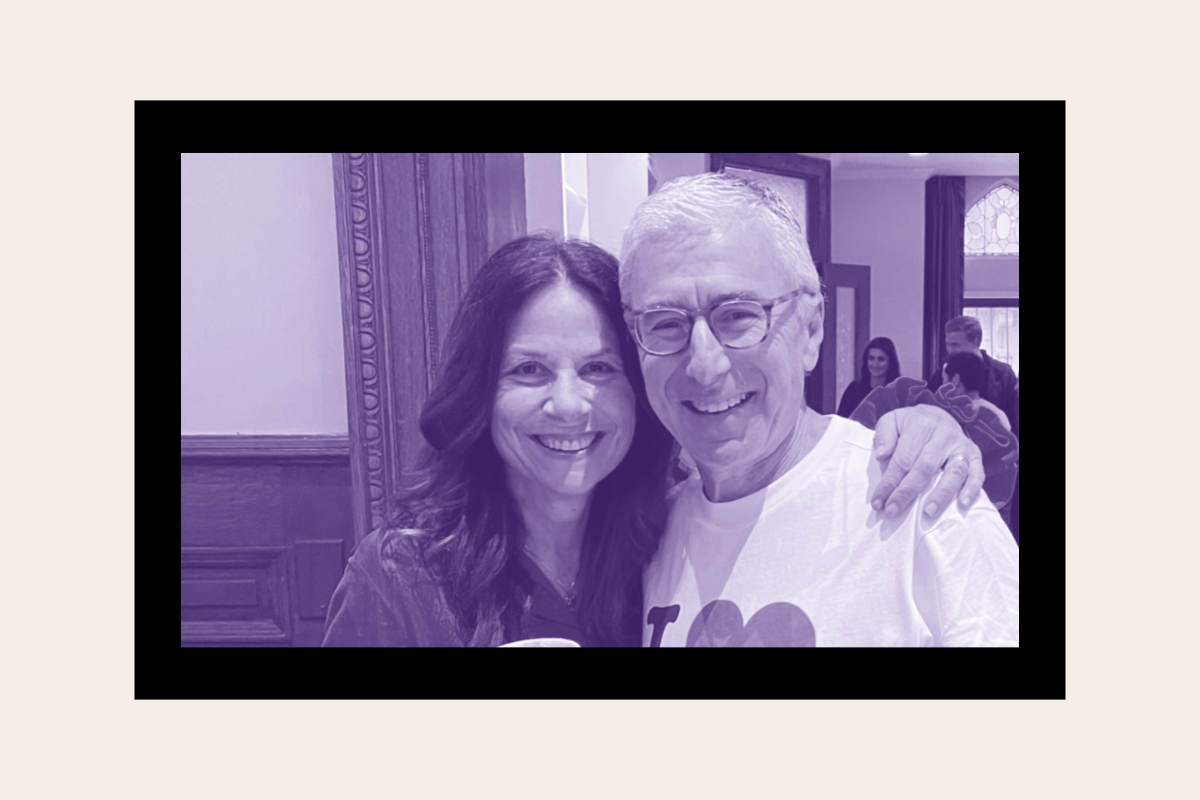
“I have lung cancer?” I whispered to my doctor in disbelief over the phone, as if it was a secret we could just keep between the two of us. “I am afraid so,” he said, definitively. When I hung up, the room went still, like the moment before a tornado touches down. I ran into my husband’s home office, partly for cover, partly for clarity, not wanting to believe what was coming out of my mouth: “It’s cancer.” My husband, Jimmy, grabbed me, pulled me close and said, “Helene, I am sorry to tell you, but you’re nothing special.” I’d been married to this man for over thirty five years. I knew he wasn’t dismissing me—he was trying to comfort me, albeit in his data driven way. It wasn’t exactly what I wanted to hear at the moment, but as I listened, I realized there was a lot of truth to what he was saying. Lung cancer is the second most common type of cancer; over two hundred thousand people are diagnosed with it every year, according to the American Cancer Society. Most lung cancers are found after the cancer has spread to other parts of the body, when survival is lowest. But when found early, doctors not only talk about survivorship but cures. This biological reality hit me with the force of a tidal wave as I sat in the quiet of our home, trying to reconcile the terrifying diagnostic syllables with the vibrant life I had been leading up until that very morning. In those first paralyzing hours of disbelief, when my mind spun with absolute terror, it was my partner’s grounded, unvarnished math that anchored me to the earth, saving me from sliding into a pit of self-pity and despair. He reminded me that cancer is not a personal failure or a cosmic curse, but a common biological vulnerability shared by millions of human beings since the beginning of modern time, bringing a strange sense of comfort to my terrified heart and troubled soul.
To understand how utterly shocking this diagnostic revelation was, one must picture the vibrant life I was leading just four weeks prior to that fateful phone call. At sixty three years of age, and in both my mind and physical body, I possessed the relentless, forward surging energy of a classic New Yorker, navigating Manhattan with the brisk, unstoppable stride of a New Yorker who refuses to slow down for anything less than a bike messenger. I had just finished an intense workout at my local gym, swinging heavy kettlebells with a sense of vitality that made me feel absolutely invincible, rejoicing in the sheer physical strength of a body that seemed to defy the calendar. The only concession I made to my age was my willing abandonment of low rise jeans; otherwise, I felt as youthful, healthy, and energized as I had decades prior, walking through the green expanse of Central Park toward my annual medical checkup with a profound sense of well-being. My physician, a meticulous practitioner who believes in aggressive preventative care, routinely orders baseline chest X-rays every five years for all his patients who have crossed the threshold of fifty. As I stood beside him in the examination room, looking at the glowing light box, my eyes traced the subtle, ghostly differences between my older films and the current ones, resting on a faint, misty white shadow nesting in my right lung that had not been there before. Even then, my doctor remained calm and reassuring, suggesting the spot was likely just benign scar tissue from an undetected respiratory infection or perhaps a cluster of harmless cells. He ordered a diagnostic CT scan out of caution, sending me on my way with a seemingly clean bill of health. This simple chest scan kicked off a rapid, terrifying medical domino cascade—leading directly to a PET scan, a needle biopsy, and that final phone call that divided my life into before and after.
The agonizing fourteen day span that stretched between my official diagnosis and my scheduled thoracic surgery crawled by with excruciating slowness, making those two weeks feel like four hundred endless years of silent contemplation. I retreated into a protective shell of secrecy, desperately wanting to shield my loved ones from the heavy burden of my diagnosis, keeping the terrifying news so closely guarded that I failed to realize how modern connectivity would betray my secret. On our wedding anniversary, a day that should have been marked by celebration, my daughters noticed through a location sharing smartphone application that my coordinates were pinned not to a romantic restaurant, but to a major local hospital, prompting an immediate, tear soaked phone call filled with desperate questions about my safety. As I wept into the phone, trying to find the words to explain the unexplainable to my children, my mind kept drifting back to my husband’s stoic reassurance: “You’re nothing special.” Rather than wounding my ego, this phrase became a warm, protective blanket that allowed me to surrender the exhausting need to understand “why me?” and ask the far more logical and realistic question, “why not me?” For years, society has conditioned us to associate lung cancer exclusively with heavy smoking, yet medical research paints a far more complex picture, revealing that nearly twenty percent of women diagnosed with lung cancer in the United States have never touched a cigarette in their lives. Realizing that I was simply one of the twenty two thousand non smoking American women diagnosed annually helped dissolve the paralyzing guilt and self blame that so often accompanies a medical crisis. It was a profound, humbling reconciliation with the physical realities of being human, a stark reminder that while our bodies are miraculous machines capable of extraordinary feats, such as carrying my healthy twins three decades prior, they are also biological systems prone to random mistakes and cellular errors that can strike even the healthiest individuals among us at any time.
On the morning of my thoracic surgery, as I lay beneath the sterile fluorescent lights of the pre operative holding area being prepared for a complex lobectomy to excise the upper fifth of my right lung, the human comedy of the medical world brought me a strange sense of peace. My surgeon, a brilliant and highly sought after specialist, stopped by my gurney to check on my emotional state and answer any lingering questions, prompting my husband to crack a dry, nervous joke about whether the doctor was sufficiently caffeinated for the delicate procedure ahead. The surgeon laughed warmly, explaining that he had already successfully completed an early morning operation and had just stepped off a global Zoom symposium with oncology colleagues in South Korea, where they were discussing the alarming, unexplained rise of lung cancer among non smoking East Asian women. After the doctor strode off toward the operating room, Jimmy leaned over, caught my eye, and whispered with a knowing wink, “See, I told you, you’re nothing special,” a remark that caused the two Irish nurse practitioners inserting my intravenous lines to freeze in absolute, horrified disbelief. One of the nurses muttered under her breath about my husband’s apparent lack of humor, prompting me to chuckle softly, shrug my shoulders, and explain that it was a complicated family joke, marking the first time in six excruciating weeks that I had felt a burst of genuine, belly deep laughter. This lighthearted exchange highlighted a comforting truth: to the medical team, my life altering crisis was simply another routine Tuesday, a highly practiced procedure that they performed with standardized, calm expertise because they had seen it thousands of times before. Standing on the precipice of major surgery, there was an immense, relaxing relief in knowing that my surgeon was not encountering a rare, historical medical anomaly, but was instead navigating familiar, well charted anatomical territory where his trained hands knew exactly what to do.
Two weeks after the surgery, during my initial post operative follow up appointment, my physician delivered the miraculous news that early detection had saved my life: the margins were completely clear, the cancer had not breached my lymph nodes, and there was absolutely no clinical need for the grueling ordeals of chemotherapy or radiation. With a triumphant, warm smile, he playfully ushered me out of his office, instructing me to go out and enjoy the gift of my life, scheduling me for a routine surveillance CT scan in six months’ time. Today, eight months removed from that terrifying phone call, the heavy, suffocating cloud of impending doom has finally dissipated, replaced by a renewed appreciation for the mundane rhythms of daily existence, though I still carry my husband’s grounding mantra close to my heart. This philosophy of “nothing special” has transformed from a survival mechanism into a daily practice of psychological resilience, helping me navigate the minor anxieties and major rejections of my professional life as a freelance writer. Instead of taking every editorial rejection as a devastating, personal indictment of my talent, I remind myself of the highly competitive nature of the publishing industry, realizing that my struggles are shared by thousands of talented wordsmiths and are simply par for the course. Even a sudden, nagging cough during the damp winter months no longer triggers an immediate spiral into health related paranoia, because I remind myself that my congestion is not a unique oncological recurrence, but rather the same common cold that is currently circulating through the rest of the sniffly, coughing population. By refusing to over dramatize my ordinary human experiences, I protect my mental peace and keep my feet firmly planted on the ground, finding a deep sense of safety in the realization that my life is beautifully unexceptional, allowing me to process both small setbacks and massive systemic challenges with the same steady, practical grace.
The true test of my adopted mantra arrived at my critical six month post operative checkup, where I found myself sitting in the sterile waiting room, fighting back a wave of visceral panic that threatens to overwhelm every cancer survivor facing scanning surveillance. As sympathetic nurses continuously checked in on me, offering reassuring smiles and promising that the doctor would be in shortly, I grounded my rising anxiety by consciously connecting myself to the vast global community of cancer patients navigating this exact same emotional tightrope. I reminded myself that my nervous system’s response was not an individual weakness, but a completely normal, biological reaction shared by the thousands of individuals who sit in identical examination rooms every single day. The latest public health data confirms that since 2019, the rate of lung cancer diagnoses among women has risen by six percent, demonstrating that my personal medical journey is part of a larger, collective epidemiological shift that researchers are actively studying and combatting. Because of major strides in early diagnostic screening and highly targeted therapeutic advancements, survivorship is rapidly transitioning from a rare, miraculous anomaly into an ordinary, beautifully unremarkable expectation of modern medicine. Embracing my complete lack of specialness has ultimately liberated me from the exhausting burden of exceptionalism, allowing me to find deep comfort, quiet strength, and infinite gratitude in being just another face in the crowd of survivors. Writing from my home in Miami about the complex tapestry of family dynamics, friendships, and the beautiful, clumsy human relationships that define us, I am deeply content to be perfectly unextraordinary, living a quiet, full life alongside millions of others who have stared into the storm and found the peace that lies on the other side. By letting go of the myth that I am a special exception to the rules of nature, I have found a far greater, more enduring freedom: the quiet joy of simply being human.