




Paragraph 1: The Weight of a Name and the Shadow of a Dynasty
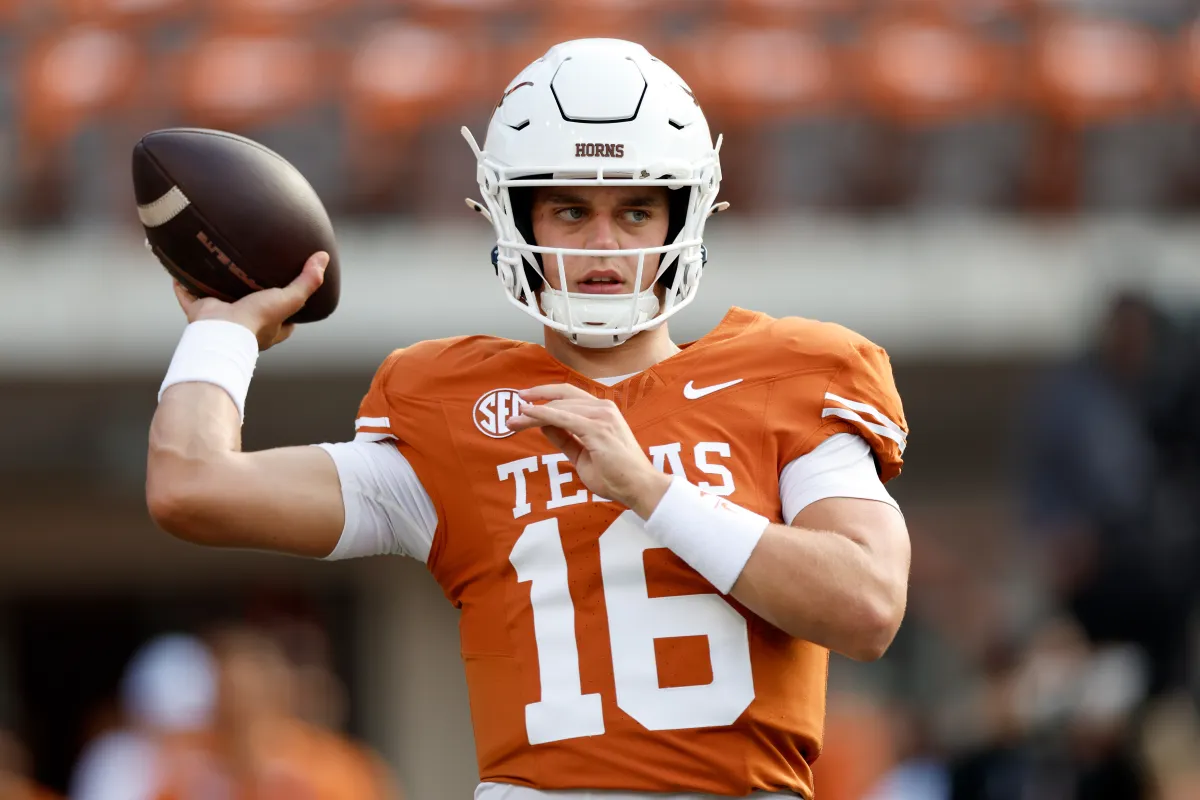
From the moment Arch Manning first picked up a football, he was never just another kid from New Orleans. He was the heir to a quarterbacking throne that stretched from his grandfather Archie, the swashbuckling hero of the New Orleans Saints, to his uncles, Peyton and Eli, two of the most celebrated Super Bowl champions of their generation. The sheer gravity of that surname has clung to him like a shadow, turning every youth game, every high school throw, and every college snap into a referendum on his family’s legacy. When he committed to the Texas Longhorns, the hype machine went into overdrive; analysts, fans, and casual observers alike had already penciled him in for multiple Heisman Trophies and a National Championship destiny before he ever suited up in burnt orange. There is a specific, almost unbearable psychological weight that comes with such preordained greatness. Every interception feels like a betrayal of the family crest; every missed read feels like a chapter rewritten in a history book that was never supposed to have erasures. The public eye that Arch Manning has lived inside his entire life is not merely a curious gaze—it is a microscope that magnifies every flaw, a spotlight that exposes every scrap of human fallibility. He didn’t get the luxury of anonymity that most college athletes enjoy, nor the grace period that allows freshmen to learn and stumble in relative obscurity. Instead, he was handed a crown made of lead, expected to carry it with the ease and poise of a man decades older, all while the ghosts of three NFL legends—and millions of their die-hard fans—watched his every step with bated breath.
Paragraph 2: The Grinding Reality of the 2025 Season
When the 2025 season finally unfolded, it did not follow the immaculate script that so many had written for him. The Longhorns were still a formidable team, but Arch Manning looked, for the first time in his career, strikingly mortal. The statistics were not awful—they were merely average, perhaps even “middling” by the impossibly high standard he had set. He threw for a respectable number of yards and touchdowns, but he also tossed interceptions that seemed to come at the worst possible moments. He took sacks that a more elusive quarterback might have avoided, and he occasionally overthrew open receivers with a visible frustration that mirrored the swelling discontent of the Texas fanbase. The Heisman campaign that had been practically manufactured months prior faded into silence by mid-October. Online, the discourse turned visceral and cruel; the same fans who had hailed him as the “next coming” now accused him of being a system quarterback, a product of his name, or simply a bust. The hate was amplified, feeling far more personal than any standard sports criticism. Yet, buried beneath that avalanche of negativity was a crucial, human truth that spectators often forget: a quarterback’s success is a collaborative venture, reliant on offensive line protection, receiver timing, and play-calling. But excuses were absent from the narrative. The pressure to be perfect, the weight of the jersey, and the fear of disappointing his family manifested as tight shoulders and hesitant feet in the pocket. For the first time in his life, Arch Manning had to face a brutal reality—that greatness is not inherited, it is forged, and forging requires fire. That 2025 season was that fire, burning away the comfortable veneer of invincibility and revealing the raw, unfinished, but resilient metal just beneath the surface.
Paragraph 3: The Veteran Voice of Reason Steps Forward
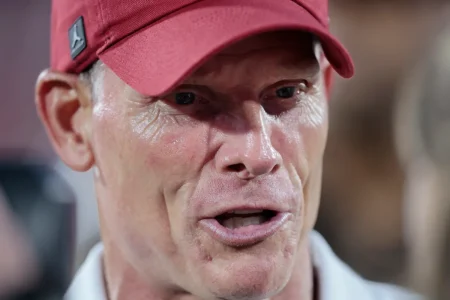
In the midst of the swirling criticism, ESPN analyst Kirk Herbstreit—a man who has seen countless five-star prospects rise and fall—stepped onto “The Pat McAfee Show” to offer a perspective that was as refreshing as it was insightful. Herbstreit, who has covered college football for decades and knows the difference between a manufactured slump and a foundational growth period, looked at Manning’s struggles not as a cause for alarm, but as a prerequisite for the ultimate success. He framed the entire ordeal as “round two” of a longer boxing match, suggesting that the adversity Manning faced in 2025 was not an obstacle to his development but rather an essential ingredient in it. Herbstreit reasoned that the experience of riding the huge wave of expectations, crashing down into the trough of doubt, and having to claw his way back to shore will serve as the most valuable training Manning could possibly receive. The analyst pointed out that the hate and scrutiny Manning endured—though completely undeserved for a kid just learning the ropes—acted as a vaccine of mental fortitude. By surviving the storm of 2025, Manning has effectively inoculated himself against the kind of panic that cripples less-prepared quarterbacks when they inevitably face adversity in the future. Herbstreit’s commentary humanized the struggle, reframing it not as a failure but as a trial by fire. He knew that to be a great NFL quarterback, one must first learn to navigate the harsh psychological landscape of losing, of doubting, and of having millions of people question your worth—and the 2025 season offered Manning a crash course in that very curriculum.
Paragraph 4: The Invisible Crucible of Adversity
Herbstreit’s deeper point, which resonated so profoundly, was about the unique nature of the pressure Manning faced compared to other college stars. He noted that a lot of college quarterbacks, even the elite ones, go through their collegiate careers riding a wave of highlight plays, favorable coverage, and rabid local support. They are the golden boys of their campuses, basking in the adoration of fans who treat them like demigods. When these players transition to the NFL, the shock of real criticism, the sting of professional defeats, and the weight of massive contracts often leaves them utterly unprepared; they “freak out” when the world turns cold. Arch Manning, however, managed to compress that brutal NFL initiation into his true freshman-to-sophomore collegiate experience under a magnifying glass ten times larger than anything a typical pro prospect faces. The online trolls, the endless podcast hot takes, the premature obituaries of his career—he heard it all, processed it all, and kept practicing. Herbstreit pointed out that dealing with more than any college quarterback has ever dealt with in their first year is exactly why Manning will be uniquely equipped to handle the NFL. He has already looked adversity in the eye and refused to blink. The hate he absorbed in 2025 was thick, viscous, and relentless, but it never broke his spirit; instead, it hardened his skin. By the time he steps onto an NFL field, the boos of a hostile away crowd will feel like a gentle breeze compared to the torrent of negativity he survived in Austin. He will not be startled by failure, because he has already dined with it and learned to find nourishment in the meager scraps of self-belief.
Paragraph 5: The Forging of the Coach-Quarterback Bond
Beyond the psychological hardening, the struggles of 2025 forged something equally critical for Manning’s future: an unbreakable bond with his head coach, Steve Sarkisian. Historically, dynasties in football are built not just on talent but on the symbiotic trust between a quarterback and his offensive-minded head coach. Sarkisian, himself a man familiar with personal and professional redemption, having battled his own demons and rebuilt his career from the ashes, was the perfect guardian for a young quarterback navigating his first professional crisis. As the 2025 season progressed, the frustration that Manning felt translated into countless late-night film sessions, private conversations on the sideline, and an increasingly honest dialogue about what was going wrong. Sarkisian did not coddle him, nor did he tear him down; instead, he taught him how to read defenses faster, how to trust his checkdowns, and, most importantly, how to block out external noise. The shared experience of weathering a disappointing season together—with Sarkisian taking the brunt of the play-calling criticism to shield his young signal-caller—cemented a level of loyalty that cannot be manufactured. When a quarterback trusts his coach implicitly, he plays with a relaxed confidence that allows his natural instincts to flourish. Herbstreit recognized this intangible quality; he saw that the bond between Manning and Sarkisian had been stress-tested and had come out stronger. This partnership, forged in the crucible of high expectations and unmet goals, is precisely the kind of foundation that National Championship teams are built upon. They are no longer just a coach and player; they are co-conspirators in a shared mission of redemption.
Paragraph 6: A Prophecy of Glory and the Human Lesson
With the wisdom of hindsight and the clarity of deep insight, Herbstreit did not just predict a bounce-back year for Texas—he declared it with a zealous confidence, stating he would be “shocked” if they didn’t have a huge year. This is not merely the optimism of an ESPN talking head trying to hype a marquee program; it is a calculated assessment based on the inescapable truth that adversity accelerates growth. Arch Manning is entering the 2026 season as a fundamentally different player and person than the one who took the first snap in 2025. He is wiser, more patient, less frantic in the face of a collapsing pocket, and deeply familiar with the taste of his own limitations. The raw talent that made him a five-star recruit did not vanish; it was simply waiting for his mind to catch up to his arm. The prediction from Herbstreit is a testament to the belief that falling down is not the opposite of strength; it is the most profound catalyst for it. As the Longhorns prepare for their upcoming campaign, the narrative around Manning has shifted from that of a fragile prodigy to that of a battle-hardened veteran. He has turned his detractors into data, his mistakes into memories, and his doubt into fuel. The 2000-word story of Arch Manning is ultimately a very human one—a story about how we often need to be broken before we can be rebuilt, how the loudest hate can become the quietest motivation, and how the weight of a great name can either crush a soul or sculpt a titan. Herbstreit sees a titan in the making, and if his prophecy comes true, we will all look back on that difficult 2025 season not as the year Manning struggled, but as the year he became a legend.