



For thousands of mixed-status couples across the United States, the journey toward building a shared life is often defined by a quiet, agonizing state of limbo, where milestones are measured not just by anniversaries, but by the unpredictable movements of government bulletins. In a rare and welcome twist of fate, the State Department’s August Visa Bulletin delivered an extraordinary beacon of hope for spouses and unmarried children of lawful permanent residents. By advancing the final action date for the family-sponsored F2A green card category by a staggering 18 months—shifting from January 1, 2025, to July 22, 2026, for most of the world, and from January 1, 2024, to July 22, 2025, for applicants from Mexico—the government has suddenly opened a critical pathway to legal residency. This dramatic leap has transformed what is usually a slow, grinding bureaucracy into a fast-paced window of opportunity, allowing long-separated families to take immediate action. Yet, this moment of celebration is underscored by an intense, collective anxiety, as a major, highly controversial policy shift looms just weeks away, threatening to fundamentally change how the federal government evaluates the financial lives of incoming immigrants.
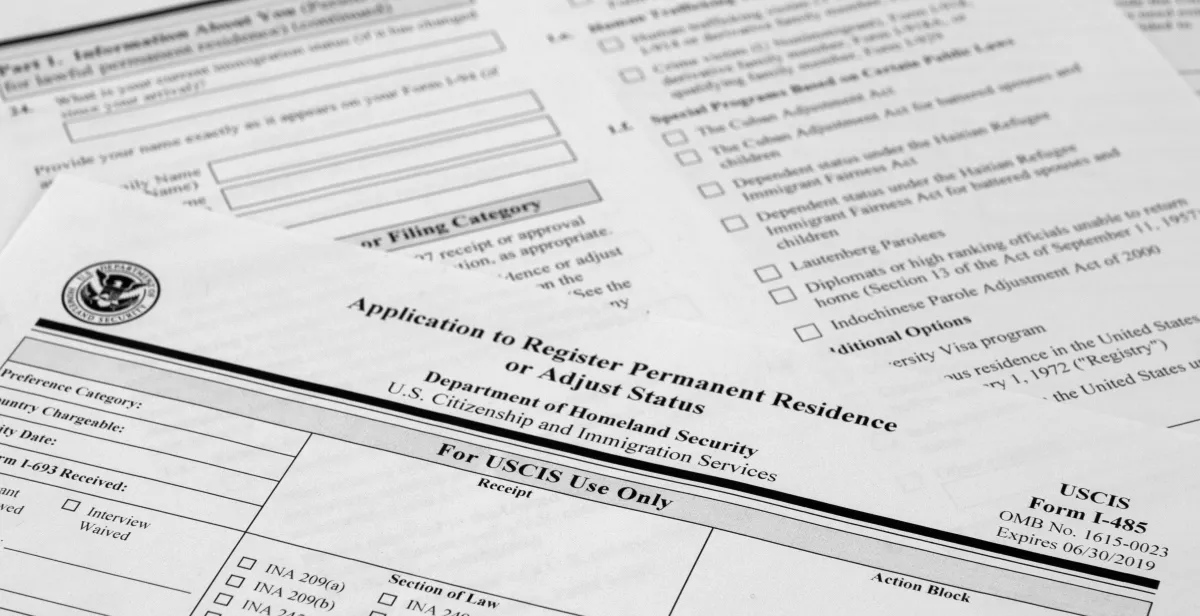
To fully appreciate the gravity of this sudden shift, one must understand the complex machinery of the American immigration system and the immense relief this update brings to everyday families. Under normal circumstances, spouses of lawful permanent residents do not enjoy the same immediate immigration privileges as spouses of U.S. citizens, often leaving them vulnerable to status violations, separation, or the stress of unauthorized employment. In August, however, U.S. Citizenship and Immigration Services is allowing applicants to use the highly favorable “Dates for Filing” chart, which lists the F2A category as entirely “current.” This means that any eligible spouse currently residing in the United States can immediately submit Form I-485 to adjust their status, regardless of their original priority date. Filing this application is a life-altering step: it grants applicants the right to remain lawfully in the country while their cases are pending, shields them from deportation, and allows them to apply for crucial interim benefits like work permits and travel authorization. For many, this avoids the stressful, expensive, and emotionally fraught alternative of consular processing, which requires immigrants to travel back to their home countries for interviews, often risking years of separation if unexpected delays or denials occur abroad.
However, the euphoria surrounding this sudden bureaucratic opening is heavily tempered by a ticking clock, as the Department of Homeland Security prepares to implement a sweeping change to its “public charge” policy on September 18. This impending adjustment marks the rescission of the Biden administration’s 2022 regulatory framework, which had established clear, predictable, and relatively narrow boundaries regarding when an immigrant could be deemed likely to rely on government assistance. In its place, the government is restoring broad, highly subjective discretion to individual immigration officers, allowing them to conduct a sweeping review of an applicant’s life to determine if they might become a public charge. When the new rule takes effect, officers will evaluate the “totality of the circumstances”—an expansive, individualized test that scrutinizes an applicant’s age, physical and mental health, family size, assets, financial resources, education, and professional skills. This policy shift introduces a deep sense of unease into the application process, transforming what was once a standardized, predictable assessment into an intimidating interrogation of a family’s socioeconomic standing and long-term financial viability.
This return to a more subjective public charge standard places an unequal and highly stressful burden on younger, working-class, and student-led households who are simply trying to build a future together. While the law has long required a sponsoring spouse to submit Form I-864—an affidavit of support guaranteeing financial backing—the new guidelines allow officers to look far beyond this document to scrutinize the petitioner’s and applicant’s personal lives. Young couples, who may be early in their careers, earning entry-level wages, or working their way through higher education, suddenly face the terrifying prospect that their modest incomes or lack of significant assets could be weaponized against them to deny a green card. It forces couples to defend their worthiness based on their bank accounts, creating a stark class divide where financial abundance is equated with a smoother path to legal status, and modest means are viewed with skepticism. The fear is palpable among immigration advocates and families alike, who worry that individual biases or overly cautious adjudicators will interpret the “totality of circumstances” test in ways that unfairly penalize otherwise eligible, loving families who simply have not had the time to accumulate wealth.
Compounding the anxiety of the policy shift is a strict, unforgiving bureaucratic deadline that leaves zero margin for error for those rushing to file before the September 18 transition. Alongside the policy change, USCIS will debut a newly revised edition of Form I-485, the central application for adjusting status, and has explicitly warned that any older editions postmarked on or after the effective date will be immediately rejected. This mandate has triggered a frantic, high-stakes race against time for immigration attorneys, paralegals, and couples, who must quickly gather an overwhelming mountain of documentation—including certified translations of birth and marriage certificates, complex financial records, tax transcripts, and the mandatory, sealed medical exams—before the window slams shut. For families, the pressure is immense; a single missing signature, an outdated form version, or a shipping delay could result in their package being rejected, forcing them to refile under the new, far more grueling public charge standard. The logistical chaos is expected to put a massive strain on the agency’s resources, leading to anticipated processing backlogs that could slow down an already sluggish system to an absolute crawl.
Ultimately, the confluence of the August Visa Bulletin’s unexpected gift and the looming September deadline presents families with a complex, high-stakes decision that requires careful, calculated legal strategy. Renowned immigration attorneys are urging eligible couples who have maintained lawful status and have clean records to move forward without delay, advising that filing before September 18 is the safest way to ensure their applications are evaluated under the familiar, predictable rules. Even for families who are financially comfortable and have no fear of the public charge rule, experts emphasize that submitting an application under the current guidelines avoids the inevitable delays and confusion that occur when USCIS officers are learning to navigate brand-new, subjective policies. While the August bulletin has provided a beautiful, fleeting window of opportunity to bring families out of the shadows, the rapidly shifting legal landscape serves as a stark reminder of the volatility inherent in the American immigration system. For the spouses of permanent residents, this month is a whirlwind of hope, urgency, and determination—a brief, precious chance to secure their place in the country they call home, before the rules of the game change once again.