





On August 1, the football community lost one of its most resilient and humble giants when George Frederick “Fred” Hoaglin passed away at the age of 82 in South Carolina. Born on January 28, 1944, in Alliance, Ohio, and raised in the close-knit community of nearby East Palestine, Hoaglin’s life was defined by a quiet determination and a blue-collar work ethic that perfectly mirrored the industrial heartland of his youth. As a boy navigating the post-war landscape of eastern Ohio, he found his voice and his passion on the athletic fields of East Palestine High School, where he distinguished himself as a versatile three-sport athlete. Contributing to a historic Tri-County League football championship in 1960, Hoaglin became a local hero long before he ever set foot on a professional gridiron, eventually graduating in 1962 and later earning a well-deserved place in his high school’s Hall of Fame. Yet, despite his early local stardom, those who knew him then recall a gentle, unassuming teenager who had little inkling of the extraordinary journey that lay ahead of him, one that would take him from the muddy fields of high school sports to the highest peaks of the National Football League.
In those early days, the prospect of a career in professional football seemed like an impossible dream for Hoaglin, who was a remarkably lean young man during his formative years. When University of Pittsburgh coach Steve Petro first scouted him and offered him an athletic scholarship, Hoaglin was a tall but remarkably thin teenager, weighing a mere 170 pounds—a frame that stood in stark contrast to the modern archetype of an offensive lineman. It was at Pitt, however, that Hoaglin underwent both a physical and positional metamorphosis, bulking up to meet the demands of college football and making the critical transition from tackle to center. By 1965, his intelligence and tenacity earned him the starting job, culminating in his selection to play in the prestigious North-South All-Star Game. Remarkably, even as his athletic profile rose, Hoaglin remained deeply committed to his education, earning a demanding degree in industrial engineering in 1968, a rigorous course of study that honed the methodical, analytical approach he would bring to the football field for the rest of his life.
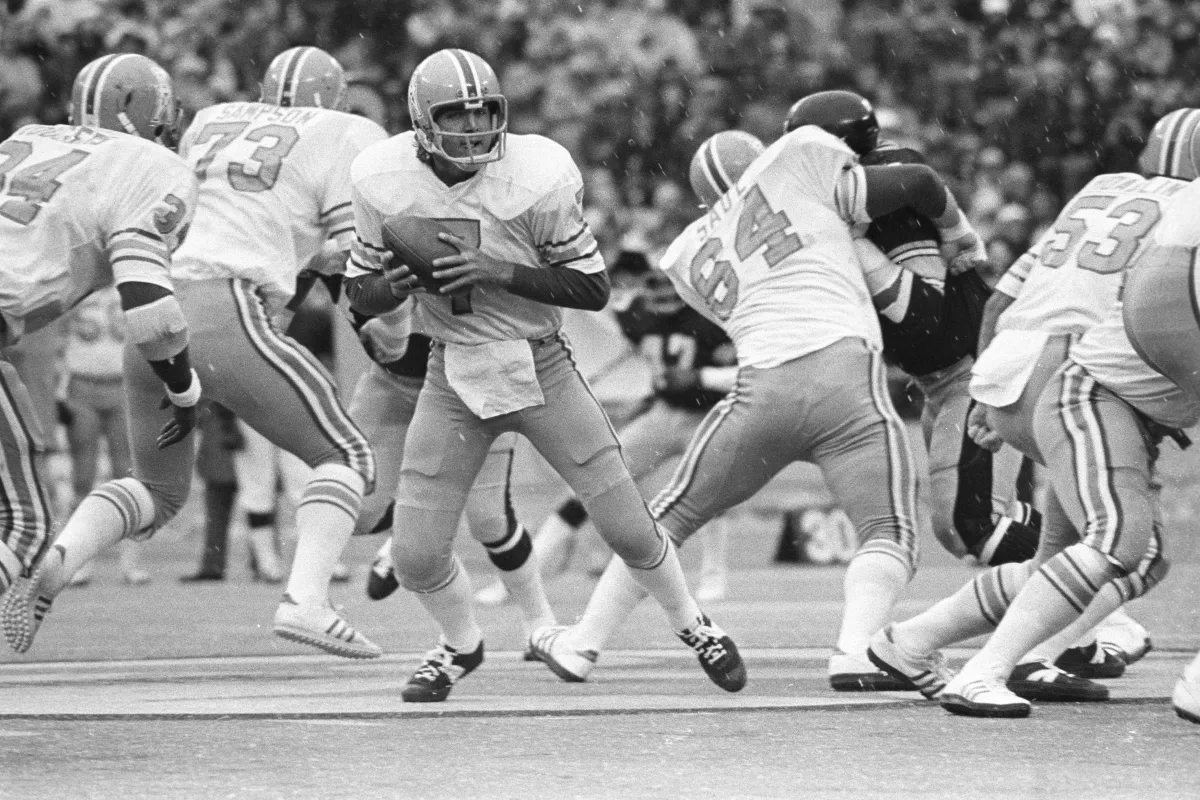
The Cleveland Browns recognized Hoaglin’s unique blend of brain and brawn, selecting him in the sixth round of the 1966 NFL draft as the 93rd overall pick, marking the beginning of a highly respectable eleven-season playing career. In an era when rookies were rarely expected to contribute immediately, fate intervened during his first season when an injury to starting center John Morrow thrust the young Hoaglin into the lineup for the final six games of the season. Seizing the opportunity with both hands, he established himself as the team’s full-time starting center by 1967, anchoring a formidable offensive line that propelled Cleveland to three consecutive division championships from 1967 through 1969. The pinnacle of his individual playing career came in 1969, when his peers recognized his exceptional execution and leadership by voting him to the Pro Bowl. Over the next decade, Hoaglin would bring his veteran presence, tactical intelligence, and physical toughness to several other franchises, including the Baltimore Colts, the Houston Oilers, and the newly established Seattle Seahawks, ultimately retiring after playing in 142 games and starting in 89 of them.
While many players find it difficult to transition to life after the cheering stops, Hoaglin embarked on an even longer and perhaps more impactful second career on the sidelines as an offensive line coach, starting with the Detroit Lions in 1978. His defining coaching chapter began in 1985 when he was hired by the New York Giants, working under the legendary, hard-nosed head coach Bill Parcells and alongside a brilliant coaching staff that included future Hall of Famer Tom Coughlin. Throughout his eight-season tenure with the Giants, which lasted until 1992, Hoaglin became the quiet architect of one of the most formidable offensive lines in the league, helping to guide the franchise through its golden era. During this period, the Giants compiled an impressive 79-48 regular-season record and captured championships in both Super Bowl XXI and Super Bowl XXV. With a stellar 7-2 postseason record, Hoaglin became, by the Giants’ own historical accounting, the most successful offensive line coach in the long history of the franchise, beloved by his players for his technical expertise and his calm, reassuring demeanor in the heat of battle.
The true measure of Hoaglin’s character, however, lay not in his championship rings or statistical milestones, but in the deep, lifelong relationships he forged with the men he coached. Years after their historic triumphs, Hall of Fame linebacker Harry Carson recalled a poignant conversation with Hoaglin about a potential reunion of the legendary 1986 championship team, a team renowned for its toughness and camaraderie. Rather than taking credit for their historic season, Hoaglin responded with characteristic humility, telling Carson that whenever he drove to the practice facility during those years, he felt like the luckiest man alive because his players made his job so incredibly easy. He warmly remarked that they were simply the finest group of men he had ever had the privilege to coach, a testament to the mutual respect and affection that defined his coaching philosophy. This commitment to excellence and mentorship followed him to the New England Patriots in 1993, where he rejoined Parcells to help guide the team to the 1996 AFC championship, and later to the Jacksonville Jaguars, where he coached tight ends under Coughlin until 2001, once again reaching the AFC championship game in 1999.
When the whistle blew on his coaching career, Fred Hoaglin stepped away from the spotlight to enjoy a peaceful retirement in South Carolina, turning his full attention to the family that had always been his anchor. He is survived by his beloved wife, Jan, their two children, six grandchildren, and four great-grandchildren, all of whom remember him not just as a sporting icon, but as a devoted husband, a loving father, and a gentle patriarch who valued family above all else. His journey from a skinny 170-pound kid in eastern Ohio to a multi-time Super Bowl champion is a classic American story of perseverance, intelligence, and quiet grace. Fred Hoaglin’s legacy lives on not only in the record books of the National Football League and the memories of the fans who cheered for his teams, but in the generations of family members and players who were made better simply by knowing him.