





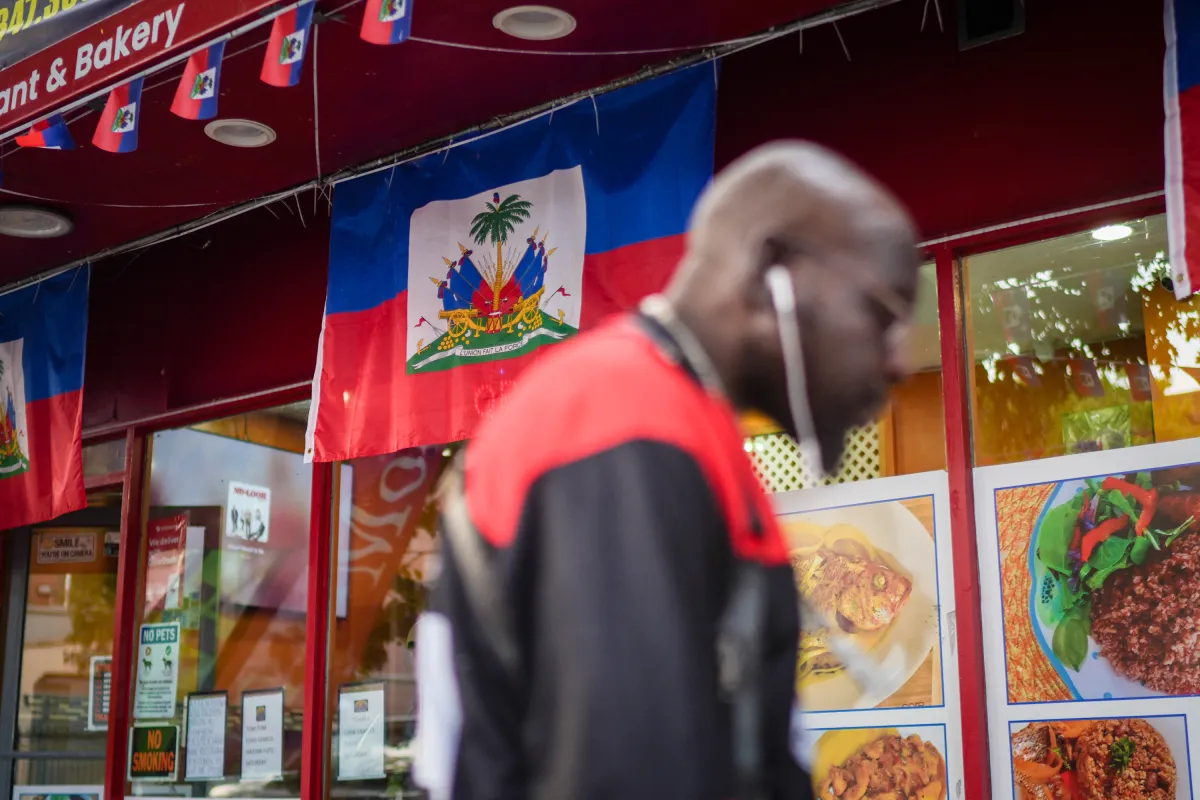
Imagine the quiet, suffocating terror of waking up every morning knowing that the life you have painstakingly built over years—perhaps decades—could vanish in an instant with a single knock on the door. For hundreds of thousands of Haitian immigrants residing in the United States, this paralyzing anxiety has become an unwelcome, constant companion in their daily lives. These are individuals who have deeply woven themselves into the fabric of American society, working essential jobs, raising American-born children, paying taxes, and breathing cultural vitality into neighborhoods from Little Haiti in Miami to Flatbush in Brooklyn and Mattapan in Boston. They originally found refuge here under Temporary Protected Status (TPS), a crucial humanitarian lifeline extended by the federal government to foreign nationals whose home countries are plagued by armed conflict, catastrophic environmental disasters, or other extraordinary, life-threatening conditions. Recently, however, that lifeline was abruptly severed by the courts, leaving an entire community staring down the barrel of sudden detention and deportation. Yet, in a surprising turn of events that underscores the complex human dynamics underlying federal bureaucracy, a fragile shield has materialized. Sources close to Immigration and Customs Enforcement (ICE) have revealed that federal officers are being quietly instructed to hold off on arresting Haitians whose TPS protections have lapsed. This unpublicized directive offers a momentary, lifesaving sigh of relief to terrified families, serving as a poignant reminder that behind the sterile, politicized debates of immigration policy lie real human lives, desperate for mercy and stability in a world that often seems to offer them neither. It is a quiet, internal acknowledgment that uprooting hundreds of thousands of integrated, peaceful community members is not just a logistical nightmare, but a moral crisis of immense proportions that requires a pause for human decency.
The existence of this internal reprieve came to light through two distinct sources intimately familiar with ICE operations, both of whom spoke to journalists under the strict condition of anonymity because they were not authorized to discuss sensitive, internal agency guidelines. These sources, including a current ICE official and a former agency official, confirmed that frontline personnel have received explicit instructions not to target Haitians with expired TPS for routine immigration enforcement actions at this time. However, this administrative umbrella is neither absolute nor guaranteed to last, and it carries significant, frightening caveats for those hoping for total safety. The sources made it clear that this temporary forbearance does not extend to everyone; Haitians who already have final orders of removal on their records may still find themselves subject to arrest and deportation as part of the agency’s standard, ongoing enforcement operations. Furthermore, the geographic scope and longevity of this policy remains shrouded in mystery, leaving advocates and families to wonder whether this is a nationwide directive or a localized, stopgap measure implemented to manage a sudden influx of cases without causing public outcry. When pressed for clarification regarding this internal guidance, the Department of Homeland Security (DHS) remained tight-lipped, declining to publicly confirm the instructions or discuss the specifics of their current and future enforcement strategies. This wall of bureaucratic silence leaves families suspended in an agonizing limbo, caught between the reassuring whispers of an internal policy shift and the terrifying reality of a government that refuses to publicly commit to their long-term safety, security, and human dignity.
To fully comprehend the depth of desperation felt by the Haitian community, one must look back to the high-stakes courtroom battles that led to this tipping point, culminating in a watershed Supreme Court decision in June. In the case of Mullin v. Doe, a legal battle brought by TPS holders and immigrant advocacy groups, the nation’s highest court delivered a crushing blow to migrant rights and humanitarian protections. In a decisive 6-3 conservative majority ruling, the justices declared that federal courts generally lack the jurisdictional authority to review decisions made by the Department of Homeland Security regarding the termination of TPS designations. This ruling effectively stripped away a vital layer of judicial oversight, granting the executive branch immense and largely unchecked power to dismantle humanitarian protections for hundreds of thousands of vulnerable people from various nations. The lawsuit had argued passionately that the administration’s efforts to end TPS for citizens of Haiti and Syria were deeply flawed, ignoring statutory requirements and downplaying the horrific, life-threatening conditions on the ground in these countries. While lower courts had temporarily managed to freeze the government’s termination plans, the Supreme Court’s ruling dissolved those barriers, allowing the administration to proceed with its plans. This legal shift culminated in a lower court judge officially confirming on a Wednesday that these long-standing protections were no longer in effect, instantly stripping approximately 350,000 Haitian nationals of their legal right to live and work in the United States, pushing them into the shadows of undocumented status.
For the families affected by this ruling, the loss of TPS is not merely a change in legal status; it is a potential death sentence. The physical reality of Haiti today is one of catastrophic collapse, characterized by rampant, unchecked gang violence, political lawlessness, severe food insecurity, and a complete breakdown of basic health and sanitation infrastructure. Ever since the devastating 2010 earthquake, followed by years of political assassinations, cholera outbreaks, and systemic economic ruin, the island nation has been trapped in a spiral of suffering that makes safe return impossible. To deport people back to these conditions is, as advocates argue, a cruel and unusual punishment that ignores basic human rights. The plaintiffs in the Mullin v. Doe lawsuit sought to make the courts see this human reality, arguing that the U.S. government had a moral and statutory obligation to recognize that Haiti remains entirely unsafe for returnees. Many of the 350,000 Haitian TPS holders have lived in the United States for over a decade, establishing deep roots, owning homes, running small businesses, and raising children who know no other home but America. Uprooting them means tearing apart families, separating parents from American-citizen children, and depriving local U.S. economies of a dedicated and vital workforce. The legal triumph of the administration in the Supreme Court, while celebrated by hardline immigration opponents, represents a devastating humanitarian tragedy for these families, who are now left to contemplate a forced return to a homeland they barely recognize and which cannot safely receive them.
In the wake of the Supreme Court’s decision, the Department of Homeland Security has maintained a firm, uncompromising bureaucratic stance, welcoming the ruling as a validation of executive authority. According to official DHS communications, the department asserted that Haiti no longer met the legal criteria required to sustain a TPS designation, a claim that deeply contradicts the reports of international human rights organizations. Initially, the agency announced a hard deadline of July 27 for the formal termination of Haiti’s TPS status, declaring that all associated employment authorization documents would become null and void on that date. This announcement triggered widespread panic across the country, as hundreds of thousands of workers faced the immediate prospect of losing their livelihoods, their health insurance, and their financial stability overnight, leaving them unable to pay rent or feed their families. Recognizing the immense logistical chaos and economic disruption this would cause, DHS subsequently issued a brief extension of these work authorizations through early August. Yet, this minor extension did little to alleviate the deep-seated dread permeating the community, acting as a mere band-aid on a gaping wound. While the department quietly manages the fallout of the court’s decision, it has steadfastly refused to address reports of specialized internal instructions regarding the treatment of Haitians who were active participants in the class-action litigation. By operating in the shadows and declining to provide transparent, public guidance, the agency has exacerbated a crisis of trust, leaving vulnerable migrants to navigate a confusing, constantly shifting landscape of administrative deadlines, expired documents, and unspoken rules.
Ultimately, the quiet pause on ICE arrests offers a momentary, fragile sanctuary, but it is far from a permanent or humane solution to a systemic crisis. It highlights the profound dysfunction of an immigration system that relies on temporary executive discretion rather than comprehensive, legislative reform that recognizes the humanity of long-term residents. For the Haitian community, this temporary reprieve is a double-edged sword; while it keeps families together for another day, it also traps them in a state of perpetual limbo, unable to plan for the future, invest in their communities, or sleep soundly at night without fearing the worst. The resilience of these immigrants is undeniable, yet the psychological toll of living under a constant, hovering threat of expulsion is immeasurable and deeply damaging to the social fabric of our neighborhoods. As the dust settles from the Supreme Court’s ruling, the fight for the dignity and safety of Haitian migrants moves from the courtroom to the streets and the halls of Congress, where advocates continue to demand a path to permanent residency. Until such a path is established, hundreds of thousands of our neighbors, colleagues, and friends will remain in the shadows, clinging to the hope that mercy will continue to prevail over the cold machinery of deportation, and that the country they have come to call home will eventually welcome them not as temporary, disposable guests, but as permanent and cherished members of the American family.