





Paragraph 1: The Universal Groan of the Clock Change and a Bold Presidential Push
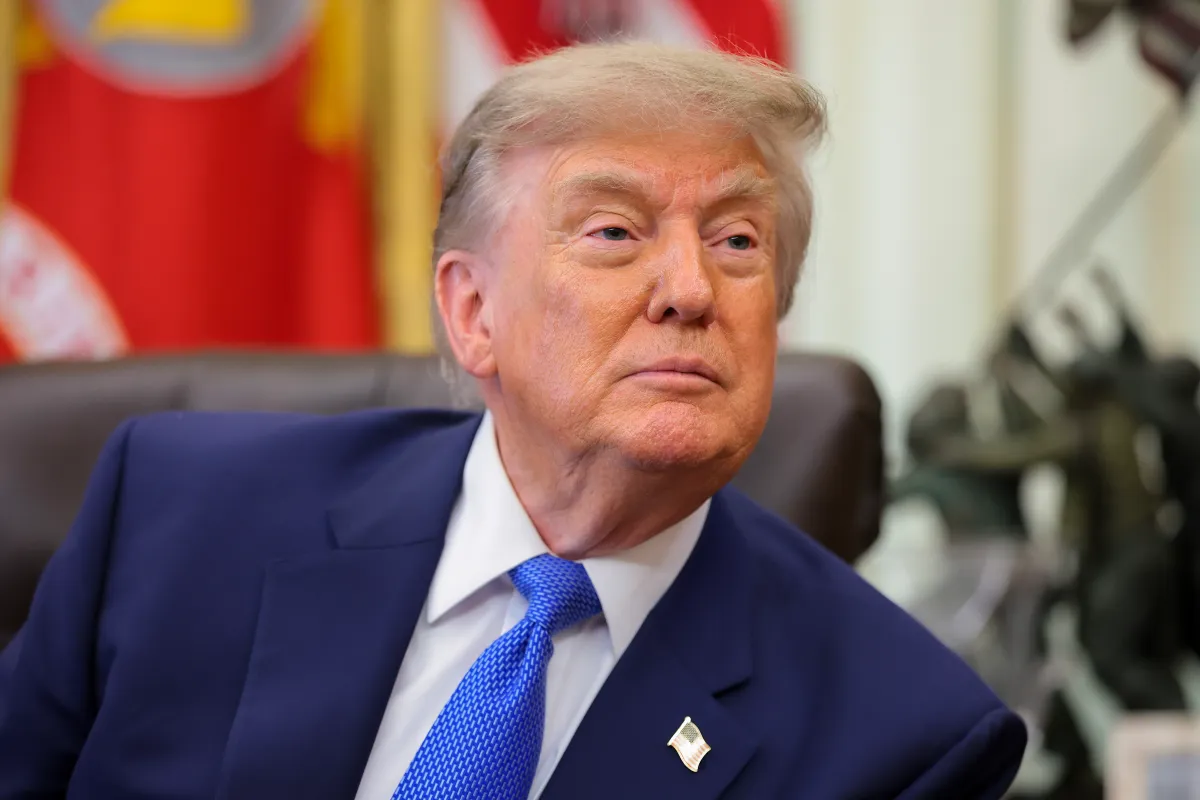
Let’s be honest for a second—does anyone actually like the semi-annual ritual of fiddling with the clock? We stumble out of bed on a Sunday in early November, feeling oddly disoriented, as if we’ve slipped into some kind of temporal twilight zone. Your phone updates on its own, but the microwave clock blinks at you accusingly, the car’s dashboard displays a stubborn hour that may or may not be accurate, and your dog, blissfully unaware of government policy, is still demanding breakfast at what your body insists is the wrong time. This biannual disruption of our circadian rhythms has been a source of mild public grumbling for decades, but it has rarely been a headline-grabbing, must-pass piece of legislation. That is, until now. President Donald Trump has decided to take the fight for permanent daylight for the people, urging Congress to fast-track the Sunshine Protection Act, a bill that would effectively put an end to the antiquated practice of “falling back” and “springing forward” forever. Trump isn’t just framing this as a matter of convenience; he is packaging this as a sweeping public safety and economic miracle. According to the President, leaving the clocks locked in Daylight Saving Time will do everything from lowering murder rates to saving energy, a claim he delivered with his characteristic forceful rhetoric on platforms like Truth Social. The bill has already cleared one significant hurdle in the House of Representatives with a massive, bipartisan vote of 308 to 117 earlier this summer, and now the political drama has shifted entirely to the Senate, where the President is applying intense pressure to get it across the finish line before the clocks inevitably turn back again this autumn reverse. For millions of Americans who just want to see the sun when they get off work, this fight feels deeply personal, and Trump is positioning himself as the champion who will finally slay the dragon of standard time.
Paragraph 2: A Century of Tinkering with the Sun
To really understand the stakes of this current legislative battle, we have to take a step back in history, way back to the muddy trenches of World War One. Daylight Saving Time was never originally conceived as a gift to backyard barbecuers or evening joggers; it was a stark, utilitarian measure born out of wartime necessity. Germany pioneered the concept in 1916 to conserve precious coal for the war effort by maximizing daylight hours, and the United States quickly adopted the practice in 1918, eager to join the resource-saving frenzy. It was abolished after the war, only to be resurrected during World War Two, becoming a permanent fixture of the American calendar in a haphazard way that led to massive confusion for decades. If you lived in Iowa, your time might differ by an hour from your neighbor in Illinois, depending on the local farming council’s whims. This chaos finally led to the Uniform Time Act of 1966, which standardized the start and end dates, but even then, it left glaring loopholes—Arizona and Hawaii largely opted out, choosing to forgo the annual dance entirely. Over the years, the debate has oscillated between public health, agricultural interests, and energy policies. The oil embargo of the 1970s prompted a brief experiment with year-round DST in 1974, but it was a disaster in public perception; horrified parents in northern states watched their children walk to school in pitch darkness, leading to such a swift public backlash that Congress repealed it within months. This historical baggage explains a lot about the current hesitancy in the Senateaine. While the concept of permanently fixing our clocks sounds incredibly simple, the history suggests that we humans are profoundly sensitive to the alignment of sunlight with our daily schedules, and changing it wholesale carries unforeseen consequences. The current bill, spearheaded by Republican Senator Marco Rubio, is the latest, most muscular attempt yet to flip the script on that 1974 failure, this time choosing to keep the summer evenings permanent instead of standard time, and riding a wave of modern research that increasingly views the spring-forward/fall-back transition as more than just a nuisance—it’s a public health hazard.
Paragraph 3: The President’s Sales Pitch—A Cure-All for Modern Life
When Trump took to Truth Social on Wednesday, he didn’t just issue a dry legislative update; he unleashed a full-throated, all-caps paean to the virtues of constant sunshine. His message read like a manifesto against the fading daylight of 4:30 p.m. winter evenings. He declared that leading medical, crime, and economic studies have supposedly shown that ceasing the “biannual time change” will do nothing less than transform society. He explicitly linked permanent DST to a decrease in robbery and murder rates, grounding this in the old criminology adage that darkness is the criminal’s best friend—that an extra hour of visible light in the evening deters opportunistic street crime. He ticked off a cascade of benefits: reduced car accidents, particularly those involving pedestrians who are often invisible to drivers during the treacherous twilight commute; lower risks of cardiac issues, strokes, and seasonal depression; and safer school commutes for children walking home from school in the afternoon glow. Then, he pivoted to the economy and lifestyle, framing it as a massive boost for family time, extracurricular activities, sports, fitness, tourism, retail, and the restaurant industry—imagine the patio seating revenues if the sun stayed out until 9 p.m. in June! The President even touted savings on energy bills, a somewhat controversial claim given that modern air conditioning usage often offsets lighting savings, but he pressed on regardless. He punctuated his message with a command to “leave it as it is now, and never change again,” calling it an issue that “Republicans, Dumocrats, and Independents can unite behind.” In a single breath, Trump managed to distill a complex public policy debate into a simple, visceral craving for the summer feeling to last all year, presenting himself as the gritty realist who understands that people just want their evenings back.
Paragraph 4: The Legislative Gauntlet and the Republican Ultimatum
Politically, this bill is a fascinating anomaly in an era of gridlock. When the House voted on the Sunshine Protection Act back in mid-July, the 308-117 tally was nothing short of a landslide, with a whopping 75% of lawmakers agreeing that the clock-changing madness has to stop. That kind of margin is usually reserved for renaming post offices or condemning foreign dictators. However, the bill now sits in the Senate, a chamber notorious for procedural roadblocks and a tendency to let popular bills wither on the vine. Trump’s latest statement carries the weight of a direct presidential ultimatum, as he explicitly called on Republican senators to pass it “ASAP.” This is a high-stakes game of legislative chicken. The President is signaling that if it doesn’t pass, it won’t be the Democrats’ fault—it will be the GOP leadership’s failure to execute a slam-dunk for the American people. Rubio, the Florida senator who has championed this issue for years, celebrated the House passage as a historic step, but the Senate hasn’t held a definitive, up-or-down vote on the permanent time change in the current session. The opposition, though smaller, is vocal; Senator Tom Cotton of Arkansas has argued for permanent Standard Time instead, citing the dangers of those pitch-black winter mornings that plagued us in 1974. Trump, however, is ignoring the sleep scientists and agrarian interests to champion a populist message of “more evening light.” He is betting that the internal Republican pressure to deliver wins before a potential presidential run will be too strong to resist. The legislative calendar is ticking, and with the Senate facing a packed schedule of appropriations and judicial confirmations, the President’s public shaming and explicit request to his party may be the crucial nudge that moves this from committee purgatory to the floor. The question now is whether the Senate has the political will to defy the lingering ghosts of the 1970s and give the President a bipartisan victory lap on the steps of the White House, a signature that would be, symbolically, a giant “yes” to lazy summer evenings all year round.
Paragraph 5: The Skeptics in the Shadows—Why Not Everyone Is Cheering for the Sun
But for every glowing promise of twilight baseball games and after-dinner walks, there is a powerful counter-weight of scientific and practical skepticism that keeps the Senate parks. The American Academy of Sleep Medicine has consistently argued that the real problem isn’t the biannual switch, but the permanent adoption of Daylight Saving Time itself. From a biological standpoint, standard time—the one we revert to in November—is actually the time that aligns best with our internal circadian rhythm, the natural biological clock that regulates our sleep, hormones, and alertness based on the sun’s position. By keeping DST year-round, we are essentially forcing our bodies to operate on “social jet lag” permanently, living an hour ahead of what our eyes tell our brains. The argument about “cardiac issues” cuts both ways, as studies have famously shown that the transition into DST in March—losing that hour of sleep—is correlated with a transient spike in heart attacks, though making it permanent would eliminate that specific spike. However, the darker issue is winter mornings. While the East Coast might see the sun rise at a reasonable 7:30 a.m., the northern reaches of the country, like parts of Michigan, Montana, or the Pacific Northwest, would face sunrises approaching 9 a.m. or later. The vision of children waiting at bus stops in the darkness that killed the 1974 experiment is a potent memory for many veteran senators. Additionally, the agricultural lobby, though less powerful than it once was, still contends that livestock and farming schedules are tied to the sun, not the clock, and an artificial hour shift disrupts rural labor patterns. There is also the grim reality of morning commuter safety—when the clocks stay forward, the very pedestrian accidents Trump claims to prevent might simply be shifted from the evening to the morning, where drivers are more tired and less alert. It is a stark reminder that we cannot actually “save” daylight; we are merely stealing it from one part of the day and gifting it to another, and the debate is fundamentally about which half of the day deserves that gift most.
Paragraph 6: The Human Yearning for Golden Hours and the Road Ahead
In the end, this entire legislative saga transcends the rigidity of policy documents and the dry parsing of scientific journals. At its core, the Sunshine Protection Act speaks to a deeply human, almost primal longing for a sense of openness and possibility in our daily lives. When we hear the phrase “one extra hour of natural sunlight in the evenings,” we don’t just think about the electricity bill; we think about the smell of a summer rain on the pavement while we grill dinner at 7:30 p.m., the laughter of kids in the neighborhood until the streetlights flicker on, or the liberation of a long run along the river without needing a reflective vest. It is the difference between coming home to a gloomy, pitch-black house in November and arriving home to a golden, amber-hued sky that invites you to get out and live. The President has latched onto this universal sentiment, expertly framing it as an emotional win rather than a technical fix. The legislative future remains uncertain—the Senate could take it up next week, or it could languish until December when the pressure of the calendar forces their hand. Regardless of the final vote, this particular chapter in America’s long, confusing romance with the clock has captured the national imagination. We are, as a nation, collectively holding our breath and glancing out our windows, wondering if the day might soon come when we never have to hear the crisp call of 5 p.m. darkness again. It is a developing story with very real consequences for our sleep cycles, our commutes, and our moods. As the President urges the Senate forwardchers, one thing is for certain—whether we get our extra hour of daylight or merely receive another year of clock-juggling, the simple act of fighting for it has reminded us how much we value those few precious moments of borrowed sun, and just how much a single hour can truly change the texture and warmth of our lives.