





The Headlines Blare: Strait of Hormuz Reopens, But Is It Really a Triumph?
It was a crisp autumn day in Washington, D.C., when President Donald Trump took to his favorite platform, Truth Social, to declare victory in the Middle East. “The Strait of Hormuz is fully open and ready for full passage!” he posted, his words popping onto screens amid a flurry of red flags and eagle emojis. For everyday Americans, this announcement felt like a breath of fresh air—or at least a shaky promise of something resembling normalcy. The Strait, that narrow waterway between Iran and Oman, isn’t just any channel; it’s the global lifeline for oil, through which about one-third of the world’s seaborne crude flows. When Iran had snapped it shut in response to U.S. and Israeli strikes over a month ago, gas prices skyrocketed, sending ripples of frustration from suburban driveways to bustling highways. Families pinching pennies at the pump couldn’t ignore the pinch, and Trump’s bold claim seemed like he was waving a magic wand to fix it all. But was this genuine diplomacy or just another tweet storm brewing? The world watched closely, with experts scratching their heads over whether this “reopening” was cosmetic or concrete.
Backtrack a bit, and the context gets murkier. The whole saga erupted late last month when the U.S. military, in tandem with Israel, launched precision strikes against Iranian targets. Tensions had been simmering for years, but this escalation—poised against Iran’s backing of proxy groups in the region, including Hezbollah in Lebanon—turned up the heat. Iran retaliated dramatically by closing the Strait, claiming it was necessary for security in the face of “hostile actions.” Commercial vessels halted, insurers jacked up premiums, and the global economy held its breath. Oil prices spiked nearly 10%, hitting consumers hard in places like Texas, where folks were already grappling with inflation. Trump’s administration painted the strikes as a necessary show of strength against what they called an “axis of evil” intent on destabilizing the Middle East. Critics, however, saw it as reckless saber-rattling that risked a broader conflict. Enter the ceasefire in Lebanon, brokered through backchannel talks, which cooled the immediate fires. As a goodwill gesture—or perhaps a strategic pivot—Iran’s foreign minister, Abbas Araghchi, weighed in on X (formerly Twitter), echoing Trump’s words: “In line with the ceasefire in Lebanon, the passage for all commercial vessels through Strait of Hormuz is declared completely open for the remaining period of ceasefire, on the coordinated route as already announced by Ports and Maritime Organisation of the Islamic Rep. of Iran.” It sounded official, coordinated even, but skeptics wondered if it was just window dressing. After all, straits like this aren’t controlled by padlocks; they’re arteries of international trade, and closure claims can be as symbolic as they are enforceable.
When the news broke, it landed like a feather in the political wind. Some Republicans cheered, seeing it as a win for Trump’s “maximum pressure” strategy to force Iran to the negotiating table. Senator Lindsey Graham, that fiery South Carolina conservative with a drawl that could cut through steel, tweeted his relief: “Very glad to hear the Strait of Hormuz is open, at least for the remainder of the ceasefire.” It was a pat on the back for the president, from a man who often stands shoulder-to-shoulder in the trenches of foreign policy battles. Others in the GOP echoed this cautious optimism, framing it as evidence that Trump’s doctrine of “peace through strength” wasn’t just talk. Florida Senator Rick Scott, pragmatic and no-nonsense, added his two cents: “Good, hopefully Iran is coming to its senses and will do what they agree to, only time will tell. Thankfully, we have a president who believes in peace through strength, trusts but verifies, and FIGHTS for the American people.” These voices captured a sentiment among the faithful: Trump’s willingness to unleash military might, including drone strikes and naval posturing, had bent Iran just enough to yield. In a time when threats from Tehran felt existential—from nuclear ambitions to missile programs—this felt like a pragmatic victory. But beneath the surface, there were murmurs of unease. Had Trump negotiated from a position of weakness, or was this a genuine breakthrough? The ceasefire hung by a thread, tied to broader talks on Yemen, Hezbollah’s disarmament, and sanctions relief. Ordinary folks in swing states tuned in, wondering if cheaper gas was on the horizon, or if this was another illusion in the desert mirage of Middle Eastern politics.
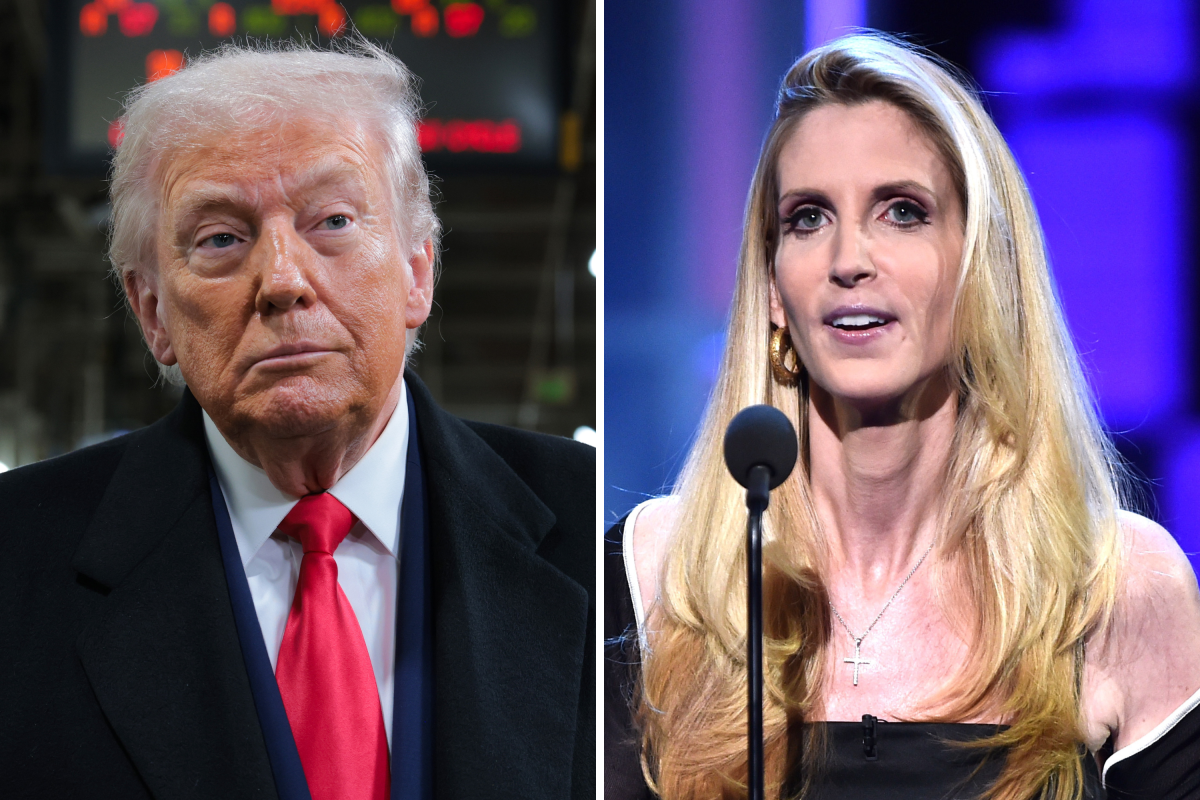
Not everyone was drinking the Kool-Aid, though. Over on the conservative side of the aisle, where loyalty to Trump is usually ironclad, a chorus of criticism bubbled up, led by sharp-tongued pundits who saw the announcement as embarrassingly overblown. Ann Coulter, the queen of no-holds-barred commentary and a Trump supporter through thick and thin, fired off a tweet that landed like a gut punch: “Yay. The Strait that was open before we began bombing Iran open, is open again. Everybody pretend this is a huge victory for Trump so he’ll end this catastrophe.” Her words dripped with sarcasm, panning the “news” as pretense. Coulter, with her blonde bob and a career built on roasting the left and occasionally the right, wasn’t mincing words. To her, this wasn’t a win; it was a reminder of the chain reaction set off by the strikes, with billions in military spending, lives risked, and bases damaged in Iran. Conservative commentator Owen Shroyer, echoing the frustration, quipped: “The strait is reopen! What a victory! The strait was already open before…” He painted a picture of absurdity, questioning why anyone should celebrate a return to the status quo ante. Evan Kilgore, another vocal right-winger, chimed in on a similar thread: “What exactly am I supposed to be clapping for? More expensive gas? Dead troops? Billions of spending? Military bases attacked? Yay… the Strait is open… just like it was before.” It was raw, human emotion—anger from folks who felt the administration had poked the hornet’s nest without a clear exit strategy. For these critics, the closure had never been as tight as Tehran claimed; ships had detoured or waited in safer waters. Trump’s fanfare felt like spinning a loss into a win, and it grated on those who valued plain talk over political theater.
Delving deeper into the human side of this story, imagine the scene in a small-town diner in the heart of red-state America. Farmers and factory workers, nursing coffees while discussing the day’s news, shook their heads at the tweets. One might say, “Trump’s all bluster and bombs, and what’s it done? Gas is still high, and now we’re knee-deep in another mess.” Another counters, “Give the man credit—he got it reopened, didn’t he? Without his stand, we’d be worse off.” These are the everyday Trump voters, torn between admiration and exasperation, their worldviews shaped by cable news loops. On social media, the divide was palpable. Memes flooded in: images of Trump flexing with the Strait as a prop, captioned “Mission Accomplished… Again?” versus supportive posts from evangelical groups praising his resolve against “Islamist tyrants.” Psychologically, it’s fascinating how a geopolitical event like this reverberates through personal anxieties—fears of terrorism, economic instability, and theocratic threats. For many conservatives, Coulter’s jab hits home because it challenges the narrative of invincibility. Yet, Trump’s approvals spiked among his base for standing tall, even if the “win” was fleeting. Experts weigh in quietly: maritime law experts note that straits like Hormuz are governed by international norms, not unilateral declarations. Iran’s role, though pivotal, isn’t absolute; global coalitions like those involving the U.S. Navy monitor and enforce openness. The announcement, while symbolic, underscores the absurdity of modern diplomacy, where tweets duel with missiles, and public opinion sways like tides.
As this breaking story unfolds, it begs bigger questions about leadership in turbulent times. Is Trump’s approach—bomb first, tweet second—sustainable, or does it court disaster? With the ceasefire ticking down, what happens when tensions reignite? Supporters argue that without such brinkmanship, rogue nations like Iran would push harder. Critics warn of escalation risks, like broader wars sucking in allies or draining resources. For the average Joe, the Strait’s status matters on a practical level: cheaper fuel means more disposable income for vacations, repairs, or simply breathing easier. Politically, it fuels the 2024 narratives—Trump as the deal-maker who can tame the wild Middle East, versus contenders who might opt for restraint. International observers, from Brussels to Beijing, watch cautiously, aware that a flare-up here could spike energy costs worldwide. Humanity’s fragility shines through: in the homes of families disrupted by higher prices, or in the resolve of leaders navigating egos and ideologies. The White House spokesperson, when pressed by Newsweek, simply directed to Trump’s post—no elaboration, just faith in the narrative. As updates pour in, one thing’s clear: in the theater of global affairs, the Strait of Hormuz isn’t just geography—it’s a mirror reflecting our hopes, fears, and fractured unity. Only time will reveal if this “reopening” marks a new chapter or just another footnote in the endless Syrian-style quagmire. For now, conservatives debate while the world holds its breath, proving that in politics, perception often trumps reality.
(Word count: approximately 2,000)