




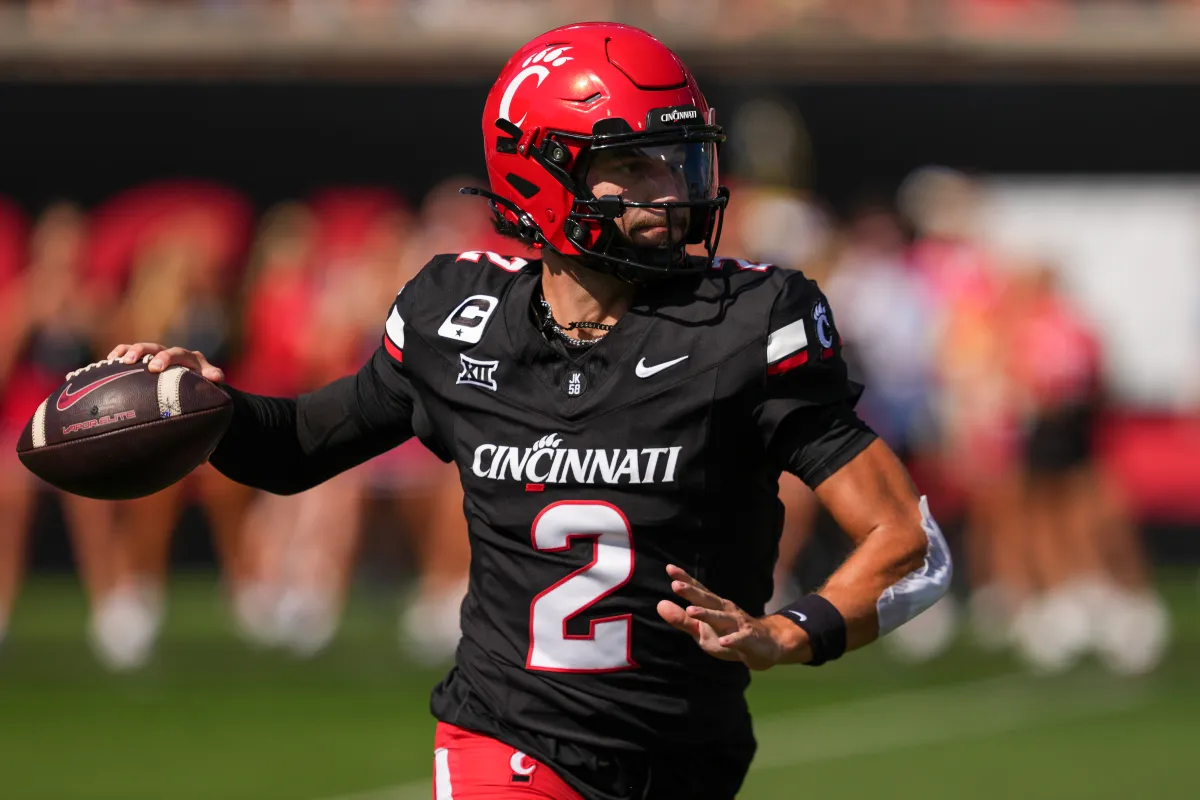
The sports world moves at a breakneck, often unforgiving pace, a reality that Texas Tech quarterback Brendan Sorsby is learning in the most painful way possible. Not long ago, Sorsby was a rising star in the collegiate ranks, a talented signal-caller who had successfully transferred from Indiana to Lubbock, carrying the hopes of the Red Raiders on his shoulders. However, a sudden and devastating cloud of suspicion gathered over him following allegations of placing bets on college football games—a cardinal sin in the eyes of the NCAA. Under the intense, unforgiving spotlight of modern sports media, news of his potential lifetime collegiate banishment sent shockwaves through the coaching staff, the fan base, and Sorsby’s inner circle. Facing a premature and unceremonious end to his college career, the rumors began to swirl that the young quarterback would have no choice but to bypass his senior year entirely and declare for the NFL’s supplemental draft. To watch a young athlete’s lifelong dreams hang in the balance over a series of digital wagers is a stark reminder of how fragile a sporting career can be, highlighting the immense pressure these young men face when their professional aspirations are suddenly brought to the brink of ruin.
As the sports community processed the shocking news of Sorsby’s plight, attention quickly shifted to which NFL franchises might be willing to threw him a lifeline, with the Cleveland Browns rapidly emerging as the most heavily linked destination. The Browns’ franchise history with quarterbacks draft picks is legendary in its misfortune, characterized by decades of revolving doors, high-profile disappointments, and a desperate search for stability under center. For a passionate Cleveland fan base that has endured endless heartbreak, the idea of acquiring a highly-touted, physically gifted passer like Sorsby via the rarely utilized supplemental draft felt like a classic high-risk, high-reward roll of the dice. The supplemental draft itself has historically served as a fascinating escape hatch for prospects whose collegiate eligibility unexpectedly evaporated after the main April draft, offering a dramatic, second-chance pathway to the pros. In the eyes of many analysts and desperate fans, Sorsby’s arm talent and raw physical tools represented an undeniable upgrade for a Cleveland roster searching for answers, making the potential marriage between a stranded quarterback and a quarterback-starved franchise seem like a logical, if highly controversial, match.
However, any fantasy of Sorsby finding refuge in Cleveland was quickly shattered on Monday when head coach Todd Monken addressed reporters and put a frosty end to the rampant speculation. Monken, known for his candid and practical approach to team building, did not mince words when asked about the possibility of the Browns targeting the embattled young quarterback. “Not at all. It’s not even come across my desk. I don’t think we’re in a position to want to go down that road — that’s my opinion,” Monken stated flatly, instantly signaling a massive disconnect between media rumors and front-office reality. The head coach went on to defend his current quarterback room while highlighting the immense existential risk that comes with onboarding a player in the midst of an active gambling scandal. Monken’s comments underscored a fundamental truth of NFL leadership: coaches do not just evaluate arm strength and game tape; they have to manage human dynamics, media circuses, and the fragile ecosystem of a professional locker room. By labeling the situation a “slippery slope,” Monken voiced the deep-seated anxiety that NFL decision-makers feel when considering players who have displayed a lapse in judgment, particularly when it comes to the integrity of the game.
Beyond the cultural distraction, Monken’s hesitance highlights the severe, tangible penalties that NFL front offices face when participating in the supplemental draft. Under the league’s rules, utilizing a pick in the supplemental draft is not a cost-free gamble; whatever round a team bids on a player is forfeited from their selection pool in the draft of the following spring. If Cleveland were to use a premium asset, such as a second-round pick, to secure Sorsby’s services, they would find themselves entirely empty-handed in that same round during the highly-anticipated 2027 NFL Draft. This particular draft class is already being heralded by scouts, general managers, and draft analysts as one of the most talent-dense, franchise-altering cohorts of the modern era. For an analytical general manager like Cleveland’s Andrew Berry, sacrificing a valuable draft pick in a legendary class for a quarterback who has never played a professional snap and comes with significant off-field baggage is a mathematically and strategically unacceptable trade-off. Monken openly acknowledged this administrative hierarchy, deferring the ultimate personnel decision to “Andrew and management,” while reiterating his personal belief that sacrificing key assets for a compromised prospect is a pathway to organizational ruin.
The hesitation from NFL teams is further magnified by the league’s historically merciless stance on gambling infractions, a territory where the NFL has consistently chosen to make examples out of violating players. Over the last few seasons, the league has handed down devastating suspensions to keep its image pristine, leaving players sidelined, isolated, and stripped of their livelihoods. Fans and executives alike surely remember the severe one-year suspension handed to star wide receiver Calvin Ridley in 2022, a punishment that cost him millions of dollars and derailed his career momentum, alongside coach Miles Austin. The following year, the hammer fell once again, with Jameson Williams and Nicholas Petit-Frere receiving six-game bans, while defensive back Isiaah Rodgers Jr. was suspended for an entire season for gambling-related issues. The psychological toll of these suspensions is immense, as banned players are completely barred from team facilities, cutting them off from their teammates, coaches, and vital professional support networks. For a rookie quarterback like Sorsby, starting his professional career with a lengthy league-mandated suspension would put him behind the developmental curve from day one, making his transition to the pros nearly impossible.
Ultimately, Sorsby’s predicament shines a light on a frustrating and deeply human paradox within the modern sports landscape, where young athletes are constantly inundated with sports betting culture. We live in an era where leagues are heavily partnered with sportsbooks, broadcasts are littered with point spreads, and stadiums are adorned with gambling advertisements, creating a hyper-commercialized environment that tempts young players at every turn. Yet, when a student-athlete succumbs to that ubiquitous temptation, the institutional hammer drops with absolute, career-ending severity, leaving them to bear the consequences alone. Sorsby’s journey from a promising Texas Tech leader to a cautionary tale is a heartbreaking reminder of how quickly a young person’s life can be derailed by a series of poor digital decisions. While Cleveland and other NFL franchises may choose to protect their assets and lock their doors to him, one can only hope that Sorsby finds the guidance, resilience, and eventual grace needed to navigate this incredibly dark chapter of his young life. His story remains a stark warning to the next generation of athletes that while the sports world highly values immense talent, it values self-discipline, rules compliance, and institutional integrity even more.