




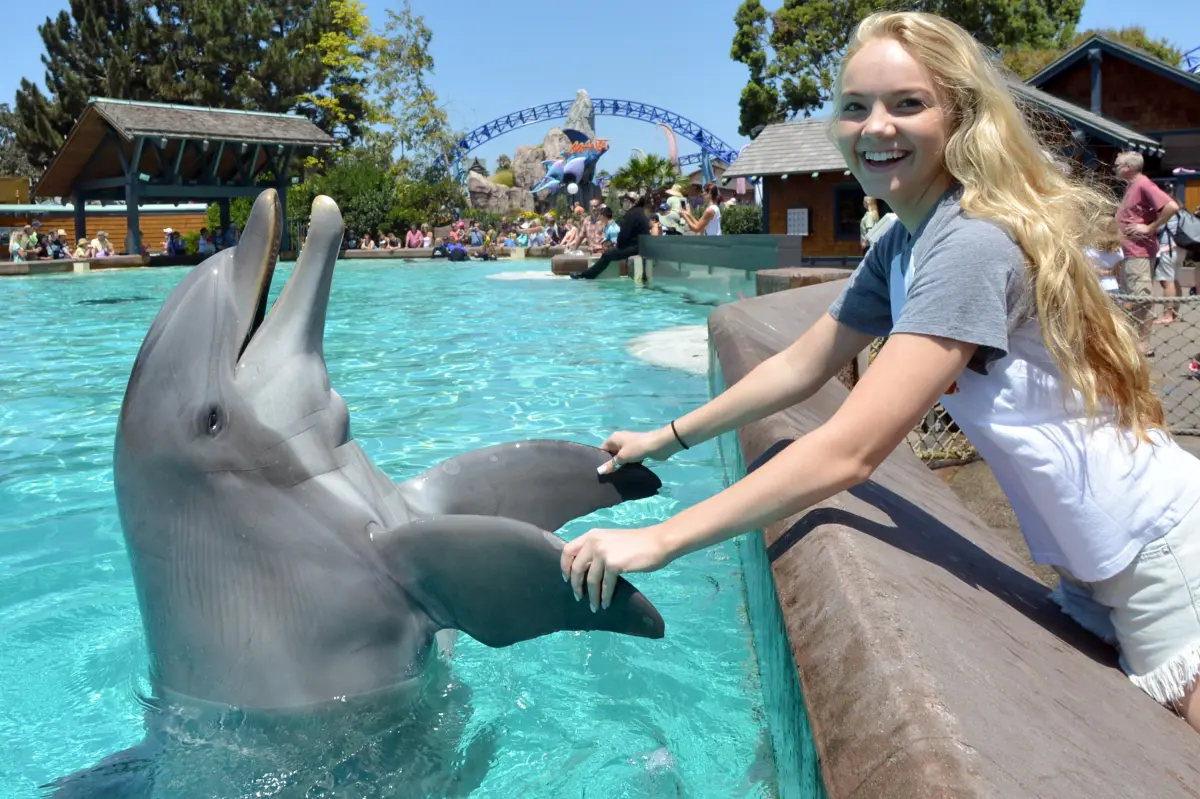
The announcement of the passing of Dottie, a luminary of the marine world and a cherished resident of SeaWorld San Diego, has cast a somber shadow over the coastal park and the hearts of marine mammal enthusiasts globally. At the venerable age of thirty-nine, a milestone that speaks volumes about the meticulous, round-the-clock husbandry and veterinary care she received throughout her long life, Dottie peacefully departed, leaving behind a legacy that transcends the physical boundaries of her habitat. Her death is not merely the loss of an animal; it is the quiet extinguishing of a vibrant light that had brightened the lives of countless visitors, trainers, and veterinarians for nearly four decades. For those who had the privilege of working alongside her daily, the grief is profound, akin to losing a family member who had been a constant, reassuring presence through the changing seasons of their careers. The park’s heartfelt announcement on social media sparked an immediate, overwhelming wave of sorrow and remembrance, illustrating how deeply a single dolphin can touch the human spirit, bridging the gap between our terrestrial world and the mysteries of the ocean. In the mornings following her passing, the quiet pools of San Diego seemed to reflect a collective pause, as staff members gathered to share tears and swap stories of a dolphin who was so much more than a resident animal. As flags of emotion fly half-mast among her dedicated keepers, the community has begun the delicate process of mourning, celebrating a life that was as impactful as it was long, and reflecting on the sheer scale of the empty space her absence leaves behind. She was an anchor for the park, a steady presence through decades of change, and her loss represents the end of a historic era for marine mammal care.
Dottie’s life journey began in the late 1980s under the warm, humid skies of Florida at SeaWorld Orlando, where she was born into a world of blue waters and watchful eyes. Even as a young calf, she exhibited a spark of curiosity that distinguished her from her peers, a playful defiance and a gentle inquisitiveness that would define her entire life. Eventually, she made the journey westward to SeaWorld San Diego, where she would spend the vast majority of her thirty-nine years and truly find her emotional and physical home. Over the decades, she evolved into a beloved fixture of the San Diego park, recognizable not just by her physical markings but by her unmistakable, charismatic personality. Visitors from around the globe were drawn to her glass, where Dottie would often initiate her own forms of contact, tilting her head with a discerning gaze that seemed to perceive the human soul behind the camera lenses. Her trainers frequently spoke of her “inquisitive nature,” a biological term that fails to fully capture her delight in exploring new enrichment toys, her clever problem-solving abilities, and the uniquely sassy attitude she displayed when she wanted her favorite treats. She was a dolphin who possessed an undeniable sense of self, ensuring that anyone who crossed her path left with a personal story to tell and a newfound appreciation for the intelligence and emotional depth of cetaceans. She had a way of looking at people that bypassed the glass barrier entirely, making guests feel seen, chosen, and connected to the wild world in a way that books and documentaries could never replicate.
Beyond her interactions with humans, Dottie played a foundational, anchoring role within her own pod, most notably through her transition into motherhood, where she successfully birthed and raised four calves. Motherhood in the dolphin world is a delicate, demanding dance of constant vigilance, synchronization, and tender guidance, and Dottie excelled as a patient, protective, and highly competent matriarch. She guided her young through the intricate social structures of the pool, teaching them the subtle languages of whistles, clicks, and physical postures that define cetacean communication and social hierarchy. Observers often marveled at the tenderness she displayed, swimming in perfect, fluid synchrony with her newborns, her massive shape acting as a protective shield against any perceived disruptions in their environment. Through her offspring, Dottie contributed significantly to the scientific understanding of maternal behavior in marine mammals, offering researchers invaluable insights into how maternal bonds are forged and maintained over decades. Her calves, who grew up to be strong, highly social members of their own pods, carry forward her genetic legacy and her learned behaviors, ensuring that a piece of Dottie’s gentle spirit and social wisdom will continue to ripple through the waters of SeaWorld for generations to come. Her role as a mother cemented her status as a nurturing anchor of the marine community, a matriarch whose influence was felt in every splash, every synchronized breath, and every playful chase of her growing descendants, who learned how to navigate their world by watching her graceful example.
At the heart of Dottie’s long life was an extraordinary, near-telepathic bond with her human care team, a relationship built on a foundation of absolute trust, patience, and mutual respect earned over thousands of hours of shared quiet moments. This profound connection was not built overnight; it was forged through the gentle feeding of fish, the soothing rubdowns she so clearly enjoyed, and the shared victories of learning new behaviors together. This trust was not merely sentimental; it was a critical lifeline that directly enabled her medical management through “voluntary diagnostic behaviors.” Rather than requiring veterinary teams to utilize stressful physical restraints for health assessments, Dottie would willingly present her tail flukes for blood draws, sit perfectly still for ultrasounds, and allow veterinarians to examine her blowhole—acts of voluntary cooperation that are only possible when an animal feels completely safe in the presence of humans. Her trainers were not merely her caretakers; they were her companions, confidants, and protectorate, possessing an intimate knowledge of her daily moods, her favorite games, and the subtle shifts in her posture that signaled her physical well-being. This deep-seated emotional reciprocity transformed daily routines into a beautiful partnership of care, showcasing the pinnacle of what modern zoological relationships can achieve when guided by empathy, patience, and love. The loss of this connection has left her trainers grieving not just a subject of care, but a true partner with whom they shared a unique, unspoken language of gestures, eye contact, and mutual affection.
The durability of this trust was put to the ultimate test in 2010 when Dottie was diagnosed with severe kidney stones, a condition that is often life-threatening for marine mammals due to the complexities of internal medicine in aquatic species. Faced with a grim prognosis, the SeaWorld veterinary team engineered a groundbreaking, highly innovative medical procedure tailored specifically to her unique physiology, navigating uncharted clinical waters to save her life. The success of the operation was a triumph of veterinary science, but the true miracle lay in Dottie’s remarkable recovery, driven by an innate tenacity and resilience that astonished even her most optimistic doctors. Following the procedure, she did not merely survive; she thrived, embarking on a fifteen-year post-operative journey filled with energy, playfulness, and high-quality living that completely defied aging norms for her species. This period of her life became a testament to her indomitable spirit, proving that physical vulnerability could be overcome by a combination of cutting-edge human medicine and an animal’s sheer, stubborn will to live. Her golden years were characterized by this same quiet strength, showing that even as her body slowly aged, her enthusiasm for her trainers, her family, and her daily routines never wavered. She became a symbol of hope and medical advancement, proving that senior marine animals can enjoy rich, active, and fulfilling lives long after facing critical health crises, leaving a roadmap for future veterinary care.
When news of Dottie’s passing was shared on social media, the resulting digital wake was a sweeping testament to her far-reaching influence, drawing thousands of reactions, emotional tributes, and shared memories from a global community of admirers. Families posted photos spanning decades, showing children—now grown into adults with families of their own—smiling next to the pool where Dottie once leaped, proving that she was a thread woven through the tapestry of countless human lives. Many commenters credited their childhood encounters with Dottie as the spark that ignited their passion for marine biology, conservation, or environmental advocacy, illustrating how one dolphin could act as a powerful ambassador for the oceans she represented. The collective grief expressed online and within the park walls highlights a profound truth: Dottie’s life was a grand bridge of connection, transforming distant curiosity into deep, protective empathy for marine life. As SeaWorld San Diego adjusts to a quiet harbor without her familiar silhouette, Dottie’s legacy remains safely anchored in the collective consciousness of the trainers who loved her, the veterinary team that fought for her, and the millions of guests who were lucky enough to watch her play. She swam through life with grace and resilience, and though her physical journey has ended, the waves she made in the hearts of humanity will continue to roll on, inspiring future generations to cherish and protect the magic of the sea.