



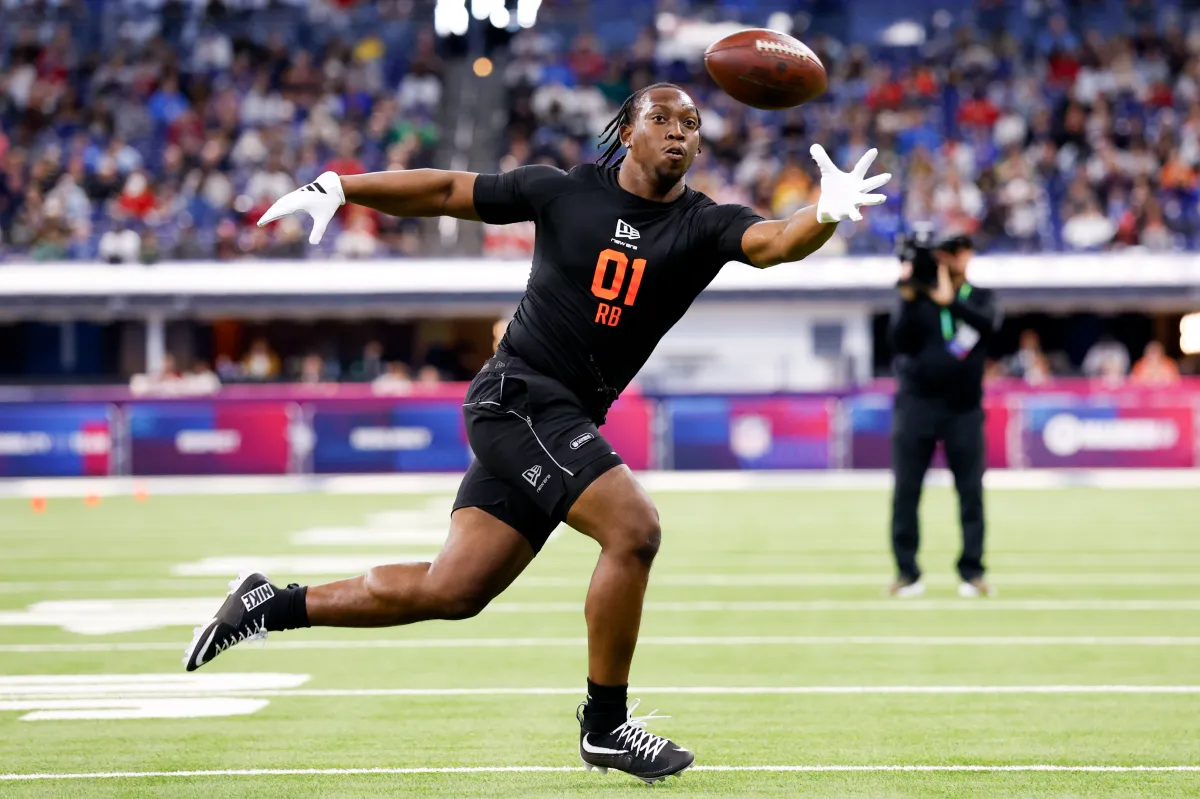
The opening weeks of NFL training camps are often characterized by a unique kind of performative theater, where players running around in helmets and shorts look like world-beaters because the element of physical consequence has been temporarily removed from the equation. For a young running back like Kaytron Allen of the Washington Commanders, this early, non-contact phase of the summer can be a difficult environment in which to stand out. In a crowded and highly competitive backfield, the early headlines naturally gravitated toward other names who possessed the flash and veteran pedigree to turn heads during the initial, non-padded acclimation periods. For a player whose game is rooted in physicality, contact, and the grim determination required to pick up tough yardage, these early days were less about making highlight reels and more about silently enduring the grind while waiting for the real football to begin. It is a psychological test as much as a physical one, requiring a young athlete to remain patient and disciplined while others capture the spotlight, knowing that the ultimate evaluation of a running back’s worth cannot truly begin until the pads are buckled, the chin straps are buckled, and defenders are actually allowed to bring ball-carriers to the ground.
During those initial days of camp, the chatter around the Commanders’ facility was dominated by other players in the backfield room, with names like Jacory Croskey-Merritt, Rachaad White, and Jeremy McNichols commanding the lion’s share of attention from coaches, media, and fans alike. In the fast-paced, hype-driven environment of modern NFL coverage, it is easy for a player like Allen to slip under the radar when the practices look more like passing academies than traditional football. Without pads, running backs are often judged on their pre-snap motion, their ability to catch passes out of the backfield in space, and their raw sprint speed in open air—attributes that favor certain archetypes over others. For Allen, who thrives on the heavy contact and the subtle, instinctive reactions that occur in congested run lanes, this period was a quiet one. It is a common trajectory for young players trying to find their footing in a crowded room; they must learn the playbook, avoid mental errors, and wait for the training camp schedule to shift toward the high-intensity, physical sessions where their true talents can be put on display. This patience is a quiet virtue in an NFL camp, where the pressure to perform instantly can lead players to press and make mistakes, but Allen stayed the course, knowing his time would come when the pads finally went on.
That shift occurred with dramatic clarity this past week when the Washington coaching staff ordered the team into full pads, instantly transforming the nature of the practices from a track meet into a physical showcase. Almost immediately, the narrative surrounding Kaytron Allen began to shift as his forceful, punishing running style became impossible to ignore. According to reports from observers on the ground, including Bryan Manning of the Commanders Wire, Saturday’s practice served as a major breakout party for Allen, who put together what was widely described as an “excellent day” on the field. Once defenders were allowed to strike and wrap up, Allen’s true value became apparent as he ripped off a series of impressive, chunk-yardage runs that left a lasting impression on both the coaching staff and his teammates. The sound of plastic popping and pads colliding seemed to act as a catalyst for Allen, who ran with a level of violence and determination that had been missing from the offense during the non-contact sessions. This sudden surge in production was not merely a product of effort, but a demonstration of how a player’s physical traits can find their perfect expression once the artificial constraints of early-summer practices are removed.
What made Allen’s standout performance on Saturday so encouraging for the Washington Commanders was that it transcended the simple, one-dimensional archetype of a short-yardage “bruiser.” While NFL teams are always on the lookout for physical backs who can lower their shoulders, absorb contact, and grind out two or three hard yards on third-and-short or near the goal line, Allen demonstrated that his ceiling might be significantly higher than that of a mere situational specialist. Throughout the afternoon, he showcased an impressive combination of vision and burst, identifying cutback lanes created by the offensive line and accelerating through them with a decisiveness that caught the second level of the defense off guard. It is one thing to be a physical runner who can initiate contact, but it is another entirely to possess the spatial awareness and lateral agility required to avoid the first defender, find the crease, and turn a potential loss into a substantial gain. By showing that he can make plays in space and maximize the blocking ahead of him, Allen proved to the coaching staff that he is not just a hammer to be used in specific, obvious running situations, but a versatile weapon who can keep the defense guessing.
The beauty of the situation for the Washington Commanders is that they are under no pressure to define Allen’s role, or anyone else’s, in the heat of early August. One of the greatest luxuries of having a deep, competitive running back room is the ability to let the evaluation process play out naturally over the course of the entire preseason without having to make premature depth chart decisions. By allowing a diverse group of backs to compete for touches, the coaching staff can gather a wealth of data on how each player performs in different scenarios, from simulated game situations in practice to live-action preseason games. This internal competition serves a dual purpose: it pushes every player in the room to perform at their absolute best, preventing complacency, while also giving the offensive coordinator a clear picture of how to best construct a multi-faceted ground game once the regular season begins. Rather than pigeonholing Allen into a specific role today, Washington can afford to give him a wide variety of reps, allowing him to continue exploring his limits and demonstrating his versatility as the team transitions from training camp to the rigors of the actual schedule.
Ultimately, the journey for Kaytron Allen is about maintaining this upward trajectory and making it impossible for the coaching staff to leave him off the field when the games start to count. In the modern NFL, where backfield committees have largely replaced the old-school, single-back workhorse model, a player who can offer a blend of physical, short-yardage toughness and dynamic, big-play potential is an invaluable asset. If Allen can continue to run with the same violent physicality he displayed on Saturday while consistently demonstrating that he can contribute in the passing game and as a creator in space, he could quickly transform from a bubble player fighting for a roster spot into a core component of Washington’s offensive identity. Training camp is a marathon of physical endurance and mental fortitude, and while the early days may belong to the flashier, speed-oriented players, the true heart of the football season belongs to those who can deliver when the pads are on and the contact is real. By embracing the grind and rising to the challenge when the intensity increased, Kaytron Allen has positioned himself as one of the most intriguing developments of the Commanders’ summer, proving that sometimes the quietest starts can lead to the loudest impacts.