






An ordinary Tuesday afternoon in the heart of Bakersfield quickly dissolved into a scene of unimaginable tension and terror when a quiet banking hour at the local Chase branch became the epicenter of a high-stakes hostage crisis. Just as the midday sun beat down on the pavement at the busy intersection of Chester Avenue and 17th Street, around 1:00 p.m., the fragile peace of the downtown district was shattered by a desperate emergency call reporting a bomb threat. Inside the bank, innocent citizens executing mundane financial transactions and employees going about their daily routines found their world suddenly contracted to the walls of the lobby. A man, carrying the terrifying claim of explosive destruction, barricaded himself inside, transforming a routine trip to the bank into a claustrophobic fight for survival. For the community members trapped within, the transition from a standard Tuesday to a hostage drama was instantaneous and deeply disorienting. The sterile, fluorescent-lit interior of the financial institution—usually a symbol of security and structured order—instantly transformed into a psychological pressure cooker. Outside, as the first sirens began to wail in the distance, the reality of the situation gripped the first responding officers, who recognized that the lives of several ordinary citizens now hung in the balance of a volatile and unpredictable individual’s whim. The sheer vulnerability of human beings caught up in the wrong place at the wrong time became the central, aching theme of the afternoon, as families rushed to the scene or anxiously monitored their phones, praying for any sign that their loved ones inside were safe from the impending threat. As the minutes dragged on, the physical space of the bank became a theater of quiet terror, where every footstep, every whispered word, and every glance toward the heavy glass doors carried the weight of life and death, highlighting the terrifying randomness of modern crises that can turn a simple errand into an existential struggle.
The psychological ordeal endured by those held inside the bank is difficult to overstate, characterized by a suffocating silence occasionally broken by the voice of their captor or the ring of a telephone connecting him to the outside world. In these dark hours, time stretches to agonizing lengths, with every minute feeling like an eternity as hostages navigate the volatile emotional landscape of their captor, searching his face and tone for cues of safety or escalating danger. Yet, amid this dense fog of fear, a significant breakthrough emerged through the tireless efforts of the negotiators, resulting in the peaceful release of two hostages. As these two individuals stepped across the threshold of the bank and into the bright, hot California sun, the relief must have been overwhelming, a stark and dizzying transition from captivity back to freedom. Despite their escape, however, the thoughts of the released individuals, the police, and the waiting public remained firmly anchored to those still trapped inside. Bakersfield Police Department Sergeant Eric Celedon provided a sliver of comfort to a worried public by confirming that the remaining hostages were in “good health,” a phrase that offers a vital lifeline of hope but does little to erase the psychological trauma currently being inflicted on those still pacing the carpeted floors of the branch. The resilience of these remaining community members is being tested to its absolute limit, as they must summon an extraordinary inner strength to remain calm, cooperative, and hopeful while the complex, invisible machinery of modern crisis resolution grinds slowly forward just beyond their line of sight. Their situation serves as a stark reminder of the fragile thread upon which human safety hangs, transforming ordinary citizens into quiet heroes of endurance who must bear the unthinkable burden of waiting for their liberation while remaining entirely at the mercy of a stranger’s unresolved grievances.
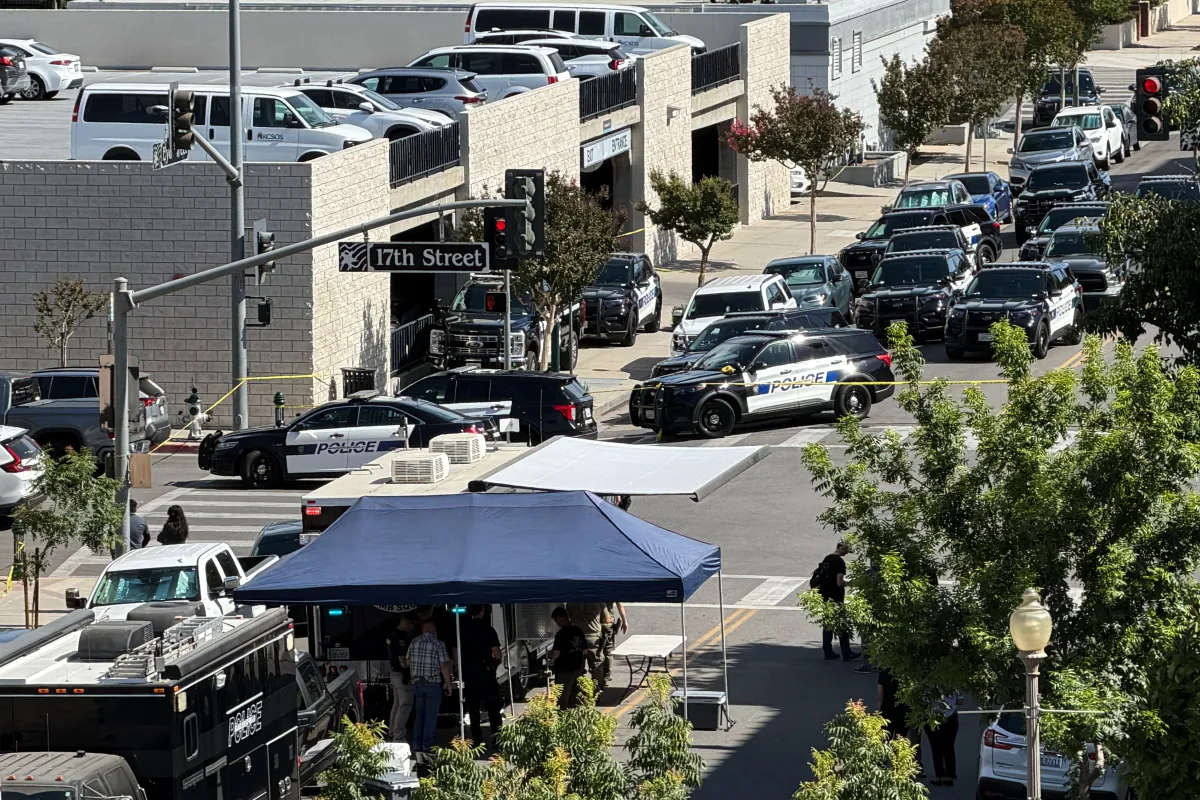
While the hostages endure their silent vigil inside, a highly specialized battle of minds is being waged over the telephone lines by the Bakersfield Police Department’s crisis negotiation team. Stationed inside a mobile command unit just outside the established perimeter, these trained professionals are tasked with the delicate, exhausting work of humanizing the situation to a desperate and barricaded suspect. It is a high-wire act of the highest order, requiring negotiators to speak with absolute calm, empathy, and patience, actively listening to the suspect’s demands, fears, and grievances while seeking a peaceful path forward. Every word uttered by the negotiator is calculated to lower the collective heart rate in the room, to build a bridge of trust where only fear and hostility exist. Sergeant Celedon underscored the gravity of this operational effort, assuring the community that the department has deployed “every single resource at our disposal” to guide this volatile stand-off to the safest possible conclusion. This massive mobilization of resources includes tactical teams, canine units, medical personnel, and technological surveillance, all operating in perfect lockstep to support the quiet, measured dialogue occurring over the phone. The true bravery of these responders lies not just in their physical readiness to breach the building if necessary, but in their profound commitment to exhausting every peaceful avenue first, recognizing that a successful negotiation is one where no shots are fired, no blood is spilled, and every human being—including the suspect—leaves the building alive. By carefully dismantling the suspect’s anger piece by piece through the medium of a simple phone line, these negotiators stand as a vital shield between chaos and order, demonstrating that under the most extreme conditions, human connection and structured empathy remain the most powerful weapons in the law enforcement arsenal.
The physical and emotional ripple effects of the standoff immediately paralyzed the civic heart of Bakersfield, transforming a bustling metropolitan center into an eerie, deserted landscape. To ensure public safety and establish a secure operating environment, officers quickly constructed a wide perimeter around the bank building, a measure that necessitated the evacuation of critical local institutions, including both City Hall and the police department’s own headquarters. This sweeping evacuation forced public servants, city administrators, and local business owners to abruptly abandon their desks and shops, spilling out into designated safe zones and joining the ranks of anxious onlookers. Major roadways were swiftly cordoned off, cutting off the main arteries of downtown commerce and replacing the usual hum of traffic with the flashing red and blue lights of emergency vehicles. The physical closure of these streets served as a visible manifestation of the sudden disruption to daily life, a stark reminder of how a single localized crisis can instantly freeze the daily rhythms of an entire city. For the residents of Bakersfield, the sight of their downtown area being treated as an active tactical zone was deeply unsettling, generating a collective anxiety that spread rapidly through social media and local news outlets. As the hours passed and the sun began its slow descent, the empty streets around Chester Avenue and 17th Street stood as a somber monument to the temporary suspension of normal civic life, highlighting the profound collective vulnerability that communities experience when the safety of their fellow citizens is placed in jeopardy. Families who would normally be planning dinner or commuting home instead found themselves glued to their screens, waiting for any scrap of news that might signal an end to the siege, proving that while only a small number of people were physically trapped inside the bank, the psychological captivity of the event held the entire city of Bakersfield firmly in its grip.
In the high-stakes world of crisis management, the preservation of human life relies heavily on the strategic application of patience, a philosophy that is currently guiding every decision made by the Bakersfield authorities. While the public and the media naturally hunger for rapid resolution and immediate action, the seasoned professionals on the ground understand that time is often their most valuable asset in neutralizing a threat. Every tick of the clock that passes without violence is a victory, a testament to the effectiveness of the ongoing dialogue and the containment of the suspect’s volatile impulses. This slow, deliberate approach requires an extraordinary display of restraint from the tactical units positioned in the shadows, who must remain poised for action while allowing the negotiation team the room they need to work their psychological craft. The complete absence of reported injuries up to this point is not a matter of luck, but the direct result of this methodical strategy, which prioritizes de-escalation over confrontation at every turn. By refusing to rush the process, the police are actively minimizing the risk of a panicked reaction from the suspect, who might otherwise feel cornered and resort to drastic measures. This dedication to a peaceful outcome illustrates a profound shift in modern law enforcement philosophy, which increasingly champions the power of dialogue and psychological decompression over immediate physical force, recognizing that the true measure of operational success is defined by the preservation of every single life involved in the crisis. This patient vigilance requires a unique kind of endurance from everyone on the scene, from the officers standing watch in the heat to the strategists analyzing every word spoken by the suspect, all united in the quiet belief that a slow, peaceful surrender is infinitely superior to a swift, violent confrontation.
As night begins to fall over Bakersfield, the standoff at the Chase bank remains a dynamic, unfolding narrative, its final chapters still unwritten but filled with the urgent hopes of a watching community. The fragile peace that currently exists within the barricaded building is a testament to the delicate balance maintained by the negotiators, but it remains a situation that could shift in an instant, keeping everyone involved on a razor’s edge of anticipation. The eyes of the city, and indeed the nation, are fixed on the corner of Chester Avenue and 17th Street, where the heavy glass doors of the bank still stand shut, concealing the ongoing drama of the hostages who await their eventual return to safety. This crisis, while terrifying, has also illuminated the deep bonds of shared humanity that unite the people of Bakersfield, visible in the quiet solidarity of the evacuated workers, the tireless dedication of the emergency responders, and the collective sighs of relief that accompanied the release of the first two hostages. It serves as a powerful reminder of how quickly the mundane routines of life can be upended, and how deeply we rely on the quiet courage of those trained to walk into danger to pull others out. As the negotiations continue into the evening, the primary focus remains steadfastly on the safe extraction of the remaining community members, with the ultimate hope that patience, empathy, and professional resolve will soon triumph over fear, allowing the hostages to finally walk out of the darkness of the bank and back into the warm, welcoming embrace of their waiting families. In the end, when the police lines are eventually taken down and the streets are reopened, the true story of this day will not be defined by the terror of the threat, but by the resilience of the survivors and the quiet, persistent humanity of those who worked tirelessly in the shadows to bring them safely home.